


The Sony 6000 series has become a go-to choice for users looking for a compact hybrid camera that delivers both in photo and video. Ever since Sony launched the FX30 with a new 26-megapixel sensor, there’s been curiosity about when that sensor would make its way into the 6000 series — something that happened with the release of the a6700 as the successor to the a6600.
But is a few extra pixels all that separates the Sony a6700 from the a6600? Spoiler alert: no. A detailed comparison between the two shows that the a6700 offers much more than just 2 extra megapixels.
As is common these days, the a6700 targets the growing content creator market, with a strong focus on improved video capabilities, offering only modest developments for photographers — although Sony’s continued advancements in autofocus also benefit the latter.
The a6700 is regarded by the specialized press as one of the best hybrid cameras currently available. While it may not match the top-tier video cameras in terms of design and features, many solo videographers will find it to be the best option for them in terms of price and performance — especially if they focus on vlogging.
The dilemma for many potential buyers is that the older a6600 — still a powerful camera in its own right — is now significantly cheaper than the a6700. For videographers, the price difference may be well worth it, but photographers have more reason to hesitate.
- View Sony a6600 price on Amazon
- View Sony a6700 price on Amazon

▌The a6700 is definitely better than the a6600 when it comes to video, but at a cost and in ways that might not be worth it for photographers.
Sensor and Processor
- Sony a6700: 26 MP back-illuminated APS-C Exmor R CMOS, BIONZ XR
- Sony a6600: 24 MP APS-C Exmor CMOS, BIONZ X
It’s true that the a6700 features a next-generation 26 MP sensor that offers a slight improvement over the a6600’s 24 MP sensor, but how significant is that really? From a photography perspective, it’s a very marginal increase. And when it comes to video, the enhanced processing power and improved video functions of the a6700 seem far more important than that bump in resolution.
ISO
- Sony a6700: Standard range 100 to 32,000; extended ISO 50–102,400 in photography
- Sony a6600: Standard range 100 to 32,000; extended ISO 50–102,400 in photography
The advantages of the a6700’s 26MP sensor aren’t any more apparent when comparing the ISO ranges of these two cameras, which are identical. The published ISO range doesn’t tell us anything about the expected image quality at high ISOs, of course, but we can draw one conclusion: Sony doesn’t expect the higher resolution of the a6700 sensor to be a disadvantage, so the same performance at high ISOs with that extra resolution can be expected.
Sony’s autofocus systems have a reputation for being the best
Autofocus
- Sony a6700: Still images: up to 759 points (phase-detection AF); Video: up to 495 points (phase-detection AF). AI processing unit from the A7R V: human, animal, bird, insect, car/train, and airplane recognition in both photo and video.
- Sony a6600: Still images: 425 points (phase-detection AF)
The strongest point of the a6700 is probably its advanced focusing system, borrowed from the Sony a7R V, a high-end camera costing over €2,500. It’s one of Sony’s best tracking autofocus systems (meaning it’s simply one of the best in the world) thanks to AI subject recognition and the large number of focus points (up to 759, compared to 425 on the a6600). It’s not that the Sony a6600 doesn’t focus well, but the comparison just doesn’t favor it.
And how important is this? It depends on how much confidence you place in autofocus and how much you need subject recognition. For some photographers, it could be a game changer; for others, it might be overkill, or in other words, Sony is offering an upgrade on a focusing system that is already quite powerful on the a6600 and, in portrait, landscape, or product photography for example, won’t make much difference. But in action, sports, or wildlife photography, the a6700 is simply the better choice.
Video
- Sony a6700: 4K 30/60p from 6K oversampling, up to 120p (QFHD (3840×2160). Approximately 38% crop factor), internal 10-bit 4:2:2 recording, dynamic range over 14 stops (S-Log3), S-Cinetone picture profile, AI-driven auto framing (field of view is reduced)
- Sony a6600: 4K 30p from 6K oversampling, 1920×1080 120p, internal 8-bit 4:2:0, 8-bit 4:2:2 via HDMI, dynamic range over 14 stops (S-Log3)
This is where the a6700 clearly outperforms the a6600 by a significant margin. The key takeaway is that the a6700 can capture oversampled 4K video at 60p and 4K at 120p (albeit with a considerable crop factor), far beyond what the a6600 can do with its 4K 30p video.
Moreover, the a6700 can capture 10-bit 4:2:2 video while the a6600 is limited to 8-bit 4:2:0. This is important if you use Sony’s S-Log2 or S-Log3 profiles, where 10-bit capture is ideal and 8-bit capture less so.
Still, if you are satisfied with 4K 30p video and don’t plan to do heavy color grading, then the a6600 will do a good job. The a6700 has a clear advantage only if you want to shoot at higher frame rates and with greater bit depth for more control in post-production.
Stabilization
- Sony a6700: 5-axis IBIS, 5 stops, active mode for video (field of view is slightly narrower)
- Sony a6600: 5-axis IBIS, 5 stops
These cameras appear to use the same IBIS (in-body image stabilization) mechanism, with 5-axis stabilization and up to 5 stops of vibration compensation. The Sony a6700 features Sony’s latest active mode stabilization, which is extremely effective but comes with a significant crop factor.
With active stabilization enabled, the a6700 should deliver smoother vlogging footage than the a6600, although it doesn’t replace a tripod or gimbal.
There are 3 areas where the Sony a6700 clearly outperforms the a6600: video, autofocus, and burst shooting
Burst
- Sony a6700: 11 fps, 1,000 JPEG or 59 RAW
- Sony a6600: 11 fps, 115 JPEG or 49 RAW
It seems the hardware designs of the a6700 and a6600 have much in common, as both can shoot at 11 fps with the mechanical shutter. However, the a6700 has a much better buffer depth, perhaps due to its BIONZ XR processor and its ability to use faster UHS II memory cards.
By today’s standards, neither camera is exactly a sports specialist, and there isn’t even a big difference between them in buffer capacity for storing RAW files. But if you plan to take many action or sports photos and don’t mind shooting JPEG instead of RAW, the a6700 is definitely the better choice.
Electronic Viewfinder and Screen
- Sony a6700: 0.39 inches, 2.359 million dots, 1.07× magnification, fully articulating 3-inch touchscreen, 1,036,000 dots
- Sony a6600: 0.39 inches, 2.359 million dots, 1.07× magnification, single-axis articulating 3-inch screen, 921,000 dots
Sony never seems to put much effort into their electronic viewfinders and rear screens, at least in mid-range cameras. The a6700’s 2.359 million-dot viewfinder looks identical to the a6600’s and does not particularly stand out among APS-C cameras in this price range.
The a6700 offers a fully articulating flip-out screen instead of the single-axis articulating screen, similar to tilt screens, on the a6600. The former is an advantage for video recording, while the latter better suits photographers’ needs. The slightly higher resolution of 1,036,000 dots on the a6700 is just a minor improvement.
Storage
- Sony a6700: 1x SD, UHS II
- Sony a6600: 1× Memory Stick Pro Duo/SD UHS I
It’s not the first thing you think about, but the a6700’s card slot supports UHS II cards, while the a6600 supports UHS I cards. This, along with the a6700’s greater processing power, helps explain the improved video capabilities of the new camera and the deeper buffer for burst shooting.
Battery Life
- Sony a6700: NP-FZ100, approx. 550 shots (Viewfinder) / approx. 570 shots (LCD monitor) (CIPA standard), USB PD Type-C PD
- Sony a6600: NP-FZ100, approx. 720 shots (Viewfinder) / approx. 810 shots (LCD monitor) (CIPA standard)
The Sony a6600 and a6700 share the same high-capacity NP-FZ100 battery, but interestingly, the a6700’s battery life is much shorter. According to official CIPA test figures, the a6700 will capture significantly fewer images on a single charge than the a6600 — between 550 and 570 shots. This is still a very good number for a mirrorless camera of this size, but it seems that instead of reducing power consumption, the a6700 actually increases it.
Connectivity
- Sony a6700: Multi Interface (MI) shoe, USB Type-C, micro HDMI connector (Type D), 3.5mm microphone, 3.5mm headphone, remote control, Wi-Fi, Bluetooth
- Sony a6600: Micro USB, micro HDMI connector (Type D), 3.5mm microphone, 3.5mm headphone, remote control, NFC, Wi-Fi, Bluetooth
The key differences between these two cameras boil down to the a6700’s digital MI interface, which supports Sony’s ECM-M1 digital microphone, and the absence of NFC in the new camera.
It’s safe to assume no one will miss NFC too much, and most videographers will probably still prefer an analog microphone and the 3.5mm jack over Sony’s digital interface and its specific microphone.
The most interesting thing here is that Sony chose a micro HDMI Type D connector for the a6700. This is a more complicated and less secure connection than full-size HDMI, and videographers using external recorders will likely find both cameras lacking in this regard.
Size and Weight
- Sony a6700: 122.0 × 69.0 × 75.1 mm; 409 g
- Sony a6600: 120.0 × 66.9 × 69.3 mm; 503 g
The a6700 is lighter than the a6600, but neither of these cameras is particularly heavy, and the small difference between them—less than 100 grams—will be almost negligible once a premium lens is mounted. Although the a6700 is thicker, the physical dimensions are so similar that both will likely fit into the same compartments in our camera bag.
Sony a6700 vs a6600: Conclusions
There are three areas where the Sony a6700 clearly outperforms the a6600: video, autofocus, and burst shooting. The a6700 is clearly better in all three aspects, but these won’t be equally important to everyone. As a hybrid photo/video camera, the a6700 is extremely effective, but if our main interest is photography and we don’t especially need the improved autofocus and burst capabilities, then the a6600 is almost just as good and considerably cheaper. The a6700 is definitely better than the a6600, but at a price and in ways that might not justify the upgrade for everyone. The main advantage of the a6700 is that it is a better hybrid camera for both photo and video. As a pure photo camera, it doesn’t outperform the a6600 by that much.
Comparison table Sony a6600 vs Sony a6700
| a6600 | a6700 | |
| Release Date | Aug 2019 | Jul 2023 |
| Camera Type | Mirrorless | Mirrorless |
| Sensor Type | CMOS | BSI CMOS |
| Image Processor | BIONZ X | BIONZ XR |
| Resolution | 24.2 MP | 26.0 MP |
| Pixel Dimensions | 6000×4000 | 6192 × 4128 |
| Sensor Dimensions | 23.5×15.6 mm | 23.3×15.5 mm |
| Pixel Size | 3.92µ | 3.76µ |
| Low Pass Filter | Yes | Yes |
| Image Stabilizer | Yes | Yes |
| Base ISO | ISO 100 | ISO 100 |
| Max Native ISO | ISO 32,000 | ISO 32,000 |
| Extended ISO | ISO 50-102,400 | ISO 50-102,400 |
| Focus Bracketing | No | Yes |
| Pre-shoot Burst Mode | No | No |
| Fastest Shutter Speed | 1/4,000 | 1/8,000 |
| Slowest Shutter Speed | 30 sec | 30 sec |
| Burst (Mechanical Shutter) | 11 FPS | 11 FPS |
| Burst (Electronic Shutter) | 8 FPS | 11 FPS |
| Buffer Size | 46 raw | 59 raw |
| Autofocus System | Hybrid PDAF | Hybrid PDAF with AI subject recognition |
| Focus Points | 425 | 759 |
| Max AF Sensitivity in Low Light (standardized at f/2, ISO 100) | -2 EV | -3 EV |
| Standard Flash Sync Speed | 1/160 | 1/160 |
Video
| Maximum bit depth (internal) | 8 bits | 10 bits |
| Maximum bit depth (external) | 8 bits | 10 bits |
| Raw video | No | No |
| Maximum frames per second in 4K | 30 FPS | 120 FPS |
| Maximum frames per second in 1080P | 120 FPS | 240 FPS |
| Video crop factor | 1.23x at 4K 30p; 1.14x at 1080p 100/120 FPS | 1.58x at 4K 120p |
| Chroma subsampling | 4:2:0, 4:2:2 (external) | 4:2:2 |
| Video recording limit | 780 min | 780 min |
Hardware and Other Features
| Card slots | 1 | 1 |
| SD card type | UHS-I | UHS-II |
| LCD screen size (diagonal) | 3.0 inches | 3.0 inches |
| LCD screen resolution | 0.92 million dots | 1.04 million dots |
| Screen articulation | Single axis | Fully articulated |
| Touchscreen | Yes | Yes |
| Electronic viewfinder | Yes | Yes |
| EVF magnification | 1.07× | 1.07× |
| EVF resolution | 2.36 million dots | 2.36 million dots |
| EVF coverage | 100% | 100% |
| Headphone jack | Yes | Yes |
| Microphone input | Yes | Yes |
| Built-in flash | No | No |
| GPS | No | No |
| Bluetooth | Yes | Yes |
| WiFi | Yes | Yes |
| USB type | Type B 2.0 | Type C 3.2 Gen 2 |
| Battery | NP-FZ100 | NP-FZ100 |
| Battery life (using EVF) | 720 shots | 550 shots |
| Battery life (using LCD screen) | 810 shots | 570 shots |
| Sealed | Yes | Yes |
| Weight (Body + battery + card only) | 503 g | 493 g |
| Dimensions | 120 × 67 × 59 mm | 122 × 69 × 64 mm |
Buy Sony a6600 or Sony a6700

Sony a 6600
Specifications summary
- Release date: August 2019
- Sensor: 24.2MP
- Stabilizer: Yes
- Buffer capacity: 115 JPEG or 49 RAW
- Screen: 3 inches, 180º flip screen, 921,000 dots
- Electronic viewfinder: 2.36 million dots
- Burst rate: 11 fps
- Video: 4K UHD, S-Log2, S-Log3, and HLG modes.

Sony a 6700
Specifications summary
- Release date: July 2023
- Sensor: 26 MP
- Stabilizer: Yes, 5-axis
- Buffer capacity: 1,000 JPEG or 59 RAW
- Screen: 3 inches, flip screen, 921,000 dots
- Electronic viewfinder: 2.36 million dots
- Burst rate: 11 fps
- Video: 4K UHD, S-Log2, S-Log3, and HLG modes.
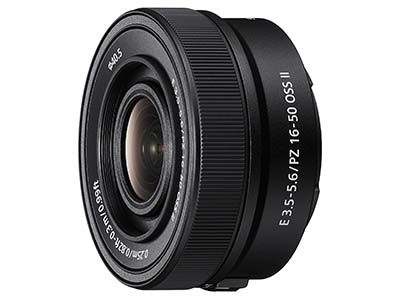
Sony 16-50mm f/3.5-5.6 OSS II
Specs
- Focal length: 16–50 mm (equivalent to 24–75 mm in full-frame format)
- Angle of view: 83°–32° (on APS-C)
- Aperture: f/3.5–5.6 (maximum) to f/22–36 (minimum, depending on focal length)
- Minimum focus distance: 25 cm
- Maximum magnification: 0.215x
- Weight and dimensions: 107 g, 64.7 x 29.9 mm (retracted)
- Compatibility: Sony E (APS-C)
Related:
- Accessories for Sony a6600
- Accessories for Sony a6700
- The Sony 6000 series: comparison of all cameras
- As an Amazon Associate, this website earn from qualifying purchases.