


The Micro Four Thirds (M43) system offers a solid and versatile ecosystem for macro photography, with options suited to both amateur and professional needs. Thanks to its compact design and the wide range of native lenses, it’s possible to assemble a complete, lightweight, and highly functional macro setup.
One of the main advantages of the M43 format is its 2x crop factor, which allows for higher levels of apparent magnification without the need for long or heavy optics. This makes it an excellent option for capturing small subjects or those that are difficult to approach, such as insects or botanical details.
The system also benefits from a more generous depth of field compared to larger sensors, making it easier to keep more areas in focus without stopping down the aperture too much. This, in turn, helps maintain safe shutter speeds and moderate ISO sensitivities. Additionally, many M43 cameras feature in-body image stabilization (IBIS), which is a great help when shooting handheld.
The M43 catalog includes everything from 1:1 magnification macro lenses to more specialized options with higher magnification capabilities. Brands like Olympus (OM System), Panasonic, and Laowa offer alternatives with autofocus, weather sealing, or features tailored for scientific and creative photography. This diversity makes the M43 system a flexible and accessible platform for exploring macro photography.
Shortlist: Which M43 Macro Lens Should You Choose Based on Your Profile?
Traveling photographers and enthusiasts who value portability: The Zuiko 30mm f/3.5 and Panasonic Lumix 30mm f/2.8 are compact and lightweight, perfect to always have in your backpack. The Zuiko offers slightly more than 1:1 magnification, while the Panasonic adds optical stabilization, which helps in handheld shots. Note: Both have short focal lengths, which can make lighting tricky and may disturb small subjects like insects.
Advanced enthusiasts seeking optical quality at a reasonable price: The Zuiko 60mm f/2.8 and Panasonic Leica 45mm f/2.8 offer greater working distance and good sharpness, with wide apertures for better low-light performance. The Leica adds stabilization and a very solid build. Note: The minimum focusing distance isn’t as short as some more specialized lenses, and the weight is slightly higher.
Professionals and users who need maximum detail: The M.Zuiko Digital ED 90mm f/3.5 offers 2:1 magnification with autofocus, built-in stabilization, and professional sealing. Its focal length allows comfortable distance from sensitive subjects like insects. The Laowa 50mm f/2.8 2x is a more compact and affordable alternative, with manual focus and no stabilization. It delivers good sharpness and versatility but requires more user control. Ideal for those prioritizing maximum magnification at a modest price without sacrificing portability. Note: The 90mm is heavier and more expensive; the Laowa is manual-focus only and does not support focus bracketing or stacking.
Budget-conscious users or those for whom macro is not the main focus: Lenses like the 7artisans 60mm f/2.8 II, Meike 60mm f/2.8, and ultra macro options from Laowa such as the 15mm f/4 Wide Angle Macro and 25mm f/2.8 2.5–5x Ultra Macro are interesting choices offering good results. Note: Some sacrifice optical quality or ergonomics, and focus is typically manual.
Users looking for creative effects: Laowa’s more original designs, such as the 15mm f/4 Wide Angle and 25mm f/2.8 2.5–5x, are aimed at users looking for highly specific effects, like exaggerated perspectives or extreme magnification for scientific or creative work. Note: They require a high level of experience, specialized lighting, and lack autofocus and stabilization.
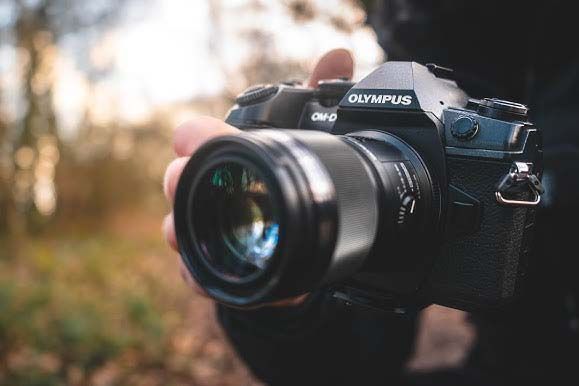
▌Our pick: The Zuiko 60mm is without a doubt one of the best lenses for Micro Four Thirds photographers, and until the recent release of the Zuiko 90mm f/3.5, it was the top choice in the macro category. With a maximum reproduction ratio of 1:1, outstanding sharpness, a reasonable working distance, and excellent handling, there’s little left to be improved. Although it’s relatively expensive (around €500), it offers excellent value for money.
Olympus and OM System: Macro with Tradition and PRO Technology
The original macro lens lineup from Olympus (now OM System) stands out for its balance between optical performance and compact size. The Zuiko 30mm f/3.5 is a lightweight, ultra-compact lens ideal for those who want to explore macro photography without sacrificing mobility. While its focal length is short, its maximum magnification of 1.25:1 is especially useful for capturing textures and tiny details. However, that short focal length also means a very close working distance, which can make lighting tricky and may scare away live subjects. Its angle of view and small size also make it well-suited for street, travel, or portrait photography.
The Zuiko 60mm f/2.8 is a classic among macro lenses for MFT, and a favorite for many photographers, as it’s arguably the most well-rounded macro lens in the system: versatile, extremely sharp from f/2.8, fast and silent internal focusing, and a longer working distance that makes lighting easier and avoids disturbing insects or flowers. Its slim, lightweight design makes it ideal for field work, and its price-to-performance ratio remains among the best. Beyond macro, its 120mm equivalent focal length also makes it a great option for portraits, offering good subject separation and pleasing background blur, as well as being useful for landscapes or tighter social shots.
For those who need more, the M. Zuiko Digital ED 90mm f/3.5 represents the pinnacle of Olympus/OM System’s macro offering. This lens not only reaches 2:1 magnification—doubling life-size—but also features advanced in-lens stabilization, a critical asset in macro photography where even small vibrations can ruin a shot. Its longer focal length is also great for outdoor portraits with pronounced bokeh, and for nature photography where keeping a respectful distance from the subject is essential without losing detail. Its build quality and optical performance make it a professional-grade option that justifies its weight and size.

Zuiko 30mm F3.5
Specs
- Focal length: 30mm (equivalent to 60mm full-frame)
- Angle of view: 40°
- Aperture: f/3.5 to f/22
- Minimum focusing distance: 9.5 cm
- Maximum magnification: 1.25:1
- Weight and dimensions: 128 g, 57 x 60 mm
- Compatibility: Micro Four Thirds
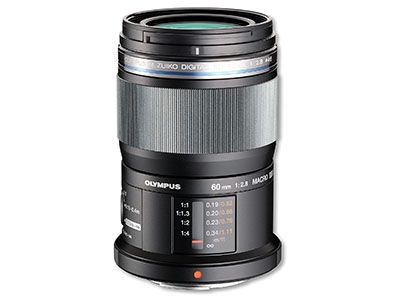
Zuiko 60mm F2.8
Specs
- Focal length: 60mm (equivalent to 120mm full-frame)
- Angle of view: 20°
- Aperture: f/2.8 to f/22
- Minimum focusing distance: 8 cm
- Maximum magnification: 1:1
- Weight and dimensions: 185 g, 81 x 56 mm
- Compatibility: Micro Four Thirds

M. Zuiko Digital ED 90mm F3.5 Macro IS PRO
Specs
- Focal length: 90mm (equivalent to 180mm full-frame)
- Angle of view: 14°
- Aperture: f/3.5 to f/22
- Minimum focusing distance: 22 cm
- Maximum magnification: 2:1
- Weight and dimensions: 435 g, 136 x 69.8 mm
- Compatibility: Micro Four Thirds
Panasonic Lumix: Leica quality and optical stabilization
Panasonic, the other key partner in the M43 system, offers lenses with optics designed in collaboration with Leica, renowned for their sharpness, contrast, and build quality. The Panasonic Leica DG Macro-Elmarit 45mm f/2.8 stands out for its excellent sharpness and micro-contrast from wide open, as well as including optical image stabilization (OIS), especially useful on cameras without in-body stabilization (IBIS). Its minimum focusing distance of 15 cm, combined with a compact and robust design, makes it a very balanced choice for product photography, still nature, or portraits with fine details.
On the other hand, the Lumix G Macro 30mm f/2.8 is a more affordable and lightweight alternative, also equipped with optical stabilization. Despite its shorter working distance, it offers good sharpness and great handling, suitable for those starting out in macro photography or looking for a versatile lens that allows real close-ups without sacrificing comfortable, portable general use.
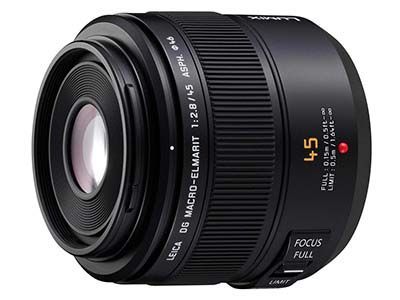
Panasonic Leica DG Macro-Elmarit 45mm f/2.8 ASPH OIS
Specs
- Focal length: 45 mm (equiv. to 90 mm full frame)
- Angle of view: Approx. 27°
- Aperture: f/2.8 to f/22
- Minimum focusing distance: 15 cm
- Maximum magnification: 1:1
- Stabilization: Yes (OIS)
- Weight and dimensions: 225 g, 63 x 63 mm
- Compatibility: Micro 4/3
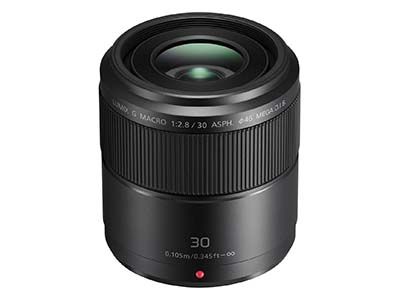
Panasonic Lumix G Macro 30mm f/2.8 ASPH Mega OIS
Specs
- Focal length: 30 mm (equiv. to 60 mm full frame)
- Angle of view: Approx. 40°
- Aperture: f/2.8 to f/22
- Minimum focusing distance: 10.5 cm
- Maximum magnification: 1:1
- Stabilization: Yes (Mega OIS)
- Weight and dimensions: 180 g, 58.8 x 63.5 mm
- Compatibility: Micro 4/3
Third-party lenses: options for every taste and budget
Laowa
Independent manufacturers have enriched the Micro Four Thirds system with offerings that, while mostly manual, stand out for their variety and specialization.
Laowa has built a strong reputation around extreme macro lenses. The 50mm f/2.8 2x delivers a true 2:1 magnification ratio without the need for accessories, and its optics are impressively well-corrected for the price. That said, focusing is fully manual and the working distance can be tight at maximum magnification. Ideal for those wanting to go beyond traditional macro without breaking the bank.
The Laowa 15mm f/4 Wide is a unique lens that allows for up to 1:1 magnification with an ultra-wide angle of view. It’s a highly specialized tool, perfect for showcasing the subject within its immediate environment. The Laowa 25mm f/2.8 2.5-5x goes even further: a lens designed purely for lab or technical use, offering magnifications that require careful lighting, a tripod, and experience (Note: the Laowa 25mm f/2.8 2.5-5x is not directly available in Micro Four Thirds mount, but can be used on this system with a dedicated Nikon F to M43 adapter without loss of functionality).
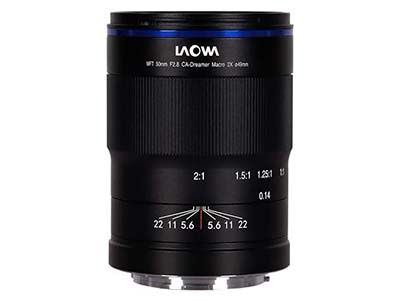
Laowa 50mm f/2.8 2x Ultra Macro
Specs
- Focal length: 50 mm (equivalent to 100 mm full frame)
- Angle of view: ~24° (estimated)
- Aperture: f/2.8 to f/22
- Minimum focusing distance: 15 cm
- Maximum magnification: 2:1
- Weight and dimensions: approx. 350 g, 70 x 80 mm
- Compatibility: Micro Four Thirds
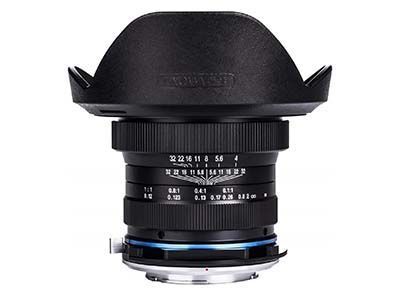
Laowa 15mm f/4 Wide Angle Macro
Specs
- Focal length: 15 mm (equivalent to 30 mm full frame)
- Angle of view: 110° (very wide)
- Aperture: f/4 to f/22
- Minimum focusing distance: 1 cm (for 1:1 magnification)
- Maximum magnification: 1:1
- Weight and dimensions: approx. 200 g, 65 x 70 mm
- Compatibility: not directly available in Micro Four Thirds mount, usable via Nikon F to M43 adapter (you can find models on Amazon here)
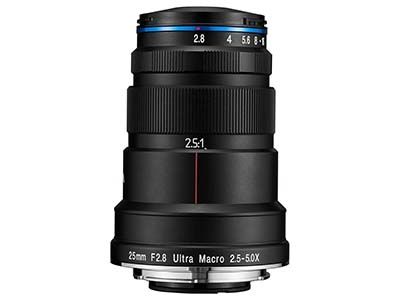
Laowa 25mm f/2.8 2.5-5x Ultra Macro
Specs
- Focal length: 25 mm (equivalent to 50 mm full frame)
- Angle of view: ~50° (estimated)
- Aperture: f/2.8 to f/22
- Minimum focusing distance: approx. 17 cm
- Maximum magnification: 2.5x to 5x
- Weight and dimensions: approx. 400 g, 75 x 90 mm
- Compatibility: not directly available in Micro Four Thirds mount, usable via Nikon F to M43 adapter (you can find models on Amazon here)
7artisans y Meike
Both the 7artisans 60mm f/2.8 II and the Meike 60mm f/2.8 sit in the most affordable segment of the macro market for Micro Four Thirds. They share manual focus, metal construction, and a classic focal length for this type of photography, though with some subtle differences.
The 7artisans model delivers solid center sharpness and a compact design, but suffers some edge softness and lacks advanced coatings, which can lead to flare in challenging lighting. The Meike offers similar optical performance, with slightly more neutral color rendering and a bulkier design.
Neither is intended for intensive professional use, but both are perfectly suitable for enthusiasts looking to explore macro photography without a large investment, or as a secondary lens for situations where autofocus precision is not a priority. Like the Zuiko 60mm, they are also usable for portrait, landscape, or tight-framed social photography.
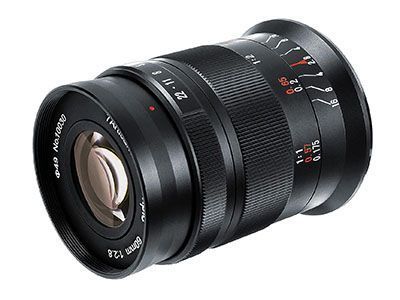
7artisans 60mm F2.8 II
Specs
- Focal length: 60 mm (equivalent to 120 mm full frame)
- Angle of view: 20°
- Aperture: f/2.8 to f/22
- Minimum focusing distance: 26 cm
- Maximum magnification: 1:1
- Weight: 339 g
- Filter size: 39 mm
- Compatibility: Micro Four Thirds
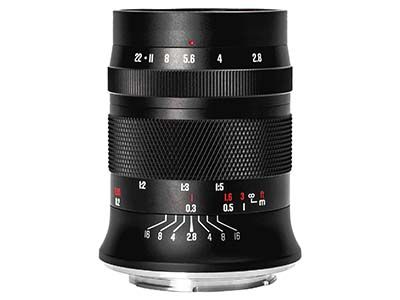
Meike 60mm f/2.8 Macro
Specs
- Focal length: 60 mm (equivalent to 120 mm full frame)
- Angle of view: ~20° (approximate)
- Aperture: f/2.8 to f/22
- Minimum focusing distance: 19 cm
- Maximum magnification: 1:1
- Weight and dimensions: approx. 300 g, 70 x 80 mm
- Compatibility: Micro Four Thirds
- As an Amazon Associate, this website earn from qualifying purchases.