


The a6000 series cameras are Sony’s best-selling models. With the launch of the Sony a6700 in 2023, the brand now offers seven APS-C mirrorless cameras on the market. Why are all the models still being sold? Which one should you choose? Which is best for what, and why?
The Sony a6000 APS-C Series
The Sony a6000 camera family — which includes the a6100, a6300, a6400, a6500, and a6600 — shares a 24-megapixel APS-C sensor and a very similar body design. Each new model has introduced incremental improvements, though not always in the same direction. For example, the most recent Sony a6700 features a 26 MP sensor and other technical upgrades, but it still belongs to this same lineup.
Sony follows a consistent marketing strategy: it releases frequent updates but continues selling older models at lower prices. This allows users to choose based on budget and specific needs. The a6000, although the oldest (released in 2014), remains a very capable and affordable option for beginners. The a6400, meanwhile — neither the newest nor the most advanced — stands out for its excellent balance of price and performance, making it a strong choice for content creators and vloggers.
- Learn more: The best cameras for vlogging and YouTube
One of the keys to this series’ success is the continuity in design: external changes between generations are minimal, aside from slight increases in thickness or battery size. In evolutionary terms, the a6100, a6400, and a6600 can be seen as direct successors to the a6000, a6300, and a6500, respectively, while the a6700 represents the latest iteration of this family.
Next, we’ll take a look at each of these models to see how they perform in both photography and video. But before diving in, here’s a quick guide to help you choose the ideal Sony a6000 camera based on your needs:
- Best price/performance balance → a6400
- Best for beginners → a6000 or a6100
- Best for video → a6700 or a6600
- Best for action/sports photography → a6500 or a6700
Camera Comparison Table
Scroll the table to the left
| a6000 | a6300 | a6500 | a6400 | a6100 | a6600 | a6700 | |
|---|---|---|---|---|---|---|---|
| Sensor | 24 MP | 24 MP | 24 MP | 24 MP | 24 MP | 24 MP | 26 MP |
| Stabilization | No | No | Yes | No | No | Yes | Yes |
| Buffer1 | 47/22 | 44/21 | 233/107 | 99/46 | 77/33 | 115/49 | 1,000/59 |
| Screen | Tilt | Tilt | Tilt | Flip | Flip | Flip | Flip |
| Touchscreen | No | No | Yes | Yes | Yes | Yes | Yes |
| Viewfinder2 | 1.44 | 2.36 | 2.36 | 2.36 | 1.44 | 2.36 | 2.36 |
| Burst rate | 11 fps | 11 fps | 11 fps | 11 fps | 11 fps | 11 fps | 11 fps |
| Video | Full HD | 4K | 4K | 4K | 4K | 4K | 4K |
| RT Tracking3 | No | No | No | Yes | Yes | Yes | Yes |
| Log profile | No | Yes | Yes | Yes | No | Yes | Yes |
| Mic input | No | Yes | Yes | Yes | Yes | Yes | Yes |
| Headphone out | No | Yes | Yes | No | No | Yes | Yes |
1. JPEG/RAW
2. Million dots
3. Real-time tracking autofocus
Sony a6000

Specs
- Release date: February 2014
- Sensor: 24.3MP
- Stabilizer: No
- Buffer capacity: 47 JPEG or 22 RAW
- Screen: 3 inches, tiltable screen, 921,000 dots
- Electronic viewfinder: 1.44 million dots
- Burst rate: 11 fps
- Maximum video resolution: Full HD
Recommended for: Beginners, casual enthusiasts, general photography.
Why: It is the most affordable in the series, easy to use, with good image quality and fast focusing.
Comparable models:
Canon EOS R50
✅ 4K video without crop
✅ 180º tiltable touchscreen
❌ No electronic viewfinder
❌ Lower battery life
Sony ZV-E10
✅ 4K video, flip-out screen
✅ Built-in directional microphone
❌ No viewfinder
❌ Less ergonomic for photography
Fujifilm X-T200
✅ Fully articulating touchscreen
✅ Better LCD screen (2.76M dots vs 0.92M on the a6000)
❌ Lower burst performance (8 fps vs 11 fps)
❌ No hot shoe for external flash
The a6000 has the same 24-megapixel resolution as the later models, and its appearance is essentially the same. The viewfinder resolution is lower, and it only records video in 1080p, not 4K, but for photographers, that won’t be an issue. The autofocus system is the most basic by Sony’s standards, but it still holds up well compared to the systems from competing brands.
It’s true that the later cameras have better processors and perform better at high ISOs, while the a6500 is far superior when it comes to burst shooting. Also, if you want in-body image stabilization, you’ll need the a6500 or a6600. But if you can live without all that, and are just looking for a good photography camera, this one will perform as well as the others—and for less money.
- Related: Accessories for Sony a6000
Sony a6300
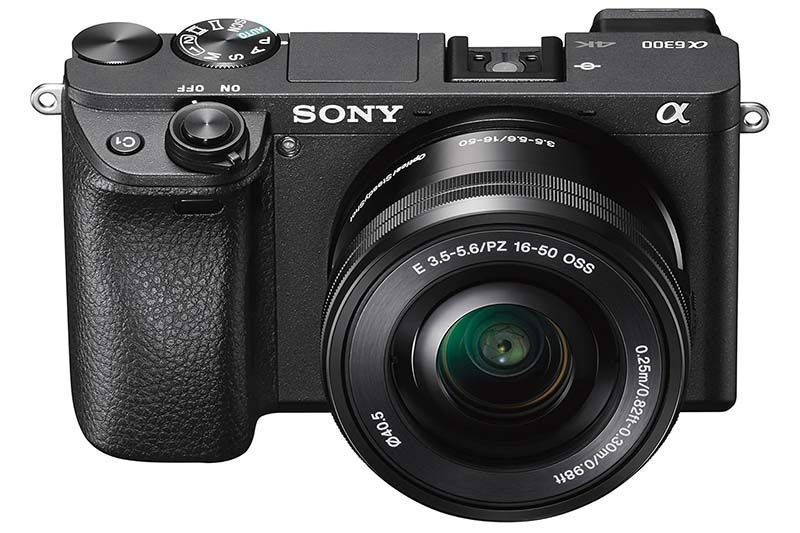
Specs
- Release date: February 2016
- Sensor: 24.2MP
- Stabilizer: No
- Buffer capacity: 44 JPEG or 21 RAW
- Screen: 3 inches, tiltable screen, 921,000 dots
- Electronic viewfinder: 2.36 million dots
- Burst rate: 11 fps
- Video: 4K UHD, S-Log2 and S-Log3
Recommended for: Basic 4K video and fast photography for intermediate users who prioritize video but don’t need IBIS.
Why: Introduces advanced autofocus and 4K video with log profiles but lacks stabilization. A good option if you find it at a good price, though the a6500 outperforms it in almost every way.
Comparable models:
Panasonic G85 (G80)
✅ In-body stabilization (IBIS)
✅ Good OLED viewfinder (2.36M dots)
❌ Micro 4/3 sensor (lower ISO performance)
❌ Lower autofocus (49 points)
Canon EOS M6 Mark II
✅ 32.5 MP sensor (vs 24 MP)
✅ 14 fps burst rate (vs 11 fps)
❌ No built-in viewfinder
❌ No log profiles in video
The Sony a6300 was a major step forward at the time, offering 4K video with Sony’s S-Log2 picture profile. It also introduced a significantly more advanced autofocus system, with 425 phase-detection points and a higher-resolution electronic viewfinder. However, it still lacked image stabilization, and its buffer capacity was barely comparable to the a6000. Just a few months later, Sony released the a6500, which far surpassed it in specifications. Although it is no longer manufactured and is increasingly hard to find new, the a6300 is still available from some dealers.
- Related: Accessories for Sony a6300
Sony a6500

Specs
- Release date: October 2016
- Sensor: 24.2MP
- Stabilizer: Yes, 5-axis
- Buffer capacity: 233 JPEG or 107 RAW
- Screen: 3 inches, tiltable screen, 921,000 dots
- Electronic viewfinder: 2.36 million dots
- Burst rate: 11 fps
- Video: 4K UHD, S-Log2 and S-Log3
Recommended for: Action photography and hybrid use for advanced amateurs or sports photographers on a budget.
Why: First model with in-body stabilization (IBIS) and a large buffer for bursts. Despite its age, it excels at fast photography and demanding situations.
Comparable models:
Fujifilm X-T3
✅ X-Trans 26 MP sensor
✅ 20 fps with electronic shutter burst
❌ No in-body stabilization
❌ No fully articulating screen
Panasonic G9
✅ Advanced IBIS, up to 6.5 stops
✅ Burst: 20 fps with electronic shutter
❌ Micro 4/3 sensor
❌ Heavier (658g vs 453g)
Canon EOS R7
✅ Burst: 15 fps mechanical, 30 fps electronic
✅ 7-stop IBIS
✅ 32.5 MP sensor
❌ More expensive than the a6500 secondhand
The Sony a6500 is a really powerful camera. It arrived just eight months after the a6300, improving on it in several key areas. It retains the same autofocus system (425 phase-detection points and 169 contrast-detection points), as well as the 2.36-million-dot electronic viewfinder and 4K video capabilities with the S-Log2 profile. However, it was the first in the series to include in-body image stabilization (IBIS) and a significantly larger buffer capacity: up to 233 JPEGs or 107 RAW files, making it an excellent choice for action photography. If you’re looking for an all-around camera for high-performance photo and video burst shooting, the a6500 is still a great pick. However, it has been discontinued and can be hard to find new, often with prices still high on the used market.
- Related: Accessories for Sony a6500
Sony a6400

Specs
- Release date: January 2019
- Sensor: 24.2MP
- Stabilizer: No
- Buffer capacity: 99 JPEG or 46 RAW
- Screen: 3 inches, 180º flip screen, 921,000 dots
- Electronic viewfinder: 2.36 million dots
- Burst: 11fps
- Video: 4K UHD, S-Log2, S-Log3, and HLG modes
Recommended for: Vlogging, balanced video and photography for intermediate users or content creators.
Why: Its flip screen, real-time tracking autofocus, and unlimited 4K recording make it suitable for creators seeking a good balance between features and price.
Comparable models:
Fujifilm X-S10
✅ In-body stabilization (IBIS)
✅ Articulated screen + 4K 30p
❌ Larger and heavier (465g vs 403g)
❌ Lower burst rate: 8 fps mechanical vs 11 fps
Canon EOS R10
✅ 15 fps mechanical / 23 fps electronic
✅ 4K 60p without crop
❌ No IBIS
❌ Shorter battery life
Panasonic G100 II
✅ Lightweight, aimed at vlogging
✅ Good microphone quality
❌ Micro 4/3 sensor (lower ISO performance)
❌ Less reliable AF in video
The a6400 can be seen as a successor to the a6300, mainly because it occupies a middle ground in the range of “new” cameras, just as the a6300 holds a middle position in the range of “older” cameras. The a6400 is specifically designed for content creators, with a 180-degree flip screen for taking selfies or, more importantly, recording yourself. It also features Sony’s next-generation autofocus system, with a 0.2-second acquisition speed, 425 phase-detection focus points, 425 contrast-detection points, and Real-time Eye AF.
Regarding autofocus, the biggest change in this model is the “Real-time Tracking,” an autofocus system trained to recognize and track people and pets. It is present in the a6100, a6400, a6600, and a6700 models. The system is truly impressive: point the camera at your subject, half-press the shutter, and it will follow them without losing focus.
Video is captured in 4K and includes Sony’s S-Log2 and S-Log3 modes as well as the new HLG (Hybrid Log Gamma) option. The a6400 isn’t especially cheap, but it’s a great vlogging camera and more affordable than the a6500 and a6600.
- Related: Accessories for Sony a6400
Sony a6100
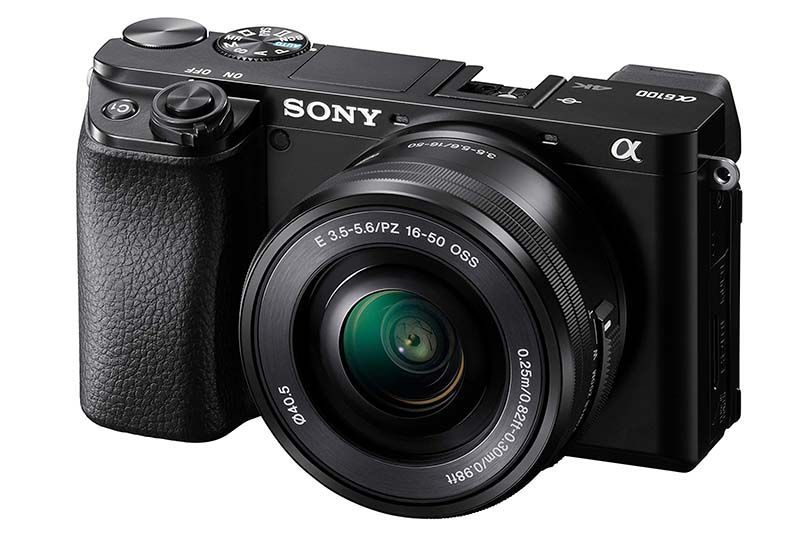
Specs
- Release date: August 2019
- Sensor: 24.2MP
- Stabilizer: No
- Buffer capacity: 77 JPEG or 33 RAW
- Screen: 3 inches, 180º flip screen, 921,000 dots
- Electronic viewfinder: 1.44 million dots
- Burst: 11fps
- Video: 4K UHD, no log modes
Recommended for: Everyday photography and occasional video for beginners who value more up-to-date features.
Why: Improved autofocus system, better JPEG quality, and adds a flip screen and 4K video. Suitable for those who want to start with a modern camera without spending too much.
Comparable models:
Canon EOS R50
✅ Very fast AF with eye detection
✅ 4K video without crop, 10-bit via HDMI
❌ No headphone input
❌ No log profiles
Nikon Z30
✅ Good 4K video quality
✅ Flip screen
❌ No viewfinder
❌ No stabilization (like the a6100)
Sony ZV-E10
✅ Better video orientation (audio, screen)
❌ No viewfinder or built-in flash
The Sony a6100 can be seen as the successor to the veteran a6000. It is the most basic model in the current lineup: its construction is mostly plastic and it features an electronic viewfinder with lower resolution than its bigger siblings. Key improvements include the 180-degree touchscreen flip screen, the ability to record 4K video (although without log profiles and with a quite noticeable rolling shutter), and an updated autofocus system with “Real-time Tracking” (also present in the a6400 and above). Additionally, it has a revamped JPEG engine that produces more appealing colors than the a6000, and a more modern BIONZ X processor that improves performance at high ISO.
Otherwise, the a6000 and a6100 are surprisingly similar in basic photographic use. If your main interest is photography, the a6100 doesn’t bring substantial improvements over the a6000, except in continuous focus or with moving subjects. And if video is the focus, while the a6100 is a step up from the a6000, the a6400 remains clearly the better choice. For all these reasons, the Sony a6100 seems to fall into no man’s land: it’s neither cheap enough nor advanced enough to be a true first choice.
- Related: Accessories for Sony a6100
Sony a6600

Specs
- Release date: August 2019
- Sensor: 24.2MP
- Stabilizer: Yes
- Buffer capacity: 115 JPEG or 49 RAW
- Screen: 3 inches, 180º flip screen, 921,000 dots
- Electronic viewfinder: 2.36 million dots
- Burst: 11fps
- Video: 4K UHD, S-Log2, S-Log3, and HLG modes
Recommended for: Professional video and versatile photography for advanced users or videographers who prioritize battery life and audio.
Why: It has IBIS, long-lasting battery, headphone input, and log profiles. Designed for uninterrupted recording with professional monitoring options.
Comparable models:
Fujifilm X-S20
✅ IBIS
✅ Internal 10-bit 4:2:2 recording
✅ Burst: 20 fps electronic
❌ More expensive, shorter battery life
Canon EOS R7
✅ Better for action photography (better buffer and burst)
✅ IBIS and advanced AF
❌ Larger and heavier
❌ Higher price
Panasonic GH5 II
✅ Internal 10-bit 4:2:2
✅ Excellent stabilization
❌ Micro 4/3 sensor
❌ Worse performance at high ISO
The Sony a6600 replaced the a6500 but took a somewhat different direction. Like the a6500, it features in-body image stabilization. Its size is slightly larger, partly due to the inclusion of the FZ100 battery, which doubles the battery life compared to previous models. The a6600 particularly stands out in video: it retains 4K recording modes and log profiles (S-Log2, S-Log3, and HLG), and adds a headphone jack for audio monitoring, as well as continuous eye autofocus—including animal eyes—during recording, something previous models do not offer.
However—attention photographers!—the a6600 does not inherit the outstanding buffer capacity of the a6500. If you are looking for a camera for action photography with long continuous bursts, the a6500 remains the best choice in the series. With the a6600, Sony seems to have clearly prioritized video use.
- Related: Accessories for Sony a6600
Sony a6700

Specs
- Release date: July 2023
- Sensor: 26 MP
- Stabilizer: Yes, 5-axis
- Buffer capacity: 1,000 JPEG or 59 RAW
- Screen: 3 inches, flip screen, 921,000 dots
- Electronic viewfinder: 2.36 million dots
- Burst: 11fps
- Video: 4K UHD, S-Log2, S-Log3, and HLG modes
Recommended for: High-quality video production and sports photography for demanding users or advanced creators.
Why: New 26 MP sensor, 4K video at 120 fps, large buffer, and superior autofocus. A very complete camera for both professional video and action photography.
Comparable models:
Canon EOS R7
✅ 32.5 MP sensor
✅ 30 fps electronic burst
✅ Highly advanced AF, also for wildlife
❌ Larger and heavier
❌ No 4K 120p recording
Fujifilm X-S20
✅ IBIS, 4K 60p, reliable AF
✅ Flip screen, 10-bit
❌ No 4K 120p
❌ Slightly limited burst (20 fps)
Panasonic GH6
✅ 5.7K video, 4K 120p
✅ Very powerful IBIS
❌ Micro 4/3 sensor
❌ Very large and heavy for a compact system
Four years after the a6600, the new flagship a6700 has made some specification improvements, but perhaps not as many as one might expect after such a long wait. A key difference is the addition of a new 26 MP sensor with higher resolution. In the video department, the leap is significant: it now allows 4K recording at up to 120 fps, ideal for high-quality slow motion.
The a6700 also notably improves in action photography, thanks to a much larger buffer capacity: up to 1,000 JPEGs or 59 RAW images in burst mode. Additionally, the autofocus system has been expanded to 759 phase-detection points, compared to the a6600’s 425. And despite its internal improvements, the a6700 body is 100 g lighter than its predecessor. Check out our Sony a6600 vs a6700 comparison for a full overview.
- Related: Accessories for Sony a6700
Conclusion and practical recommendations
If you’re just starting out in photography or looking for a simple and affordable camera, the Sony a6000 or a6100 could be your choice, offering a good balance between features and ease of use.
For those mainly focused on video, the a6700 and a6600 stand out for their advanced 4K recording capabilities, log profiles, and professional options like microphone input and headphone output.
If your priority is action or sports photography, the a6500 and a6700 are the recommended cameras thanks to their high buffer capacity and fast autofocus systems.
Finally, for those seeking a solid balance between price and performance, the a6400 represents a very attractive option, combining advanced features with an affordable cost — ideal for intermediate users who want more without a big budget increase.
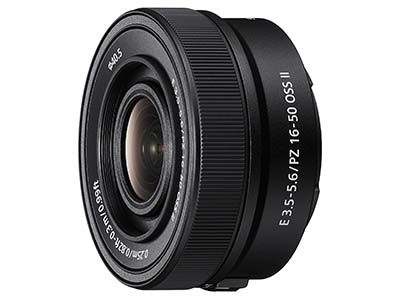
Sony 16-50mm f/3.5-5.6 OSS II
Specs
- Focal length: 16–50 mm (equivalent to 24–75 mm in full-frame format)
- Angle of view: 83°–32° (on APS-C)
- Aperture: f/3.5–5.6 (maximum) to f/22–36 (minimum, depending on focal length)
- Minimum focus distance: 25 cm
- Maximum magnification: 0.215x
- Weight and dimensions: 107 g, 64.7 x 29.9 mm (retracted)
- Compatibility: Sony E (APS-C)
- As an Amazon Associate, this website earn from qualifying purchases.