

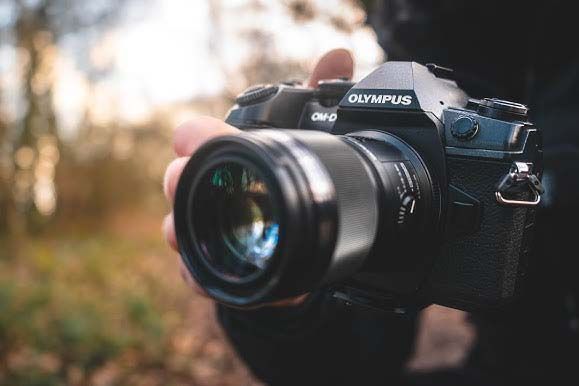
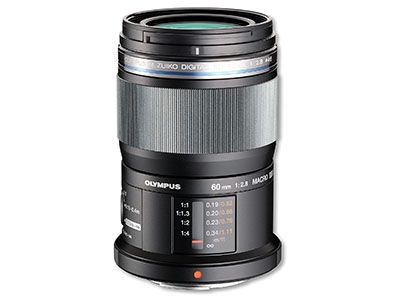
The Olympus M.Zuiko 60mm 2.8 macro lens is undoubtedly one of the best lenses for Micro Four Thirds system photographers and, until the arrival of the recent Zuiko 90mm 3.5, the best in the macro category. With a maximum reproduction ratio of 1:1, exceptional sharpness, a reasonable working distance, and excellent handling, there is little room for improvement. Although it is a relatively expensive lens (around €500), it offers excellent value for money.
Macro photography in Micro Four Thirds
When using a Micro Four Thirds system camera, the small sensor size can be a limitation in certain situations—but macro photography is not one of them. In fact, the 2x crop factor is extremely helpful here, as it allows us to stay farther away from our subject while still capturing a great amount of detail. With a 60mm lens, we can be as far from our subject as a full-frame photographer using a 120mm macro lens, with the added benefit of working with a lighter, more maneuverable setup and without sacrificing much image quality.
Build and Handling
The first thing you notice when holding this lens is how small and lightweight it is. Weighing just 185 grams and measuring 81.5 mm in length, it is extremely easy to use. The construction is solid and resistant to dust and splashes.
It features 13 elements arranged in 10 groups, including one extra-low dispersion element to reduce chromatic aberration and improve color accuracy, one extra-high refractive index element, and two high refractive index elements to correct distortion and enhance sharpness.
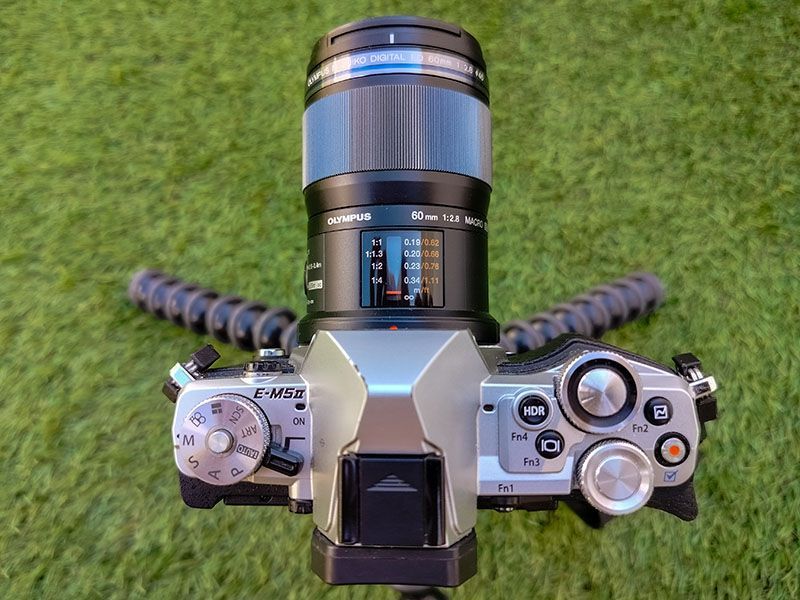
The focus ring moves very smoothly, and the lens does not extend while focusing—something uncommon in macro lenses. On the top, it features four different focus distance ranges that can be selected via a dial. These tell the camera at what working distance to search for focus when using autofocus.
Working Distance
At the maximum magnification of 1:1, the subject is approximately 8 cm from the front element of the lens. This may seem short, but it is actually quite suitable for extremely close-up shots. Keep in mind that on Micro Four Thirds cameras, a 1:1 magnification fills the frame with subjects as small as 1.7 cm in diameter. Therefore, in most cases, you’ll be able to maintain a greater working distance.
For larger subjects such as small animals (reptiles, amphibians, large insects), as well as plants, flowers, etc., there is enough room to work comfortably with a flash and diffuser. In this situation, the longer the lens’ focal length and the more compact its size, the better. The Zuiko 60mm f/2.8 performs well on both fronts.
Sharpness
There are no complaints when it comes to the sharpness of this lens. While the sharpest aperture is around f/4 to f/5.6, images remain very sharp from f/2.8 to f/11. Since achieving the greatest possible depth of field is essential in macro photography, having an almost flawless f/11 is a big plus.
Bokeh
The M.Zuiko 60mm macro features a 7-blade rounded aperture diaphragm that helps create a pleasant and smooth bokeh. When fully opened at f/2.8, it can almost turn the background into a uniform blur when the subject is very close.
The Micro Four Thirds system has an inherent disadvantage when it comes to bokeh due to the 2x crop factor, but the 60mm f/2.8 macro lens performs better in this area compared to other lenses. When focusing closely, you’ll have no trouble achieving smoothly blurred backgrounds. Occasionally, you may see the heptagonal shape of the aperture in out-of-focus highlights, but even that isn’t truly distracting.
Autofocus
Even in very low light conditions, the Zuiko 60mm f/2.8 focuses quickly. Like all lenses, it struggles a bit when light is scarce, but it still manages to focus in slightly darker conditions compared to other f/2.8 lenses.
This is likely thanks to the focus range dial mentioned earlier, which tells the autofocus system where to look for the subject—making the process faster and easier. The dial can be set from 0.19m to infinity (the full focusing range) for all-around use, or to 0.19–0.4m and 0.4m to infinity. Just remember to set the dial correctly—otherwise, the lens won’t find the subject and will keep hunting.

Drawbacks
There are very few weaknesses in this lens. The most notable is the lack of image stabilization, although this is relatively unimportant in macro photography when using a flash. Additionally, if you’re using an Olympus/OM System camera, it likely already has excellent in-body stabilization.
A common weakness of all macro lenses is that at maximum magnification, the effective aperture is reduced. At 1:1, the lens’s maximum aperture effectively becomes f/5.6, resulting in a darker image unless compensated for. This darkening effect starts to become noticeable around 1:4 magnification.
The lens does not include a lens hood, which must be purchased separately. Some photographers don’t use one, while others consider it essential for protecting the lens from stray light that can cause flare. The official lens hood costs around €50. Fortunately, there are much cheaper universal hoods that screw onto the lens.
Alternatives
While there are other macro lens options for Micro Four Thirds users, none of them seem like a better choice—unless price is the most important factor.
Olympus offers the affordable Zuiko 30mm f/3.5 (follow the link to read our comparison between the Zuiko 30mm and the Zuiko 60mm), and Panasonic has the Panasonic Leica Macro-Elmarit 45mm f/2.8, with maximum magnifications of 1.25:1 and 1:1, respectively. The biggest difference compared to the Zuiko 60mm is the shorter focal length, which forces you to get closer to your subjects. Another key difference is that neither lens is advertised as weather-sealed.
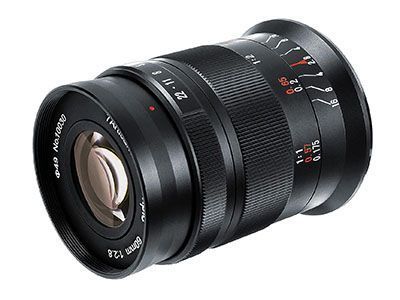
Laowa and Samyang also offer macro lenses for Micro Four Thirds. The Laowa 50mm f/2.8 2x Ultra Macro APO is an option for those seeking extreme magnification. The Samyang 100mm f/2.8 ED UMC for Micro Four Thirds offers a longer working distance than the Zuiko 60mm. However, both are manual focus lenses—an important drawback. On the more budget-friendly side, there’s the surprisingly decent 7Artisans 60mm F2.8 II, also manual. If you’re on a tight budget, check out our review.
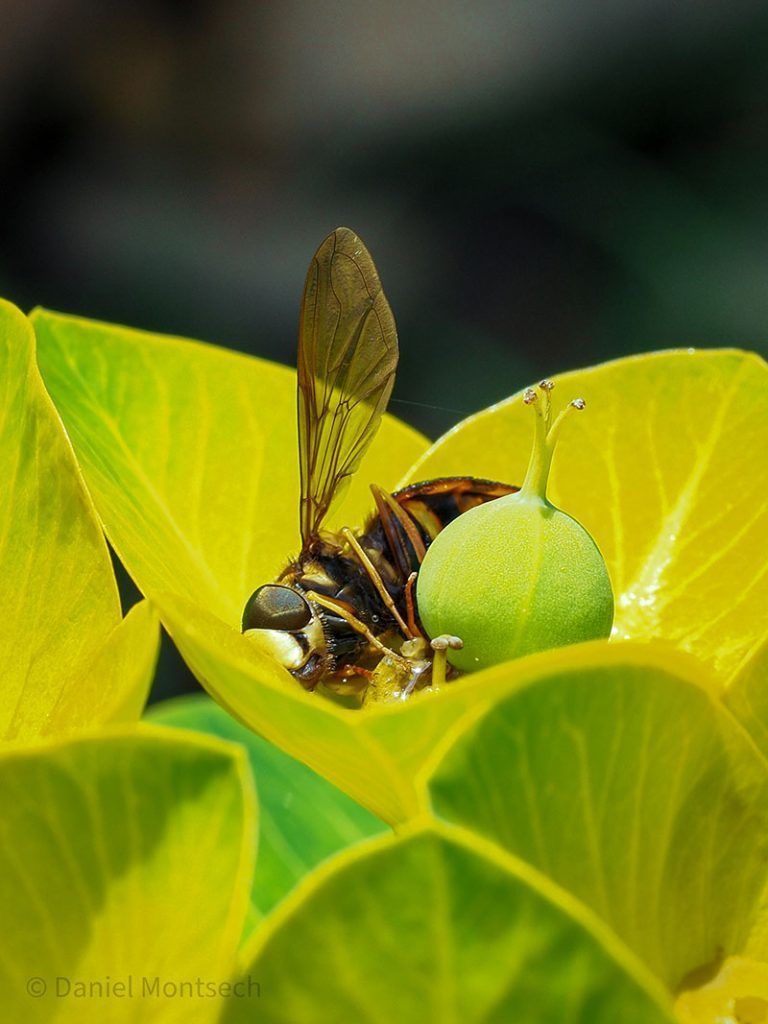
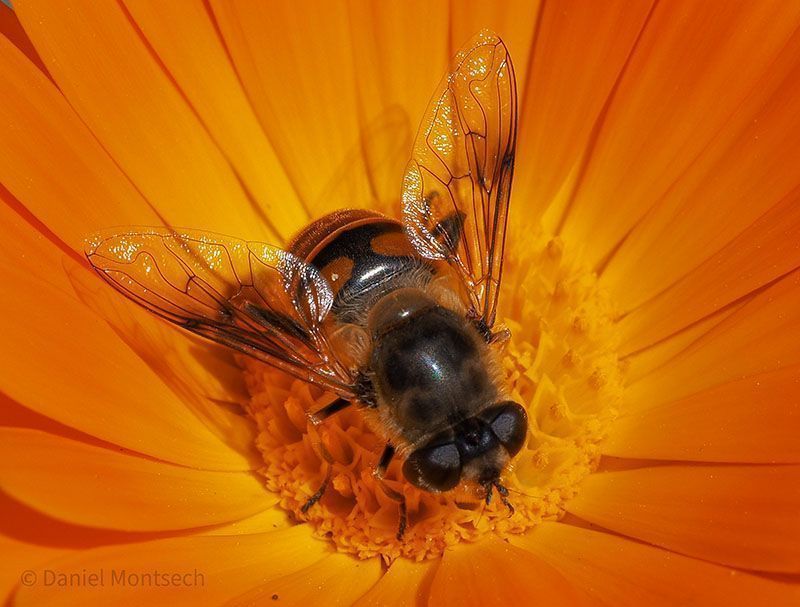
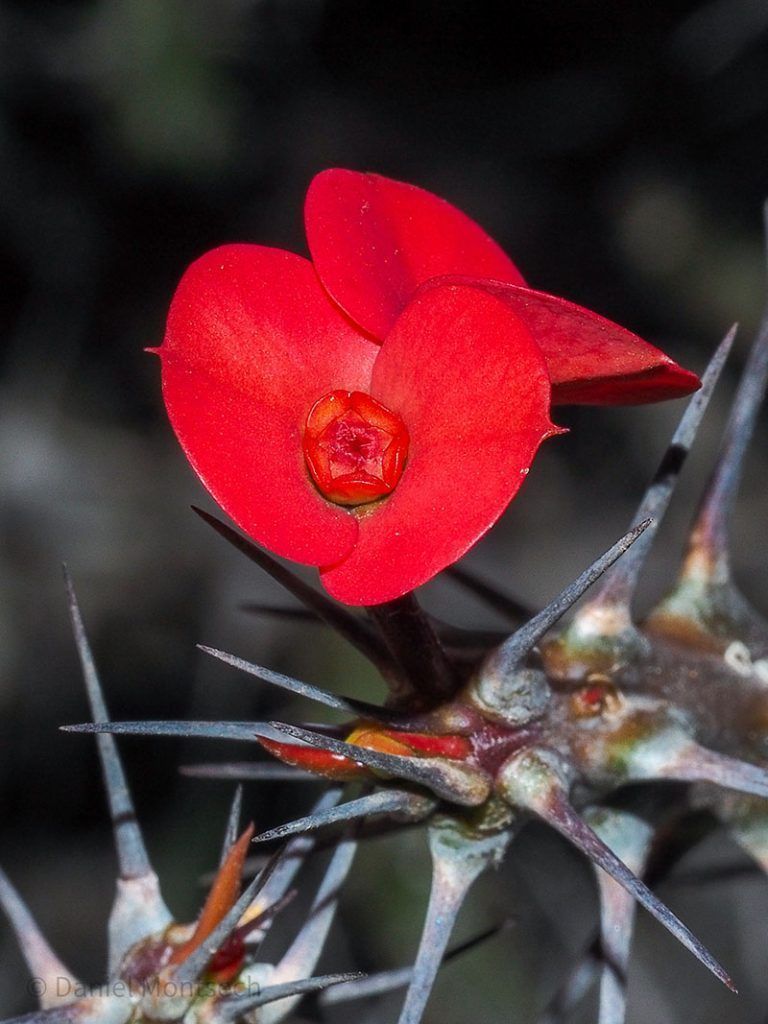
Photos taken with the Zuiko 60mm F2.8


Conclusion
The Zuiko 60mm f/2.8 macro meets all the requirements: it is extremely sharp, has a reasonable working distance, excellent autofocus, is very lightweight, and is dust and splash resistant.
The only reasons to look for an alternative are the price, which leads us to the Zuiko 30mm or the 7Artisans 60mm, or the need for a reproduction ratio higher than 1:1, in which case the Laowa 50mm f2.8 2X Ultra Macro is an option to consider. The Leica Macro-Elmarit 45mm f2.8 is a high-quality lens if you don’t mind the shorter working distance.
Zuiko 60mm F2.8
Other macro lenses for Olympus / OM System and Micro Four Thirds

Zuiko 30mm F3.5
7artisans 60mm F2.8
- As an Amazon Associate, this website earn from qualifying purchases.