


If you don’t feel like reading and just want to see the lenses, follow these links:
The Fujifilm ecosystem for macro photography revolves around two camera lines: the X system, with an APS-C sensor, and the G system for medium format. In both cases, macro lenses have been developed with a reproduction ratio close to or equal to 1:1, precise manual focus control, and, in some models, optical stabilization and weather sealing.
In addition to native lenses, the Fujifilm system — especially with the X mount — offers a wide range of third-party optics. Manufacturers like Laowa, Zeiss, 7Artisans, TTArtisan, and AstrHori provide alternatives ranging from versatile lenses to highly specialized setups for extreme macro. While most are manual focus, these lenses expand the system’s capabilities and make it adaptable to various creative or technical needs, for both amateur and professional use.
Fuji X (APS-C): native macro lenses
Preselection: which Fuji APS-C macro lens should you choose based on your profile?
For those starting out in macro photography and valuing versatility, a good option is the Fujinon XF 30mm f/2.8 R LM WR Macro, which offers 1:1 magnification in a compact and lightweight design. Its short focal length makes it easier to handle in tight spaces and also useful for everyday and portrait photography. It has a fast autofocus motor and a dust- and moisture-resistant build. Note: its short working distance may not be ideal for sensitive subjects or those that are hard to light.
For advanced photographers for whom macro is an important part of their work, the Fujinon XF 80mm f/2.8 R LM OIS WR Macro is the reference lens in the X system. It provides true 1:1 magnification, built-in optical stabilization, fast and quiet autofocus, and a generous working distance, ideal for nature or product photography. Its weather-sealed build ensures durability in outdoor conditions. Note: its size and weight make it less convenient for casual use.
For professionals seeking extreme macro or scientific photography, Fuji does not offer lenses beyond 1:1 in its official catalog. In such cases, one must turn to manual lenses like the Laowa 65mm f/2.8 2x Ultra Macro APO, which allows up to 2:1 magnification. However, it lacks both stabilization and autofocus, so using a tripod and carefully controlled lighting is essential. Note: steep learning curve and lower versatility for general photography.
For photographers on a tight budget, the Fujinon XF 60mm f/2.4 R Macro is an alternative that provides 0.5x magnification, enough for close-up shots and basic detail work. It’s lightweight and optically solid, though it lacks stabilization and weather sealing. Note: it’s the most affordable Fuji macro lens, but still not cheap, and since it doesn’t reach 1:1, it might be disappointing if used exclusively for macroquedarse corto y terminar resultando una mala compra si solo lo queremos para macro.

▌Our choice: The Fujinon XF 80mm f/2.8 R LM OIS WR Macro is the most complete and professional option for macro in the Fujifilm X system. It offers true 1:1 magnification, optical stabilization, and an ideal working distance for insects and delicate subjects. Its sharpness, robust build, and creamy bokeh make it the top choice to consider.
The Fujifilm X system, based on APS-C sensors, features a growing selection of macro lenses for enthusiasts and professionals, many of which include features like dust and moisture sealing, as well as optical stabilization in some models.
At the same time, there is a diverse range of compatible third-party lenses that expand options for macro photography. Brands like Laowa, Zeiss, 7Artisans, TTArtisan, and AstrHori offer lenses with various focal lengths and magnification ratios, from general close-ups to extreme macro, allowing adaptation to different styles and applications, from amateur use to technical or creative projects.
Regarding integrated technologies, although optical stabilization is not present in all native macro lenses, some have linear motors that enable fast and quiet focusing.
Comparative table of all macro lenses for APS-C
| Mount | Brand | Model | Macro | AF/Manual | Stabilization | Format |
|---|---|---|---|---|---|---|
| X | Fuji | 30mm f/2.8 | 1:1 | AF | No | APS-C |
| X | Fuji | 60 mm f/2.4 | 1:1 | AF | No | APS-C |
| X | Fuji | 80 mm f/2.8 Macro WR | 1:1 | AF | No | APS-C |
| X | Laowa | 65 mm f/2.8 Ultra Macro | 2:1 | Manual | No | APS-C |
| X | 7Artisans | 60 mm f/2.8 Macro | 1:1 | Manual | No | APS-C |
| X | Zeiss | Touit 50 mm f/2.8 Macro | 1:1 | AF | No | APS-C |
| X | TTArtisan | 40 mm f/2.8 Macro | 1:1 | Manual | No | APS-C |

Fujinon XF 30mm f/2.8 R LM WR Macro
Specs
- Focal length: 30 mm (equivalent to 45 mm full-frame)
- Aperture: f/2.8 to f/22
- Minimum focusing distance: 10 cm
- Maximum magnification: 1x (1:1)
- Weight and dimensions: 195 g, 60 x 70 mm
- Compatibility: Fujifilm X-mount (APS-C)
Analysis
The Fujinon XF 30mm f/2.8 R LM WR Macro is the most compact and affordable macro lens in the Fujifilm X system with 1:1 magnification capability. Its 45mm equivalent focal length makes it especially versatile, suitable for product photography, everyday objects, and spontaneous scenes, as well as general or street use, although somewhat short for subjects requiring distance, like insects.
With a minimum focus distance of only 10 cm, it allows extreme close-ups, though this also means the lens can be very close to the subject, making lighting difficult in some situations. In controlled or studio photography, this is not an issue.
Optically, the XF 30mm performs notably well: great sharpness from f/2.8, accurate color reproduction, and good aberration control. The linear focus motor is fast and quiet, useful for both macro, video, and general photography.
It lacks optical stabilization, so on Fujifilm bodies without IBIS, using a tripod is recommended to achieve maximum macro performance. Still, its lightweight, weather-sealed construction and compact size make it an excellent all-around lens to always carry with real macro capabilities.
Ideal use: Food, details, documents, textures, and small objects in controlled environments. Also works very well as a versatile prime for everyday use.
Limited use: Insects, wildlife, or moving subjects outdoors where the short working distance and lack of stabilization can hinder focusing and sharpness.

Fujinon XF 60mm f/2.4 R
Specs
- Focal length: 60 mm (equivalent to 90 mm full-frame)
- Aperture: f/2.4 to f/22
- Minimum focus distance: 26.7 cm
- Maximum magnification: 0.5x (1:2)
- Weight and dimensions: 215 g, 64.1 × 70.9 mm
- Compatibility: Fujifilm X mount (APS-C)
Analysis
The Fujinon XF 60mm f/2.4 R was one of the first lenses released for the Fujifilm X system. While it doesn’t reach a 1:1 magnification, it offers excellent optical quality and a focal length that’s useful for moderate macro and portrait photography. Its full-frame equivalent (90 mm) provides a comfortable working distance, suitable for delicate subjects like flowers or calm insects.
With a maximum magnification of 0.5x, it can’t capture the tiniest details as precisely as a true 1:1 macro, but its performance is more than sufficient for product photography, nature, and everyday details. Its minimum focusing distance, a bit long for a macro, also limits close-up capability.
Optically, it’s a very capable lens: excellent sharpness from mid-apertures, nice bokeh, and good color reproduction. Autofocus is somewhat slow due to the lack of a linear motor and image stabilization. Still, it performs well in portrait and general use.
The design is compact, lightweight, and solid, though not weather-sealed. Despite its age, it’s still an appealing option for those seeking a fast short telephoto with moderate macro capability and good optical performance.
Ideal use: flowers, detailed portraits, product shots, static nature, and close-up general photography.
Limited use: extreme macro, insects or small objects requiring high magnification.
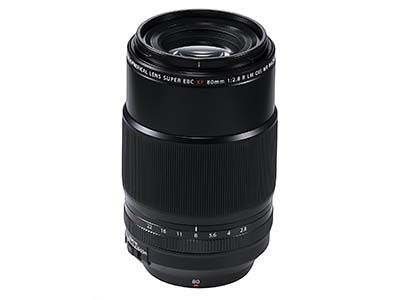
Fujinon XF 80mm f/2.8 R LM OIS WR
Specs
- Focal length: 80 mm (equivalent to 120 mm full-frame)
- Aperture: f/2.8 to f/22
- Minimum focusing distance: 25 cm
- Maximum magnification: 1x (1:1)
- Optical stabilization: Yes (OIS)
- Weight and dimensions: 750 g, 80 × 130 mm
- Compatibility: Fujifilm X mount (APS-C)
Analysis
The Fujinon XF 80mm f/2.8 R LM OIS WR Macro is the most advanced macro lens in the Fujifilm X system. Its 120mm full-frame equivalent focal length provides excellent working distance, ideal for insects, nature, and subjects that require space. It’s a professional-grade lens designed for true 1:1 macro with outstanding sharpness and focus control.
With a minimum focusing distance of 25 cm, the long focal length still allows you to work without disturbing the subject. The built-in Optical Image Stabilization (OIS) is especially helpful in the field, enabling handheld shooting even at high magnifications.
Optically, the lens delivers exceptional sharpness even wide open, with rich colors, low distortion, and creamy bokeh that isolates the subject beautifully. Autofocus is accurate and reasonably fast, though it can hesitate in low-contrast or very close-up situations. A focus limiter switch helps improve speed based on subject distance.
Its build is solid and professional—sealed against dust, moisture, and cold—but that comes with a noticeable size and weight, especially compared to other X-series lenses. Still, it’s the top choice for serious users who prioritize image quality.
Best for: Insects, flowers, textures, nature, product photography, and field macro work. Also useful for compressed portraits or outdoor use.
Less suited for: Users looking for a lightweight or compact lens for occasional macro.
Third-party lenses: APS-C
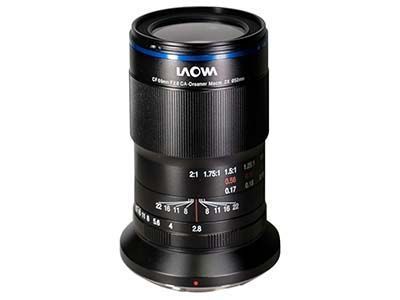
Laowa 65mm f/2.8 2x Ultra Macro APO
Specs
- Focal length: 65 mm (equivalent to 104 mm in APS-C format)
- Angle of view: 24.4°
- Aperture: f/2.8 to f/22
- Minimum focusing distance: 17 cm
- Maximum magnification: 2x (2:1)
- Weight and dimensions: 335 g, 57 x 100 mm
- Compatibility: Fuji X (APS-C only)
- Focus: Manual
- Stabilization: No
Analysis
This lens is a rare bird in the APS-C macro world thanks to its 2:1 reproduction ratio—twice that of the classic 1:1 macro. Its apochromatic (APO) design significantly reduces chromatic aberration, delivering images with high sharpness and contrast. It lacks autofocus and stabilization, so precise handling and preferably a tripod are required for optimal results. The short focal length combined with high magnification makes it ideal for capturing extremely small details, especially in studio photography or focus stacking. However, it is not suitable for moving subjects or users looking for speed and ease of use.
Ideal use: Extreme macro, focus stacking, studio, tiny detail photography
Limitations: Manual focus, no stabilization, not for fast action or outdoor use
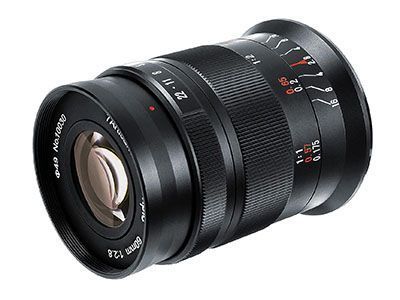
7Artisans 60mm f/2.8 Macro
Specs
- Focal length: 60 mm (equivalent to 90 mm on Fuji APS-C)
- Field of view: Approximately 25°
- Aperture: f/2.8 to f/16
- Minimum focusing distance: 26 cm
- Maximum magnification: 1:1
- Weight and dimensions: 550 g, 60 × 100 mm
- Compatibility: Nikon Z (APS-C only)
- Focus: Manual
- Stabilization: No
Analysis
Affordable manual lens offering 1:1 magnification, designed for beginners or photographers on a tight budget. Its optical quality is decent, with acceptable sharpness but limited aberration correction and frame uniformity. The build is simple and lightweight, with no stabilization or autofocus motor, requiring a tripod and good lighting conditions. Despite its limitations, it’s a valid option for learning macro or for personal projects where extreme quality is not essential.
Ideal use: Getting started with macro, static photography.
Limitations: Modest optical quality, no stabilization or autofocus, not for professional use.
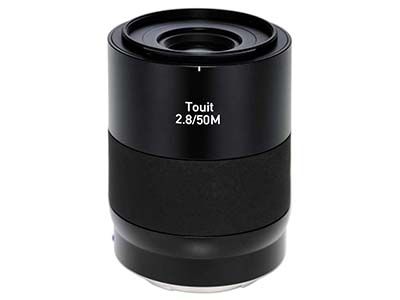
Zeiss touit 50mm f 2.8
Specs
- Focal length: 50 mm (equivalent to 75 mm on Fuji APS-C)
- Angle of view: Approximately 31°
- Aperture: f/2.8 to f/22
- Minimum focusing distance: 15 cm
- Maximum magnification: 1:1
- Weight and dimensions: 290 g, 65 × 91 mm
- Compatibility: Fuji X (APS-C)
- Focusing: Autofocus
- Stabilization: No
Analysis
Designed specifically for APS-C sensors, the Zeiss Touit 50mm f/2.8 Macro is the only third-party autofocus lens for Fuji APS-C. It offers true 1:1 magnification while maintaining the high optical standards expected from Zeiss: excellent sharpness from wide open, strong contrast, and exemplary chromatic correction.
With a focal length equivalent to 75 mm, it strikes a balance between short and long macro lenses. It allows close subject approach without the inconvenience of 30 mm, but without the working distance of 90 or 100 mm lenses. This makes it especially suitable for product photography, everyday details, and slow macro with static subjects rather than insects or movement-sensitive animals.
Autofocus is one of its main strengths within the APS-C ecosystem, although its speed is not on par with general-purpose or action lenses. The build is robust, and optical performance is very consistent, especially in the center of the frame. Like many macro lenses, it lacks stabilization, so tripod use or good technique remains essential, especially when working near 1:1.
In short, a lens aimed at those seeking premium optical quality, automatic operation, and a compact profile for macro and detail photography without the demands of a longer focal length.
Ideal use: Product photography, object macro, flowers, everyday details, mixed use with autofocus.
Limitations: Insect photography, handheld shooting, demanding outdoor macro.
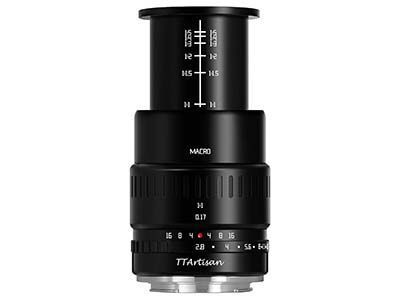
TTartisan 40 mm f/2.8
Specs
- Focal length: 40 mm (equivalent to ~60 mm in full frame APS-C)
- Aperture: f/2.8–f/16
- Minimum focusing distance: ~17 cm (~6.7″)
- Maximum magnification: 1:1
- Weight: ~370 g; dimensions: ~80 × 110 mm (varies by mount)
- Focus: fully manual
- Compatibility: Fuji X
Analysis
The TTartisan 40 mm f/2.8 Macro is one of the most affordable 1:1 macro options for APS-C users, featuring an all-metal build and a good tactile feel.
Optically, it delivers great sharpness in the center and pleasant bokeh thanks to its 11-blade aperture. However, lacking advanced coatings, it can be more prone to internal reflections and flare in harsh light or backlighting conditions, which may affect contrast and cause a slightly washed-out or less saturated appearance in those situations.
Additionally, the focus ring causes slight framing changes during focusing (focus breathing) and can accumulate dust inside. Despite these limitations, it is an economical and versatile lens that allows you to truly dive into macro photography and works well for portraits or landscapes with tight framing.
Ideal use: Casual macro photography (flowers, small objects), negative scanning, portraits, and everyday life.
Limited use: Professional macro, insect photography, or very demanding contrast and direct light situations.
Fuji G (medium format): native macro lenses
Preselection: Which Fuji G macro lens to choose based on your profile?
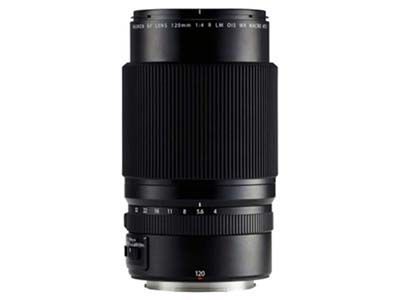
For beginners who value versatility, the Fujinon GF 120mm f/4 R LM OIS WR Macro is the reference macro lens in the GFX system. It offers 1:2 magnification, excellent sharpness, optical stabilization (OIS), and precise autofocus thanks to the linear motor (LM). Its focal length equivalent to 95 mm also makes it useful for portraits, and the weather sealing makes it suitable for outdoor use. Note: It doesn’t reach 1:1 magnification, so it might fall short for very small subjects or technical macro work.
For advanced photographers seeking higher magnification, the Laowa 65mm f/2.8 2x Ultra Macro (with adapter). Although designed for APS-C sensors, this lens can be mounted on GFX with an adapter and used in crop mode or with controlled vignetting, depending on magnification. Its ability to reach up to 2:1 makes it ideal for exploring tiny details. Note: Fully manual and only covers a small portion of the sensor.
For professionals looking for extreme macro or scientific photography, the Laowa 100mm f/2.8 2x Ultra Macro APO (with FF–GFX adapter). This full-frame lens adapts very well to the GFX, offering up to 2:1 magnification without needing extension tubes or additional lenses. Its optical performance is among the best in its class, with apochromatic correction and excellent control of color and aberrations. Suitable for technical macro, lab, or field work. Note: Manual and heavy, so tripod use is recommended. Covers only part of the sensor but more than the Laowa 65 mm.
For budget-conscious photographers, GFX adapter + classic macro lens (such as Nikon 55mm f/3.5, Canon FD 100mm f/4, etc.). Using adapters allows mounting old macro lenses with good results. While lacking automation or electronic communication, many vintage lenses offer 1:1 or close magnification with good image quality at low cost. Note: No autofocus, stabilization, or in-camera control; requires manual skill and controlled lighting.

▌Our choice: Truth is, there isn’t much to choose from. The Fujinon GF 120mm f/4 R LM OIS WR Macro is the only native model for the GFX system.
The macro lens range for the Fujifilm G system is currently very limited, with only one native model: the Fujinon GF 120mm f/4 R LM OIS WR Macro. It stands out for its excellent optical quality, built-in stabilization, and fast focusing.
As for third-party alternatives, there are no macro lenses specifically designed for the G mount. However, it is possible to use macro lenses from other full-frame systems — such as Hasselblad H or Canon EF — via adapters, although this means losing automatic functions like autofocus and stabilization.
Comparative table of macro lenses for APS-C
| Lens | Adapter needed | Magnification | Minimum Distance | Stabilization | AF | Notes |
|---|---|---|---|---|---|---|
| Fujinon GF 120mm f/4 R LM OIS WR Macro | — | 1:2 (0.5x) | 45 cm | Yes (OIS) | Yes | Only native macro lens for G mount. High sharpness, dust and water sealing, fast AF. |
| Hasselblad HC 120mm f/4 Macro | Hasselblad H to Fujifilm G adapter | 1:1 | — | No | No | Classic medium format macro lens. High optical quality, manual focus. |
| Canon EF 100mm f/2.8L Macro IS USM | Canon EF to Fujifilm G adapter (no communication) | 1:1 | — | No | No | Very popular in macro photography. Manual focus with adapter, great optical quality. |
| Laowa 100mm f/2.8 2x Ultra Macro | Canon EF or Nikon F to Fujifilm G adapter | 2:1 | — | No | No | Extreme macro, 100% manual focus. Excellent for fine details and textures. |
Fujinon GF 120mm f/4 R LM OIS WR
Specs
- Focal length: 40 mm (equivalent to 60 mm in APS-C format)
- Angle of view: 38°50′
- Aperture: f/2.8 to f/22
- Minimum focusing distance: 16.3 cm
- Maximum magnification: 1x (1:1)
- Weight and dimensions: 235 g, 68.5 × 64.5 mm
- Compatibility: Nikon F mount (DX format)
Analysis
The Micro-Nikkor 40mm f/2.8G is Nikon’s most affordable and lightweight option for macro photography in DX format. Its 60 mm equivalent focal length places it in the short macro range, suitable for still life, flowers, or small objects, though less ideal for insects or subjects that require more working distance.
The minimum focusing distance of 16.3 cm allows for 1:1 magnification, but at that distance the lens is very close to the subject, making lighting difficult and limiting use with live animals. Still, in controlled settings like document reproduction, product photography, or studio detail work, it performs very well.
Optical quality is impressive for the price: very good central sharpness from f/2.8 and overall balanced performance. The bokeh is decent, though not exceptional. The SWM focus motor is quiet and sufficiently accurate, but not particularly fast.
The lack of stabilization limits handheld use in low light, though its brightness helps to offset that. In terms of construction, it’s a compact, lightweight lens with a polycarbonate body that is well assembled. While not weather-sealed, it’s suitable for everyday use.
For its size, weight, and price, it’s an excellent lens for starting out in macro with DX cameras or as a secondary tool for detail and close-up photography.
Ideal use: basic macro photography, product shots, everyday details, document reproduction, general APS-C photography.
Limited use: insects or subjects requiring more distance, low light without tripod, intensive professional use.
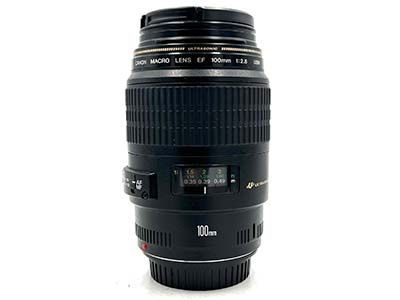
Canon EF 100mm f/2.8 Macro USM (adapted for Fujifilm G)
Specs
- Effective focal length: 100 mm (no change in focal length, but the GFX sensor is larger than full frame, so the field of view is wider than on full frame)
- Angle of view: approximately 53° horizontal (wider than on APS‑C or full frame, due to the larger medium-format sensor)
- Aperture: f/2.8 to f/22
- Minimum focusing distance: 16.3 cm
- Maximum magnification: 1x (1:1)
- Weight and dimensions: 600 g (approx.), 78 × 96 mm
- Compatibility: Adapted to Fujifilm G mount via EF to G adapter (no electronic communication)
- Notes on use: Fully manual focus. Designed for full-frame sensors, does not fully cover the Fujifilm GFX medium-format sensor.
Analysis
This has been Canon’s macro workhorse for over a decade. An affordable, reliable lens with true 1:1 magnification and a decent working distance.
Its build isn’t sealed or luxurious, but it’s sturdy and lightweight. On full-frame cameras, it offers an ideal distance for insects and botanical details without needing to be right on top of the subject. It’s also been very popular as an alternative portrait lens thanks to its smooth bokeh.
Its biggest limitation today is the lack of image stabilization. In macro photography, where tiny movements matter, this can make handheld or low-light shooting tricky. It’s also not the fastest focusing lens (the USM motor is good, but a bit rough with moving subjects). Still, for its price-to-performance ratio, it remains a very solid option.
Ideal use: insects, plants, occasional portraits.
Limited use: macro in low-light conditions without a tripod.
- As an Amazon Associate, this website earn from qualifying purchases.