


The Sony ZV lineup of vlogging cameras currently includes five models: Sony ZV-1, Sony ZV-1 Mark II, ZV-1F, ZV-E10, and ZV-E1. Which one is the best, and how do they differ?
When it was first released, the Sony ZV-1 was a bit of an oddball — a small compact camera derived from the RX100 line, but specifically designed for video recording, particularly vlogging.
Over time, the ZV-1 has been joined by the Sony ZV-E10, the fixed focal length ZV-1F, and the advanced Sony ZV-E1. It seems clear that Sony had a roadmap for the series. Since we assume you can’t buy them all, this comparison is here to help you choose the right one.
- Note: This article was written before the release of the Sony ZV-1 II. If you’re especially interested in that model, check out Sony ZV-1 vs Sony ZV-1 II: full comparison.
The ZV Series
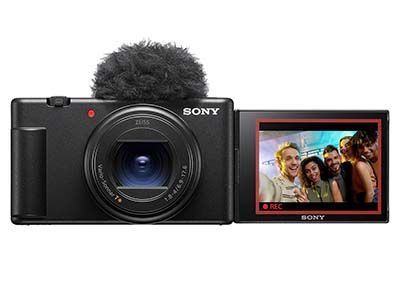
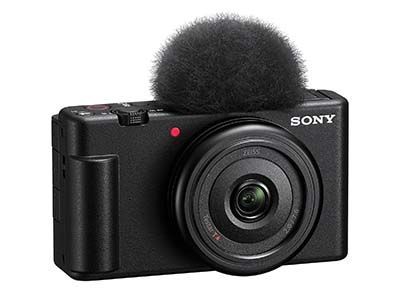
First of all, the ZV cameras are divided into two groups. The very similar ZV-1 and ZV-1F are compact cameras evolved from Sony’s RX100 line. The ZV-1F is a more affordable and simplified version, designed specifically for selfie vloggers — those who enjoy talking directly to the camera.
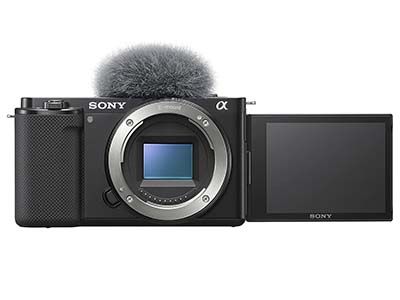
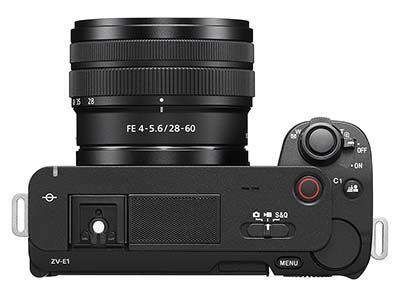
The ZV-E10, on the other hand, is based on Sony’s a6000-series APS-C cameras, while the ZV-E1 is a version of the powerful but specialized (and expensive) A7S III.
Basically, all these ZV models are adaptations of existing cameras and share some physical features. None of them have an electronic viewfinder, they all have flip-out screens, and all come with built-in 3-capsule directional microphones and included windshields.
However, their features and capabilities vary significantly, so to avoid being left indecisive, it’s best to start by asking what focal lengths and lenses will be needed, whether you want to take photos as well as videos, and of course, how much you’re willing or able to spend.
ZV Series Prices on Amazon:
- Sony ZV-1
- Sony ZV-1 II
- Sony ZV-1F
- Sony ZV-E10
- Sony ZV-E1
Camera Comparison Table
Scroll the table to the left
| GENERAL | |||||
| Model | ZV-1 II | ZV-E1 | ZV-1F | ZV-E10 | ZV-1 |
| Release Date | 2023-05-27 | 2023-03-29 | 2022-10-13 | 2021-07-30 | 2020-05-27 |
| Camera Type | Compact | Interchangeable lenses | Compact | Interchangeable lenses | Compact |
| SENSOR | |||||
| Model | ZV-1 II | ZV-E1 | ZV-1F | ZV-E10 | ZV-1 |
| Resolution | 20 MP | 12 MP | 20 MP | 24 MP | 20 MP |
| Max Image Size | 5472 x 3648 | 4240 x 2832 | 5472 x 3648 | 6000 x 4000 | 5472 x 3648 |
| Sensor Type | BSI-CMOS | BSI-CMOS | BSI-CMOS | CMOS | BSI-CMOS |
| Sensor Size | 1″ | Full frame | 1″ | APS-C | 1″ |
| Sensor Dimensions | 13.2 x 8.8 mm | 35.6 x 23.8 mm | 13.2 x 8.8 mm | 23.5 x 15.6 mm | 13.2 x 8.8 mm |
| Sensor Area | 116 mm2 | 847 mm2 | 116 mm2 | 366 mm2 | 116 mm2 |
| Max ISO | 12800 | 102400 | 12800 | 32000 | 12800 |
| Min ISO | 125 | 80 | 125 | 100 | 125 |
| PHOTOGRAPHY | |||||
| Model | ZV-1 II | ZV-E1 | ZV-1F | ZV-E10 | ZV-1 |
| Max Shutter Speed | 1/2000 s | 1/8000 s | 1/2000 s | 1/4000 s | 1/2000 s |
| Min Shutter Speed | 30 s | 30 s | 30 s | 30 s | 30 s |
| Burst | 24.0 fps | 10.0 fps | 16.0 fps | 11.0 fps | 24.0 fps |
| Exposure Compensation | ±3 (at 1/3 EV) | ±5 (1/3 EV, 1/2 EV) | ±3 (1/3 EV) | ±5 (1/3 EV, 1/2 EV) | ±3 (1/3 EV) |
| Stabilizer | Digital only | In-body | Digital only | Digital only | Optical |
| Built-in Flash | No | No | No | No | No |
| Viewfinder | No | No | No | No | No |
| Screen | Flip-out | Flip-out | Flip-out | Flip-out | Flip-out |
| VIDEO | |||||
| Model | ZV-1 II | ZV-E1 | ZV-1F | ZV-E10 | ZV-1 |
| Video Formats | MPEG-4 AVCHD XAVC S | MPEG-4 XAVC S H.264 | MPEG-4 AVCHD XAVC S | MPEG-4 XAVC S H.264 | MPEG-4 AVCHD XAVC S |
| Microphone | See | See | See | See | See |
| Speaker Type | Mono | Mono | Mono | Mono | Mono |
| External Mic Port | Yes | Yes | Yes | Yes | Yes |
| Headphone Jack | Yes | Yes | |||
| BODY | |||||
| Model | ZV-1 II | ZV-E1 | ZV-1F | ZV-E10 | ZV-1 |
| Weight | 292 g | 483 g | 256 g | 343 g | 294 g |
| Dimensions | 106 x 60 x 47 mm | 121.0 x 71.9 x 54.3 mm | 106 x 60 x 46 mm | 115 x 64 x 45 mm | 105 x 60 x 44 mm |
| Sealing | No | No | No | No | No |
| BATTERY AND STORAGE | |||||
| Model | ZV-1 II | ZV-E1 | ZV-1F | ZV-E10 | ZV-1 |
| Battery | NP-BX1 | NP-FZ100 | NP-BX1 | NP-FW50 | NP-BX1 |
| Battery Life | 260 shots | 570 shots | 360 shots | 440 shots | 260 shots |
| Memory Card | SD/ SDHC/SDXC, Memory Stick Pro Duo/ Pro-HG Duo | SD/SDHC/SDXC + Memory Stick Pro Duo | SD/ SDHC/SDXC, Memory Stick Pro Duo/ Pro-HG Duo | SD/SDHC/SDXC + Memory Stick Pro Duo | SD/ SDHC/SDXC, Memory Stick Pro Duo/ Pro-HG Duo |
| CONNECTIVITY | |||||
| Model | ZV-1 II | ZV-E1 | ZV-1F | ZV-E10 | ZV-1 |
| Wireless | Yes | Yes | Yes | Yes | Yes |
| HDMI | |||||
| USB | USB 2.0 (480 Mbit/s) | USB 3.2 Gen 2 (10 GBit/s) | USB 3.0 Gen 1 (5 GBit/s) | USB 3.2 Gen 1 (5 GBit/s) | USB 2.0 (480 Mbit/s) |
| OPTICS | |||||
| Model | ZV-1 II | ZV-E1 | ZV-1F | ZV-E10 | ZV-1 |
| Mount | Fixed lens | Sony FE | Fixed lens | Sony E | Fixed lens |
| Focal length (35mm) | 18-50 mm | – | 20 mm | – | 24-70 mm |
| Aperture | F1.8–4.0 | – | F2 | – | F1.8–2.8 |
Sensor size and resolution
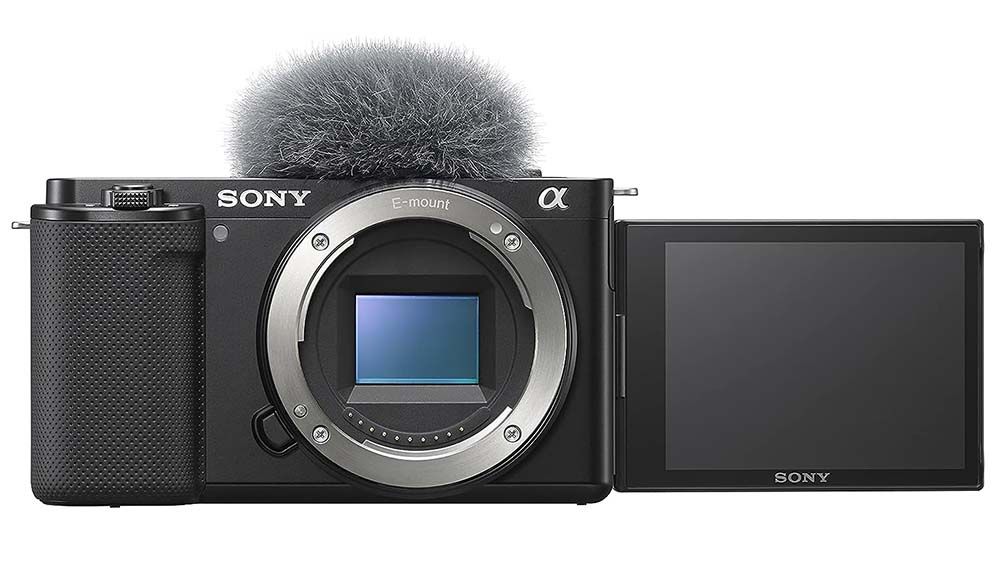
- Sony ZV-1: 1 inch
- Sony ZV-1 II: 1 inch
- Sony ZV-1F: 1 inch
- Sony ZV-E10: APS-C
- Sony ZV-E1: full frame
The Sony ZV lineup covers various sensor sizes. The compact ZV-1 models use a 1-inch CMOS sensor, which is considerably smaller than the APS-C sensor in the ZV-E10, which in turn is smaller than the full-frame sensor in the ZV-E1.
For beginner or casual users, or simply those who don’t need the best image quality money can buy, the 1-inch sensor in the ZV-1 and ZV-1F will likely provide perfectly satisfactory video quality. However, the ZV-E10 and ZV-E1 are better suited for more advanced filmmaking work, partly due to the inherently better quality of larger sensors, but also because of the possibility to work with interchangeable lenses.
Resolution
- Sony ZV-1: 20MP
- Sony ZV-1 II: 20 MP
- Sony ZV-1F: 20MP
- Sony ZV-E10: 24 MP
- Sony ZV-E1: 12 MP
It may be surprising that the most expensive camera in this group has the lowest resolution. The ZV-E1 features a 12-megapixel full-frame sensor specifically designed for video, with the advantage of supporting native 4K resolution without the need for oversampling or cropping. The downside is that this significantly limits its capability for still photography. 12 megapixels can be more than enough in many situations, but if you’re serious about photography as well as video, the other ZV models seem like a better choice.
The ZV-E10 is much cheaper, offers fairly powerful video features, and can capture detailed 24-megapixel still images. The ZV-1 and ZV-1F can also capture 20-megapixel images, but the smaller sensor size means their resolution won’t be at the same level.
Lenses

- Sony ZV-1: Equivalent to 24-70 mm, f/1.8-2.8
- Sony ZV-1 II: Equivalent to 18-50 mm, f/1.8-4.0
- Sony ZV-1F: Equivalent to 20 mm, f/2
- Sony ZV-E10: Sony E mount
- Sony ZV-E1: Sony FE mount
The Sony ZV-1 and ZV-1F are compact cameras, which means their lenses are fixed and cannot be swapped. The ZV-1 has a 3x zoom 24-70 mm that covers most needs, but the equivalent 20 mm wide-angle lens on the ZV-1F is specifically designed for self-recording with an outstretched arm and limits us to panoramas and indoor shots only.
The ZV-E10 and ZV-E1 are interchangeable lens cameras that can accept anything from wide-angle to telephoto lenses. The full-frame ZV-E1 offers the widest selection of lenses, but these can be heavier and more expensive.
Autofocus
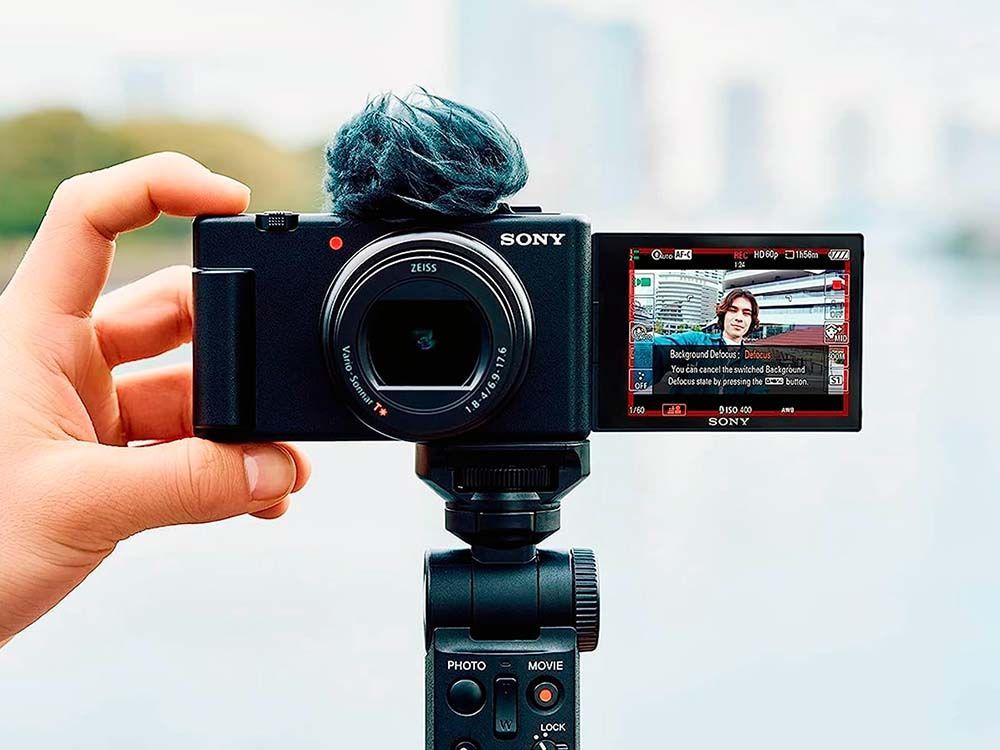
- Sony ZV-1: Hybrid AF with 315/425 points, real-time tracking and Eye AF, background blur and face priority, product presentation setup
- Sony ZV-1 II: Hybrid AF with 315/425 points, real-time tracking and Eye AF, background blur and face priority, product presentation setup
- Sony ZV-1F: Contrast AF with 425 points, real-time tracking and Eye AF, background blur and face priority, product presentation setup
- Sony ZV-E10: Hybrid AF with 425 points, real-time tracking and Eye AF, background blur and face priority, product presentation setup
- Sony ZV-E1: Hybrid AF with 759/627 points, breathing compensation, AI recognition and tracking, multi-face recognition, product presentation
All four cameras offer real-time tracking and Eye AF modes, background blur, and product presentation, but the ZV-1F is the least sophisticated and only has contrast autofocus.
The Sony ZV-1 nearly matches the capabilities of the ZV-E10. However, the ZV-E1 breaks new ground with AI subject recognition and tracking, a higher number of autofocus points, and multi-face recognition. It also offers focus breathing compensation with compatible lenses, a feature that prevents objects from appearing to change size as they focus and defocus.
Video
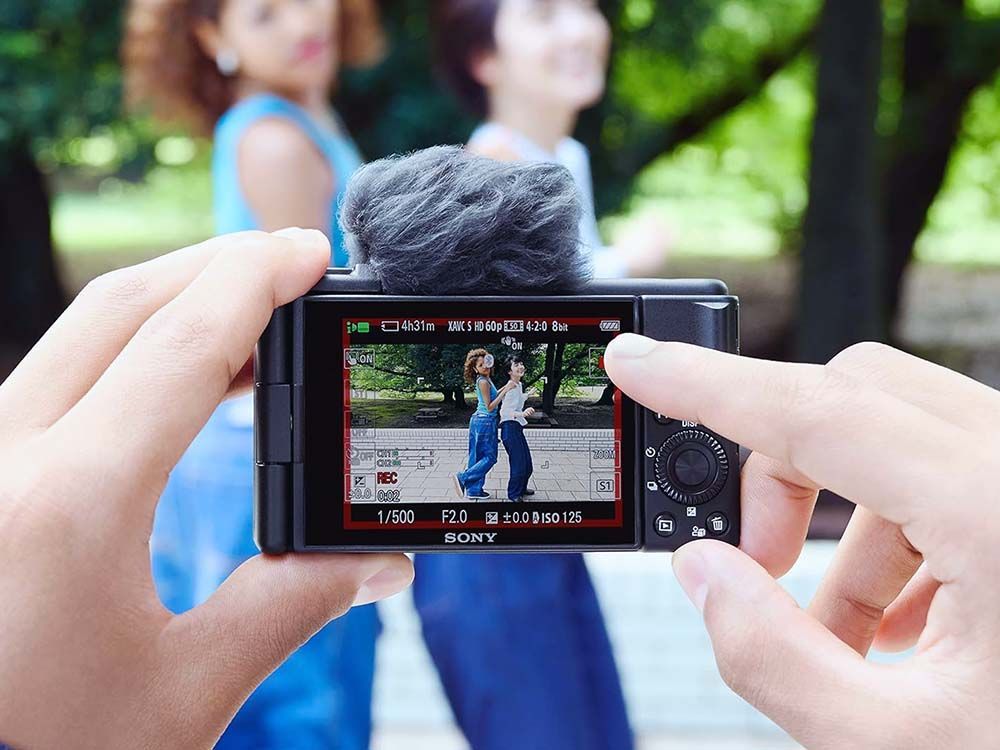
- Sony ZV-1: UHD 4K30p, HLG and S-Log3/2 gamuts, built-in ND filter
- Sony ZV-1 II: UHD 4K30p, HLG and S-Log3/2 gamuts, built-in ND filter
- Sony ZV-1F: UHD 4K30p
- Sony ZV-E10: UHD 4K30p, HLG and S-Log3/2 gamuts
- Sony ZV-E1: UHD 4K 120p, S-Gamut3.Cine/S-Log3 and S-Gamut3/S-Log3, Cinematic Vlog, S-Cinetone, custom user LUTs
All four cameras can record standard 4K UHD video at 30 fps, but the ZV-E1 goes much further and offers 4K UHD up to 120p. The basic Sony ZV-1F is largely designed to record video straight away without adjusting many settings and with limited editing, but the equally compact ZV-1 goes much further and offers S-Log2 and S-Log3 modes seen in higher-end cameras. These modes increase the dynamic range of the captured video and provide more options for color grading during editing.
The ZV-E10 and ZV-E1 models offer the same recording modes, but the ZV-E1 adds more advanced grading and color profile options aligned with Sony’s professional Venice camera lineup.
Sound
- Sony ZV-1: 3-capsule directional microphone and microphone jack, multi-interface shoe, and windscreen
- Sony ZV-1 II: 3-capsule directional microphone and microphone jack, multi-interface shoe, and windscreen
- Sony ZV-1F: 3-capsule directional microphone and microphone jack, multi-interface shoe, and windscreen
- Sony ZV-E10: 3-capsule directional microphone and microphone jack, multi-interface shoe, windscreen, and headphone jack
- Sony ZV-E1: 3-capsule directional microphone and microphone jack, multi-interface shoe, windscreen, and headphone jack
These cameras feature an innovative internal 3-capsule microphone with a clip-on windscreen, although in practice most serious videographers will use external microphones. All four cameras have 3.5mm audio jacks and Sony’s digital multi-interface shoe to connect their own microphones. The mirrorless ZV-E10 and ZV-E1 also have headphone ports for monitoring audio levels while recording.
Stabilization
- Sony ZV-1: lens stabilization (where available), Active SteadyShot
- Sony ZV-1 II: digital
- Sony ZV-1F: Active SteadyShot
- Sony ZV-E10: lens stabilization, Active SteadyShot
- Sony ZV-E1: 5-axis in-body stabilization, lens stabilization, Active Dynamic SteadyShot, frame stabilizer, AI auto framing
The ZV-1F, the cheapest camera in the group, is the only one that does not offer optical stabilization. Like the others, it features the Active SteadyShot stabilization system for video, which is very effective but introduces a crop factor that reduces the effective field of view of the lens.
The ZV-1 has an optical stabilizer built into its 3x zoom lens, and many—but not all—lenses compatible with the Sony ZV-E10 also have optical stabilization, though the camera itself does not have in-body stabilization.
The Sony ZV-E1 is the only camera in the group with in-body stabilization, which can work together with stabilized lenses. The ZV-E1 also features a more advanced digital Active SteadyShot system, a frame stabilizer function, and AI auto framing, although these functions slightly crop the image.
Rear screen
- Sony ZV-1: 3-inch vari-angle touchscreen with 921k dots
- Sony ZV-1 II: 3-inch vari-angle touchscreen with 921k dots
- Sony ZV-1F: 3-inch vari-angle touchscreen with 921k dots
- Sony ZV-E10: 3-inch vari-angle touchscreen with 921k dots
- Sony ZV-E1: 3-inch vari-angle touchscreen with 1034k dots
None of these cameras have an electronic viewfinder, and the rear screens are quite modest in both size and resolution, which is typical for Sony cameras.
The screens on the four models are 3-inch vari-angle types, although the ZV-E1’s LCD screen has a resolution of 1034k dots, which is slightly higher than the 921k dot screens used in the others.
Size and weight
- Sony ZV-1: 105,4 × 59,9 × 43,4 mm, 294 g
- Sony ZV-1 II: 106 x 60 x 47 mm, 292 g
- Sony ZV-1F: 105,5 × 60,0 × 46,4 mm, 256 g
- Sony ZV-E10: 115,2 × 64,2 × 44,8 mm, 343 g (body only)
- Sony ZV-E1: 121 × 71,9 × 54,3 mm, 483 g (body only)
All these cameras are fairly lightweight, but the ZV-1 and ZV-1F are much smaller than the other two. They also have integrated lenses in their design, so while the ZV-E10 doesn’t seem much heavier on paper, that is the weight of the body only, so the additional size and weight of the lenses that attach to it must be taken into account.
The Sony ZV-E1 is impressively compact and light for a full-frame mirrorless camera, but it is still substantially larger than the others. Add to that the fact that full-frame lenses are bigger and heavier, resulting in a notably bulkier setup than the ZV-E10.
Price
The Sony ZV-1F is the cheapest camera in the ZV lineup but also the most limited, with a fixed focal length lens equivalent to 20 mm, less advanced video capture and autofocus options, and only digital stabilization.
The ZV-1 doesn’t cost much more (although prices do fluctuate, so we’ll need to do our market research before deciding), but it is a much more powerful camera and the extra expense seems worthwhile.
The APS-C format ZV-E10 offers particularly good value for money, and although the included 16-50 mm lens isn’t the best optically, it is small, lightweight, and practical for vlogging.
The ZV-E1 is the most advanced and by far the most expensive. The price reflects that it is more of a cinema-optimized camera than a vlogging tool.
Sony ZV-1 vs ZV-1F vs ZV-E10 vs ZV-E1: Conclusions
The cheapest camera in this group is the compact fixed focal length ZV-1F, but one should carefully consider whether the cost savings outweigh its limitations.
If you need a compact pocket camcorder, the ZV-1 offers more features for a little more money and seems like a much better option in every respect.
However, if you want the flexibility of an interchangeable lens system, the ZV-E10 offers excellent value for money. The only downside is its relatively old sensor, which can sometimes produce rolling shutter or “jello” effect if the camera is moved too quickly, and its lack of in-body stabilization.
The queen of this camera line is the Sony ZV-E1, though it also has its limitations. The main one is its 12MP sensor, which to some extent rules it out for hybrid photo/video use, while the other three can do both tasks perfectly well. It is also much more expensive, and its sophisticated cinematic features will probably appeal more to professional filmmakers than to vloggers. Overall, the two mid-range cameras in the series, the ZV-1 and the ZV-E10, are in our opinion the ones offering the best combination of features, versatility, and value.
You might be interested in:
- Sony ZV-1F: The Cheapest Vlogging Camera
- Sony ZV-1 vs Sony ZV-1 II: Full Comparison
- Canon PowerShot V1 vs Sony ZV-1 II: Full Comparison
- The Best Cameras for Vlogging
- Sony 6000 Series: Comparison of All Models
- Sony a6600 vs Sony a6700 Comparison: Key Features in Photo and Video
- DJI Osmo Pocket 3: The Ideal Camera for Vloggers and Content Creators?
Buy Sony ZV Cameras
Sony ZV-1
Sony ZV-1 II
Sony ZV-1F
Sony ZV-E10
Sony ZV-E1
- As an Amazon Associate, this website earn from qualifying purchases.