


In 2020, Sony took the lead in the vlogging world with the ZV-1, a compactly designed camera made specifically for content creators. However, the model had some limitations, such as a somewhat narrow maximum wide angle and the lack of a headphone jack, which made audio monitoring during recording difficult. The arrival of the Sony ZV-1 II in May 2023 addressed the first issue by including a wider lens (18-50 mm), and added an improved touchscreen interface and optimized ergonomics. To maintain a compact design, Sony replaced optical stabilization with digital stabilization, which is effective though with a slight crop during video recording.
Two years later, the Canon PowerShot V1 presents itself as a direct alternative within the competitive segment of compact cameras with large sensors. Also aimed at creators and vloggers, the V1 introduces technical and design differences that set it apart from the Sony ZV-1 II.
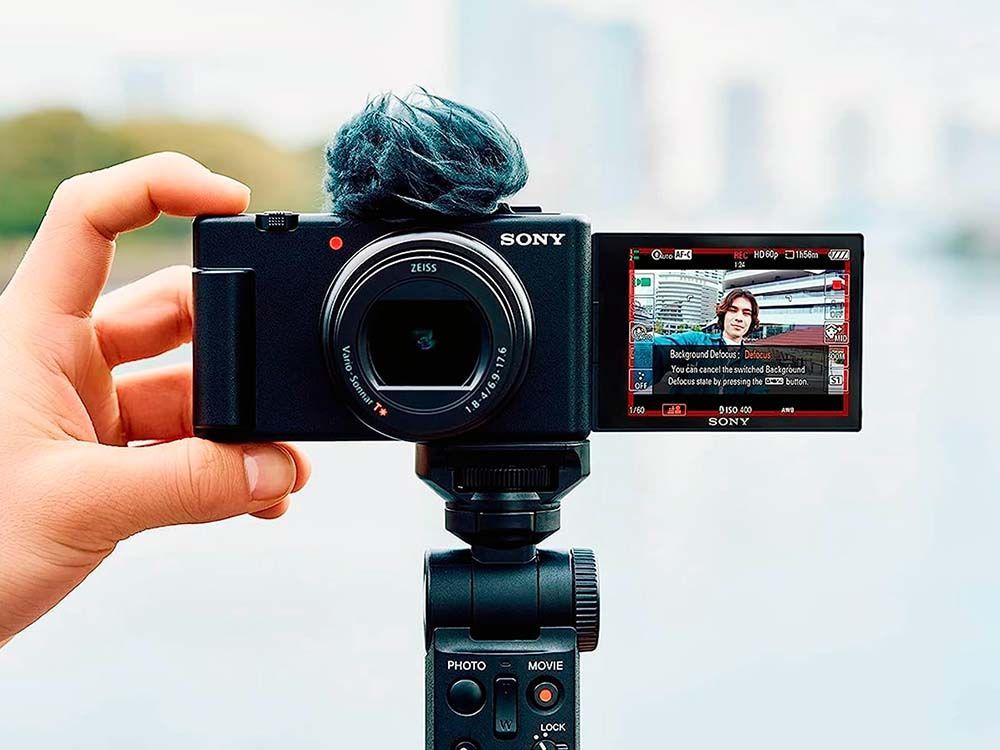
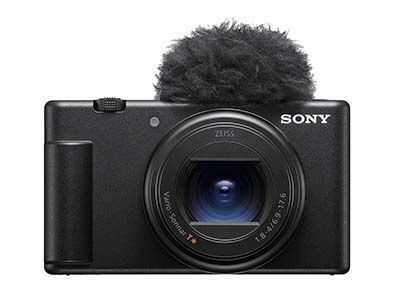
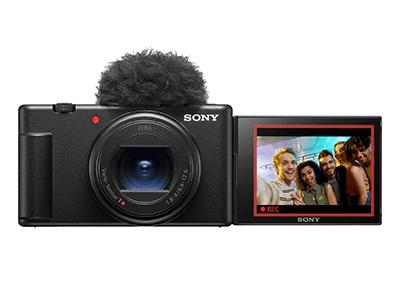
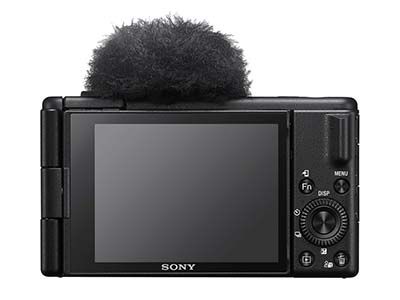
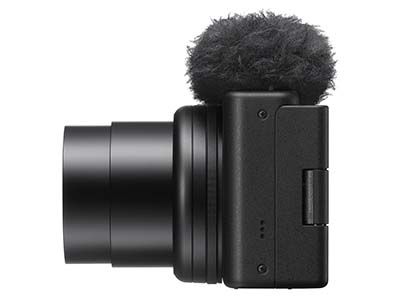
Sony ZV-1 II
Canon V1

Size and Ergonomics
When holding them, the difference in size and weight between the two is obvious. The Sony ZV-1 II stands out for being significantly more compact and lighter, weighing just 292 grams, making it a very portable and discreet option for daily use. It offers an acceptable grip, although it can slip if your hands are sweaty.
On the other hand, the Canon PowerShot V1 weighs 426 grams, a noticeable increase justified by a more robust build and a more comfortable and secure rubber grip, suitable for long sessions or greater control in demanding situations. Additionally, it features an active fan (yes, a fan!) that eliminates overheating problems, making it more reliable during long recording sessions.
In terms of production tools, Canon also takes the lead with features like framing guides for simultaneous horizontal and vertical recording, something almost unique in its category. So, while Sony wins on portability, Canon scores points for ergonomics, cooling, and advanced features for creators.
Although two years separate both models, technological evolution in this category is gradual, and they remain cameras that compete with each other
LCD Screen
Both cameras feature a fully articulated 3-inch LCD screen designed to make framing easier for vlogging or selfies. However, although they look very similar at first glance, there are differences that affect the user experience.
The Canon PowerShot V1’s screen resolution is 1.04 million dots, while the Sony ZV-1 II has 922 thousand dots. Not a huge difference in absolute terms, but it results in a slightly sharper and more detailed image on the Canon’s screen, which will help creators working in very bright environments or outdoors.
The ZV-1 II improved the touchscreen interface compared to its predecessor, offering a smoother and more responsive touch, ideal for quickly changing settings or focusing with a tap. The Canon PowerShot V1 also has a touchscreen, but its response is somewhat less agile, though still functional for most tasks. A draw or a points win for Sony in this area.
Image Quality
Sensor
The Canon PowerShot V1 features a 22-megapixel BSI-CMOS sensor with a generous size of 1.4 inches, allowing it to capture images with a higher level of detail. Additionally, its native ISO range reaches up to 32,000, nearly three times that of the Sony ZV-1 II, which is a clear advantage in low-light conditions.
On the other hand, the Sony ZV-1 II incorporates a stacked 1-inch 20-megapixel sensor, smaller than Canon’s, but with the advantage of faster readout and less rolling shutter effect, which is crucial when recording moving scenes. This 1-inch stacked sensor is possibly the best in its class, but being smaller and recording in 8-bit, it falls behind Canon’s larger sensor and its 10-bit files. For all these reasons, Canon wins in image quality.
Regarding format, although Canon uses a Micro Four Thirds sensor with a 3:2 aspect ratio, its design still favors better depth of field control and superior overall image quality performance.
Frame Rate and File Quality
The difference here is notable. The Canon V1 is the only compact camera around €1,000 for vlog-type content that records in 10-bit. Sony, on the other hand, still uses the same 8-bit codec as always and was one of the last manufacturers to implement internal 10-bit video even in their interchangeable lens cameras. So it’s no surprise that the ZV-1 Mark II sticks with 8-bit.
10-bit video captures over a billion colors, compared to the 16.7 million of 8-bit, offering smoother gradients and more detail in skies and skin tones. Both record in 1080p and 4K without cropping, but Canon also allows 4K recording with crop, which is useful for slow motion. Result: Canon dominates in this category.
Color Science
This is subjective, but historically Sony has received criticism for its colors. With the ZV-1 Mark II, this has improved and people no longer look like corpses if you don’t shoot in log. Still, Sony tends toward cool and greenish tones, while Canon offers warm and magenta tones, which are more flattering for skin.
Image Gallery: Canon V1
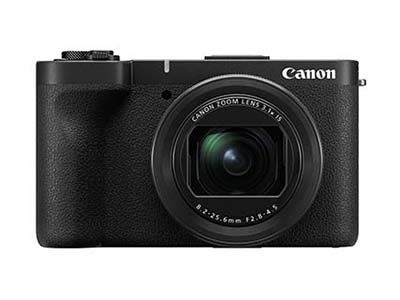
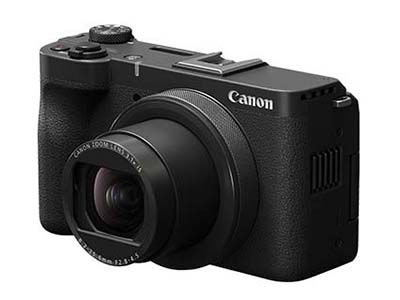
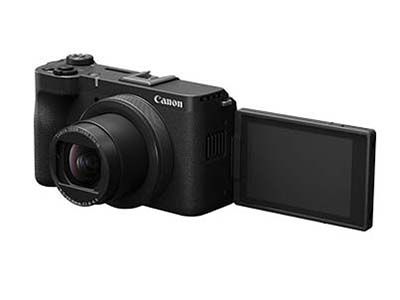
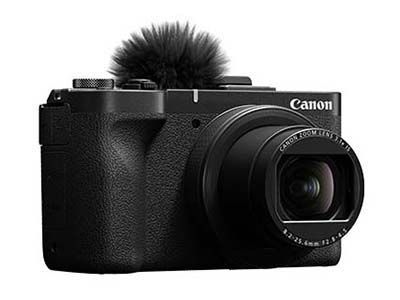
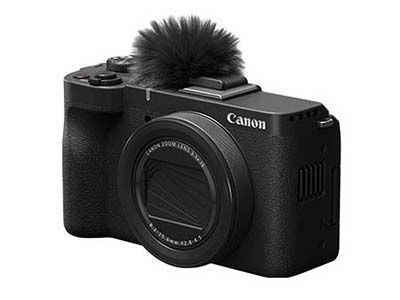
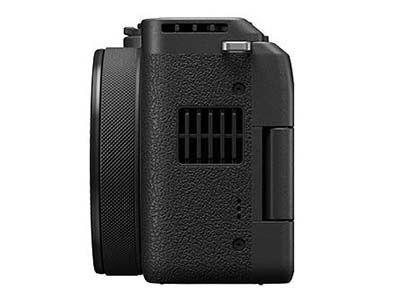
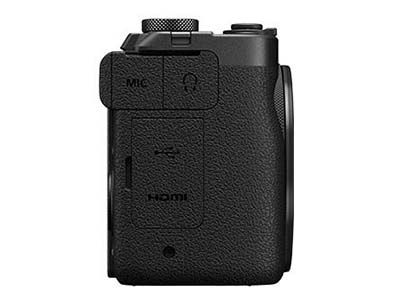

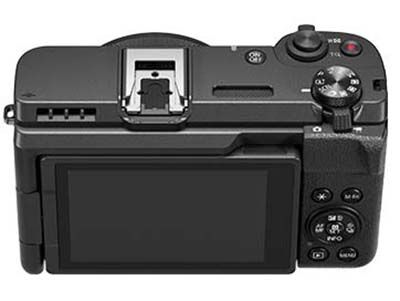
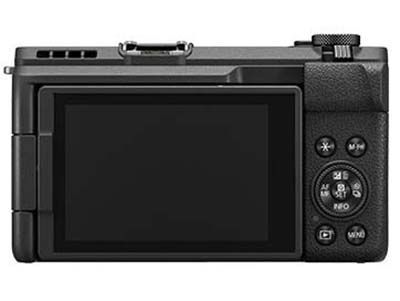
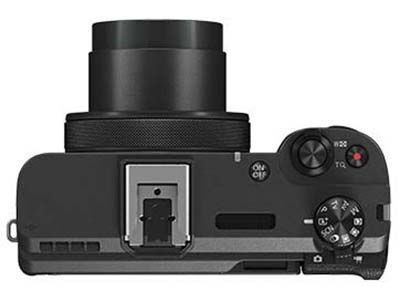
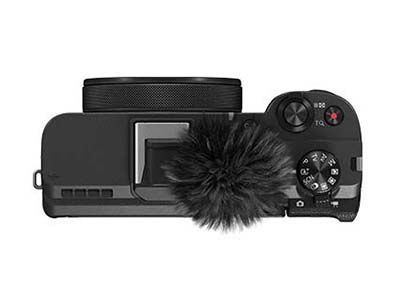
Image Gallery: Sony ZV-1 II
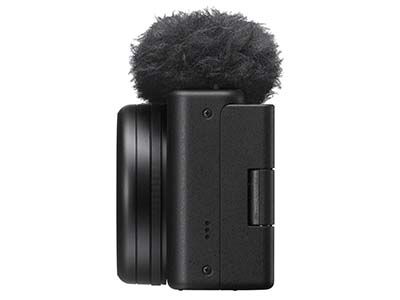
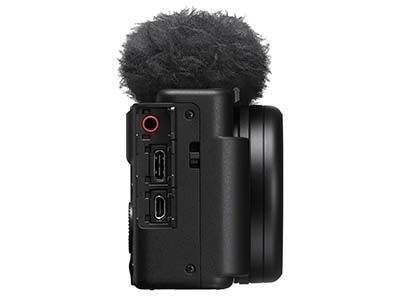
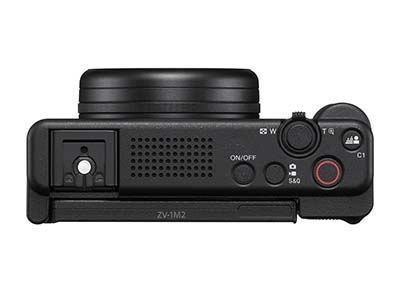
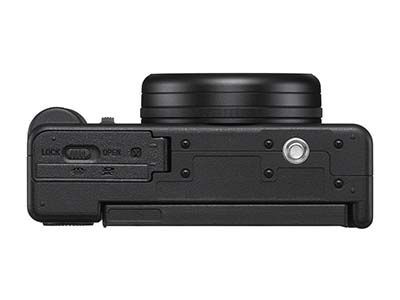
Lens: Aperture, Angle, and Stabilization
The Sony ZV-1 II improves on its predecessor in the wide-angle end, moving from 24mm to 22mm, with a maximum aperture of f/1.8, brighter than Canon’s f/2.8, allowing better performance in dark scenes and greater background blur, although it sacrifices optical stabilization.
The Canon PowerShot V1 raises the stakes with a lens offering an equivalent focal range of 16-50mm and excellent optical and digital stabilization. The more aggressive digital stabilization crops the image quite a bit but still provides more solid and stable results. In terms of background blur and separation, both cameras are on par, although Canon offers a softer and more natural bokeh.
Autofocus
This is a big topic. Since the RX100V in 2016, Sony has set the standard for autofocus, and the ZV-1 Mark II continues that tradition: it works excellently, quickly, and accurately, never losing the subject or randomly focusing where it shouldn’t. It is the benchmark in this category.
The Canon PowerShot V1 features the latest version of the Dual Pixel Autofocus system, which is almost on par with Sony’s system. However, Sony still takes the win here thanks to a key feature: the product showcase mode, which is flawless. Simply hold up an object in front of the face and the camera instantly focuses on it.
Canon also includes this feature, but only in scene mode, which is fully automatic and offers no control over aperture, ISO, or shutter speed. Although it’s possible to simulate it in manual mode, the focus is somewhat slower.
In summary, both systems are outstanding, but Sony retains the crown.
Audio
Audio is even more important than video when the essential thing is that what you say is understood. Both cameras include a built-in directional microphone, a 3.5mm input, and a wind filter, covering the basics for clean recording.
However, Canon goes a step further: it includes a headphone output to monitor audio directly from the camera and a multi-function hot shoe compatible with advanced accessories like higher-quality microphones. Sony, on the other hand, does not allow on-camera audio monitoring.
In this area, Canon takes the win.
Connectivity
In connectivity, both cameras are very close, offering WiFi and Bluetooth for fast image transfer and remote control via smartphone. They also support webcam functionality and have a port for an external microphone.
Conclusion
Both the Sony ZV-1 II and the Canon PowerShot V1 are compact cameras aimed at content creators and vloggers, but each offers a different approach within this category.
Sony stands out for its portability, focusing speed, and ease of use, with autofocus that remains a benchmark, a compact design ideal for everyday use, and a responsive touchscreen interface. The ZV-1 II is a reliable, fast, and practical camera, especially useful for those who prioritize small size and quick recording with good results.
Canon, on the other hand, opts for a more robust and ambitious proposition. It offers better image quality thanks to its larger sensor, 10-bit recording, better low-light performance, and superior stabilization. It also includes key features for demanding creators, such as a headphone output, active cooling, and advanced recording tools like framing guides for simultaneous vertical and horizontal video.
Ultimately, if you’re looking for lightness, speed, and excellent autofocus for product presentation and reviews, the Sony ZV-1 II remains a very solid option. But if your priority is image quality, audio control, and versatility for more demanding productions, the Canon PowerShot V1 stands out as the clear winner in this comparison.
Relacionado:
Comparison tables
| Advantages of Canon PowerShot V1 over Sony ZV-1 Mark II | ||
|---|---|---|
| Built-in image stabilization | Optical vs None | Sharper handheld images or at low shutter speeds |
| Sensor resolution | 22 MP vs 20 MP | 10% more pixels for greater detail |
| Maximum native ISO | 32,000 vs 12,800 | 150% more low-light sensitivity |
| LCD screen resolution | 1,040k dots vs 922k dots | Sharper screen |
| Continuous burst rate | 30 fps vs 24 fps | 6 fps faster |
| Battery life | 300 shots vs 260 shots | 40 more photos per charge |
| Headphone jack | Yes vs No | Better sound monitoring |
| Wide-angle focal length | 16 mm vs 18 mm | Greater framing coverage |
| Advantages of Sony ZV-1 Mark II over Canon PowerShot V1 | ||
|---|---|---|
| Gyroscopic stabilization | Yes vs No | More effective post-production stabilization |
| Stacked sensor | Yes vs No | Faster readout and less rolling shutter effect |
| Maximum electronic shutter | 1/32000s vs 1/16000s | Captures fast subjects more precisely |
| Weight | 292 g vs 426 g | 134 g lighter |
| Time-lapse recording | Yes vs No | Creative options for video |
| Optical zoom | 2.9x vs – | Greater focal length versatility |
| Maximum aperture (wide) | f/1.8 vs f/2.8 | Brighter at wide angle |
| Maximum aperture (tele) | f/4.0 vs f/4.5 | Better telephoto performance |
| Auto exposure bracketing | Yes vs No | Useful in difficult lighting and for HDR |
| Common Features between Canon PowerShot V1 and Sony ZV-1 Mark II | ||
|---|---|---|
| Product demo mode | Yes | Makes reviews easier by focusing on objects in front of the face |
| Video recording limit | Unlimited | Clips longer than 30 minutes |
| Dedicated photo/video switch | Yes | Quick mode transition |
| Wireless connectivity (Wi-Fi) | Yes | File transfer and remote control |
| Bluetooth | Yes | Pairing with phones and accessories |
| Articulated LCD screen | Fully tiltable | Flexibility for filming yourself or low angles |
| Touchscreen | Yes | More intuitive interface |
| RAW support | Yes | Maximum image quality and editing |
| Face detection autofocus | Yes | Effective tracking for portraits |
| Maximum resolution | 22 MP vs 20 MP | Large prints and more detail |
| Continuous burst | 30 fps vs 24 fps | High speed for action or sports |
| Manual focus | Yes | More control in difficult situations |
| Manual exposure | Yes | Total control over light and look |
| Microphone input | Yes | Recording with external microphones |
| Wide-angle focal length | 16mm vs 18mm | Excellent coverage for vlogging |
| Built-in ND filter | 3 stops | Allows wide apertures in bright light |
| Selfie-friendly screen | Yes | Ideal for vloggers |
| Remote control via smartphone | Yes | Shooting and settings from the phone |
| Recording light (tally light) | Yes | Clearly indicates when recording |
| Digital video stabilization | Yes | Improves smoothness in handheld shots |
| UHS card compatibility | UHS-II vs UHS-I | Faster speeds on Canon |
| Webcam function | Yes | Use as webcam for streaming |
| Eye-tracking autofocus | Yes | Focus follows the subject’s eye |
Buy Canon PowerShot V1
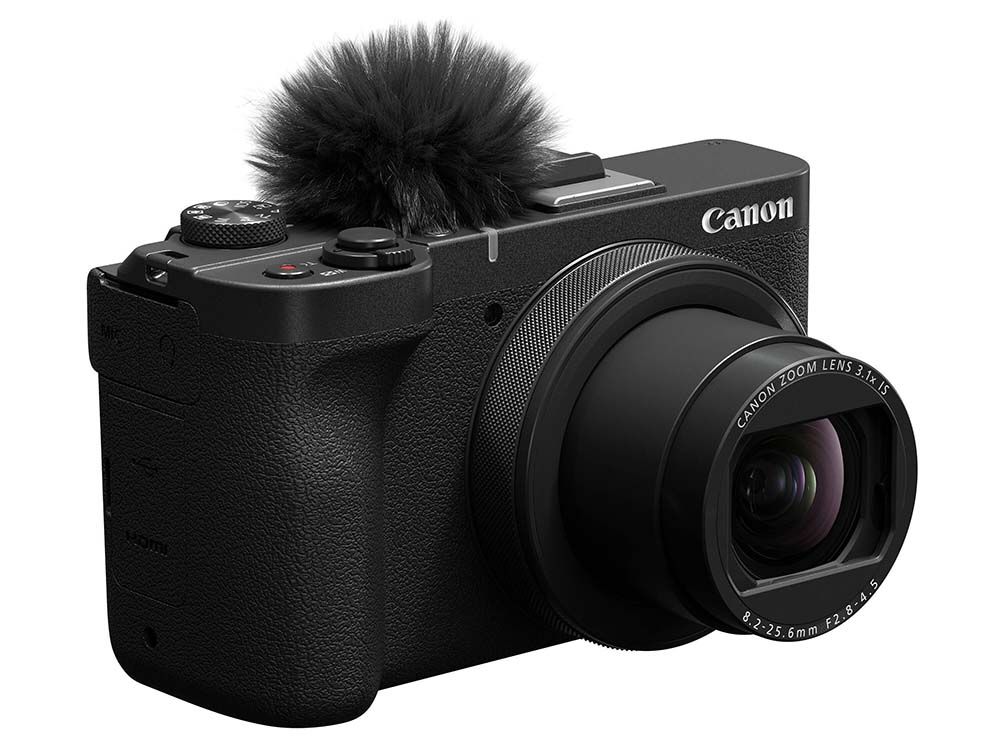
Specs
- Sensor: 1.4-inch CMOS; effective resolution: 22.3 megapixels; ISO: 100–32,000 (photo), 100–12,800 (video)
- Lens: 3.1x optical zoom (16–50 mm equivalent); aperture f/2.8–4.5; minimum focusing distance: 5 cm (wide angle), 15 cm (telephoto); built-in 3-stop ND filter
- Video: 4K UHD up to 60 fps (1.4x crop at 50/60 fps); Full HD up to 120 fps; unlimited 4K 30 fps recording; built-in stereo microphone, external microphone input, headphone output
- Photography: JPEG, HEIF, RAW, and C-RAW formats; continuous shooting: up to 15 fps mechanical, 30 fps electronic; shutter speed: 1/2000s mechanical, 1/16000s electronic
- Screen: 3-inch articulated touchscreen LCD
- Connectivity: Wi-Fi and Bluetooth; USB-C, micro-HDMI, microphone and headphone ports
- Battery: LP-E17, approx. 400 shots per charge
- Dimensions and weight: 118 x 68 x 52 mm; 379 g (body only), 426 g with battery
Buy Sony ZV-1 II
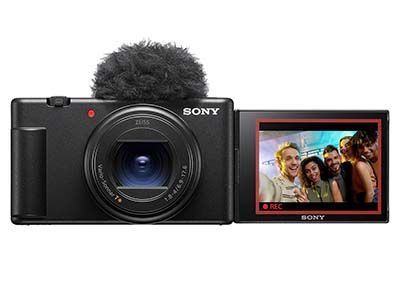
Sony ZV-1 II
Specs
- Design and ergonomics: Maintains the same compact chassis as the ZV-1. Tripod mount moved to an edge to improve access to the battery and memory compartment.
- Lens and image quality: 18-50 mm
- Image stabilization: Digital (crops the image to 22 mm when enabled).
- Audio: Improved microphone, no longer only forward-facing. Still lacks a headphone jack.
- Interface and usability: Improved touchscreen interface supporting nearly all functions and operations.
- Features and functions: ‘Product Showcase’ display, one-touch bokeh, skin smoothing. Includes new features: touch exposure, closer minimum focusing distance. USB-C port replaces Micro USB.
- Bit depth and file formats: Maintains 8-bit 4K/30.
- As an Amazon Associate, this website earn from qualifying purchases.