

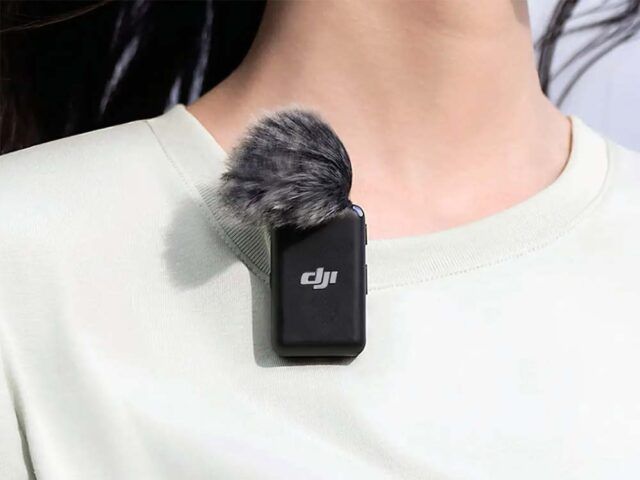
In video production, attention to image quality is often paramount. However, the crucial role of sound is sometimes underestimated. Let’s not forget this: a video with poor image but good audio can be tolerated—and even appreciated—by viewers; on the other hand, a video with flawless visuals but poor sound will most likely be unbearable.
The built-in microphone of our camera or phone should capture acceptable quality sound if we are close to it and the wind isn’t sabotaging us. But as soon as we move a few meters away, our voice will lose clarity and blend with the surrounding noise.
This is where wireless microphones come in, allowing us to achieve good sound even when we are many meters away from the camera.
How to Choose the Best Wireless Microphone
Any of the kits discussed in this buying guide can improve the audio quality of a video and provide at least “broadcast-quality” sound, meaning it meets the professional standards used in radio, television, and other media. But beyond that, it’s worth considering our specific needs before making a decision.
- Number of transmitters: If you just want to talk to the camera without the limitations of a wired microphone, consider an affordable kit that includes one transmitter mic and one receiver; this guide features the duo version of each kit, which allows one microphone for the interviewer and another for the interviewee, but you can also find single-transmitter versions, though not all models offer them.
- Configuration options: Think about whether you want a basic kit that lets you start recording right away, like the Godox WEC, or a more advanced one like the Saramonic Blink Me, which lets you view and manually adjust audio levels on the receiver.
- Built-in recording: This means the transmitter mic clipped to your clothing has internal memory that stores a copy of the audio, so if the wireless signal drops at any point, you’ll have a backup file to recover the sound for your video.
In general, the more you spend, the more features you’ll get, but even the cheapest kit in our guide will sound better than your camera or phone’s built-in microphone—especially once you step a few meters away from the recording device—and it will give you much more freedom.
Top Picks
You might not feel like reading the reviews of every single kit in this guide. To help you navigate, here are our suggestions:
- Most affordable wireless microphones: Joby Wavo Air
- Best-selling wireless microphones: Rode Wireless GO II
- Best wireless microphones for Sony cameras: Godox Virso S
- Best entry-level wireless microphones: Hollyland Lark M1
- Best mid-range wireless microphones: Rode Wireless GO II
- Best high-end wireless microphones: Saramonic BlinkMe B2
👉 All the wireless microphones featured in this guide are compatible with iPhone.
Best entry-level wireless microphones
Move the table to the left
| Transmitter battery | Transmitter weight | Maximum distance | Mic type | Dynamic range | Frequency range | Max SPL | Latency | Built-in recording | |
|---|---|---|---|---|---|---|---|---|---|
| Godox WEC | 8 h | 12 g | 200 m | Omni. | 86 db | 20Hz-20KHz | – | No | |
| 7Artisans | 6-8 h | 27 g | 100 m | Omni. | 70 dB | 20Hz-20KHz | 110dB | – | No |
| Hollyland Lark M1 | 8 h | 12 g | 200 m | Omni. | 86 dB | 20Hz-20KHz | 110dB | 20 ms | No |
| Joby | 6 h | 33 g | 50 m | Omni. | 80 dB | – | 120 dB | – | No |
Godox WEC

The Godox WEC Kit2 is the typical affordable wireless microphone kit. It consists of a case/charging base with two transmitter microphones (which could be placed, for example, on the lapels of a presenter and an interviewee). The case includes a receiver that can be connected via a 3.5 mm jack to a DSLR or with a USB-C cable to a smartphone. The kit is very quick and easy to use since the transmitters and receiver come fully charged and paired right out of the case.
The two transmitters are made of plastic and very lightweight, and feature buttons for basic gain control that allow adjusting recording levels in three increments, as well as a button to activate a software noise reduction function. This function reduces noise very effectively, allowing our voice to sound clear and crisp, although it can also sound flatter and more metallic than the deeper voice captured by the microphones in standard mode. If the presenter activates the noise reduction function, it also activates on the interviewee’s microphone, ensuring a consistent sound. The Godox WEC Kit2 works well at a distance, without signal loss even when turning your back to the receiver.
7Artisans DMic-S

The 7Artisans DMic-S wireless microphone kit contains two transmitters with built-in omnidirectional microphones and a receiver that must be connected to a camera or smartphone via a cable (includes a Lightning cable adapter for models before iPhone 15). Both transmitters feature built-in noise reduction, but the supplied windshields can also be attached. Automatic gain on the transmitters ensures clear, clean, and audible dialogue. The receiver can also capture a lower-level safety track at -6dB to reduce distortion. A 48 kHz sample rate and 24-bit depth help produce CD-quality audio.
Unlike the Godox WEC, which is similarly priced, the DMic-S receiver has a color screen that shows the sound quality being captured from the transmitter. It also has a 3.5 mm headphone port on the receiver that allows you to monitor signal loss or wind noise during recording. However, performance-wise, the DMic-S is inferior to the Godox WEC, as it tends to fail when the camera is turned away at 20 meters. Still, when facing the camera and with a clear transmission line, the voice sounds loud and clear at a test distance of up to 60 meters.
Hollyland Lark M1

If you’re new to wireless microphones, the Hollyland Lark M1 Duo kit is worth considering. The two transmitters and receiver charge simultaneously in a case to ensure optimal battery performance. As soon as you take the microphone and receiver out of the case, they instantly pair, and you can start recording with a camera or phone.
Regarding sound quality, it is excellent (just remember to remove a blue tape that protects the microphones, or you’ll think they don’t work). Both transmitters have a noise reduction button. On some devices, like the Godox WEC, the noise reduction software can make the voice sound flat and metallic, but with the Lark M1’s HearClear function, background noise is reduced without that happening. The kit also includes windshields.
Unlike many wireless microphones, there is no perceptible latency (delay) between lip movement and audio sync. The kit specs say there is a 20 ms latency, but when you watch the recording it is imperceptible, so you probably won’t need to spend time shifting the audio track one or two frames.
You can also buy the Lark M1 as a Duo kit for iOS or Android. The transmitters in these versions have a built-in USB-C or Lightning connector.
Joby Wavo Air

The JOBY Wavo AIR wireless microphones allow you to capture broadcast-quality audio from a distance of up to 50 meters. This kit includes two transmitters and one receiver with built-in omnidirectional microphones.
Each transmitter can be attached to a magnetic necklace to bring the mic closer to the speaker’s mouth. A clip-on windscreen effectively helps reduce wind noise. If you prefer not to show the transmitter, a traditional lavalier mic can be connected to the transmitter and the cable can be hidden under clothing.
The receiver can be connected to a camera or smartphone using the included TRS and TRRS cables. However, to connect the receiver to an iPhone, an additional jack-to-Lightning adapter is required.
Sound levels are adjusted using a button on the transmitters, though it’s easy to accidentally change these levels. The lack of a proper visual level indicator can be addressed by recording with the FiLMic Pro app, which allows precise level adjustments.
The Wavo AIR has an effective range of up to 50 meters when the transmission line is uninterrupted, though sound quality degrades if the line is lost. The transmitters and receiver are made from lightweight plastic and come factory-paired, ready to use. Battery life is approximately 6 hours, enough for most recording sessions.
Regarding latency (audio-video sync delay) when recording via Bluetooth, the delay is about 3 frames.
One downside is that the transmitters must be charged individually.
The best mid-range wireless microphones
Scroll the table to the left
| Transmitter battery | Transmitter weight | Maximum distance | Mic type | Dynamic range | Frequency range | Max SPL | Latency | Built-in recording | |
|---|---|---|---|---|---|---|---|---|---|
| DJI | 5.5 h | 30 g | 250 m | Omni. | – | – | 114 dB | – | Yes |
| Hollyland Lark Max | 8 h | 12 g | 200 m | Omni. | 86 dB | 20Hz~20KHz | 110 dB | – | Yes |
| Godox Virso | 13 h | 33 g | 200 m | Omni. | 90 dB | – | 110 dB | – | Yes |
| Godox Virso S | 13 h | 33 g | 200 m | Omni. | 90 dB | – | 110 dB | – | Yes |
| Saramonic Blink 500 Pro B2 | 8 h | 32 g | 100 m | Omni. | 80 dB | – | 120 dB | – | Yes |
| Rode Wireless GO II | 7 h | 30 g | 200 m | Omni. | – | – | – | – | Yes |
| SmallRig Forevala W60 | 8 h | – | 100 m | Omni. | – | – | – | – | – |
DJI Mic

Most of the wireless microphone receivers in this buying guide connect to a camera via a 3.5mm jack, and a third-party adapter is needed if you want to connect the receiver to a phone—this leaves the receiver dangling from a cable. The DJI Mic comes with small adapters that allow the receiver to be plugged directly into an Android or Apple phone, avoiding dangling cables that could snag. However, you must ensure the adapter is firmly inserted, or no audio will be recorded.
The DJI Mic kit appears to be well built, and the transmitters are sturdy without being too heavy. As with most wireless kits in this guide, the two DJI transmitters and receiver are housed in a charging base/case that is carried inside an additional protective case. The receiver features a touchscreen that gives access to submenus where you can adjust settings such as the transmitter’s audio levels. It may take a little time to navigate these submenus, but they provide full control. The transmitters also record a backup of the audio onto their internal memory, which can be used to restore audio in case of signal loss.
The transmitters produce rich, clear audio that doesn’t require post-production enhancement. In terms of performance and price, it’s a kit comparable to the Hollyland Lark Max.
Hollyland Lark Max

Desde el lanzamiento del kit de micrófonos inalámbricos Lark 150 en 2021, Hollyland ha presentado una serie de kits todo en uno que culminan con el Lark Max, lanzado en junio de 2023. Al igual que sus predecesores, el Lark Max incluye un estuche que también funciona como base de carga de sus componentes: dos transmisores y un receptor inalámbricos. Basta con quitar la cinta protectora, fijar un transmisor a nuestra ropa y conectar el receptor a un dispositivo como un smartphone o una cámara DSLR paSince launching the Lark 150 wireless mic kit in 2021, Hollyland has rolled out a series of all-in-one kits culminating in the Lark Max, released in June 2023. Like its predecessors, the Lark Max includes a case that doubles as a charging base for its two wireless transmitters and receiver. Simply remove the protective tape, attach a transmitter to your clothing, and connect the receiver to a device like a smartphone or DSLR camera to record wirelessly.
The microphones are the centerpiece of the Lark Max Duo. Both high‑sensitivity 48 kHz/24‑bit omnidirectional mics capture high‑quality audio regardless of orientation. With a 70 dB signal‑to‑noise ratio and a 120 dB SPL—exceeding what the Lark M1 offers—it minimizes distortion and audio loss in loud environments. Additionally, the Digital Signal Processing (DSP) enhances audio clarity and reduces unwanted noise.
A standout feature is Environmental Noise Cancellation (ENC), which allows the Lark Max to effectively manage ambient noise. Another benefit is built‑in recording: with the press of a button, you can record to the mic’s 8 GB internal memory, giving up to 14 hours of backup recording in case the signal between mic and receiver is lost.
The kit is housed in a rugged case that protects all contents, including windshields and lavalier mics for each microphone. The hard‑plastic charging case charges mics and receiver simultaneously via a USB‑C cable. The receiver’s display shows battery levels and case charge status.
Each transmitter runs for about 7.5 hours, and with the case’s recharge, total runtime extends to 22 hours. You can also use a lavalier mic for a more discreet setup. The receiver has a 3.5 mm output for DSLRs and a USB‑C to Lightning cable for iPhones.
Unlike the Lark M1, the Lark Max lets you adjust input levels directly on its 1.1″ touchscreen AMOLED receiver display. This enables precise level control and avoids audio distortion.
In tests, the mic maintained a clear signal even with obstacles like trees between mic and receiver. Its AFH signal transmission technology ensures uninterrupted audio recording.
Godox Virso and Virso S (Sony)

The Virso M2 kit and the Virso S M2 kit are nearly identical: both include a pair of wireless microphone transmitters and a receiver. The Virso S M2 kit features a receiver designed to slot into Sony’s Multi Interface Shoe. This connection provides a better signal than what can be achieved with a traditional 3.5 mm jack. The receiver in the Virso S kit also includes a built-in microphone that allows the camera operator’s voice to be recorded in addition to the audio from the two transmitters.
If you’re not a Sony user, the Virso M2 kit works well with cameras and smartphones (and the receiver from the Virso S M2 kit can also be connected to other cameras via the 3.5 mm jack).
Aside from Sony compatibility, both kits perform the same way: operating on 2.4 GHz, the transmitters have a range of up to 200 meters as long as there is a clear line of sight to the receiver. In tests conducted 100 meters away from the receiver, voices sounded loud and clear—even behind a thick brick wall. The mic’s windscreen and noise reduction feature allow for clear, high-volume recordings in difficult environments.
Saramonic Blink 500 Pro B2

The Saramonic Blink500 Pro B2 kit includes two wireless transmitters and one receiver. All components look identical and are only distinguished by labels: the transmitters are labeled “TX” and the receiver “RX”. This uniform design can cause confusion.
The three devices fit into a protective case that also functions as a charger, allowing all components to be charged simultaneously via a USB-C port and ensuring balanced charge levels across all devices.
The charging case also has a pairing button that instantly syncs the transmitters with the receiver, so they are ready to use as soon as they are taken out of the case. The kit includes windshields for the transmitters’ built-in microphones and lavalier microphones for closer, higher-quality audio capture.
The components are made of lightweight black plastic and weigh only 32 grams each, making them comfortable to wear. The transmitters have an OLED screen that displays settings such as microphone input mode and gain level for easy and intuitive adjustments.
The receiver features a headphone output, allowing you to monitor audio from both transmitters to detect issues like distortion or wind noise. However, it is recommended to monitor audio directly from the recording device for better accuracy.
The kit connects to cameras or smartphones using the included 3.5mm jack connectors. Recent iPhone users will need a jack-to-Lightning adapter, such as the UGREEN Lightning to 3.5mm Headphone Jack Adapter.
The transmitters have adjustable mic gain from 0 to 6. Levels above 4 tend to distort the sound, so it’s best to keep the gain at 3 to get clean, strong signals that can be amplified in post-production.
Audio signal occasionally drops beyond 30 meters if the subjects turn their backs to the camera, but with a clear line of sight, it remains stable up to about 100 meters.
As with many wireless microphones, there is slight latency—about three frames between audio and video. This isn’t noticeable on mobile devices and can be easily corrected in post-production.
Rode Wireless GO II
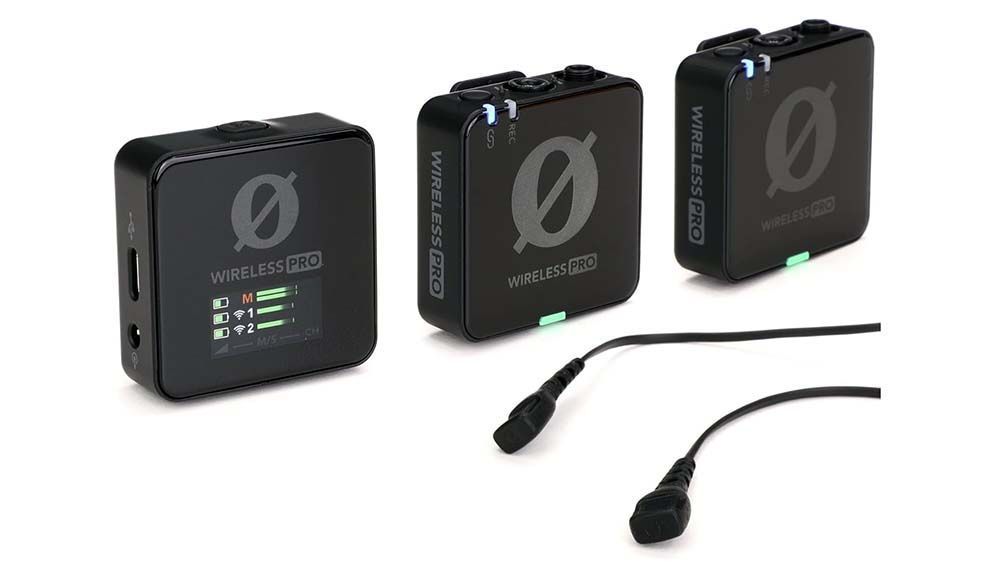
The Rode Wireless GO II is an advanced version of the popular Wireless GO microphone, featuring two transmitters instead of one. This package is ideal for recordings with two presenters or special occasions like weddings, allowing microphones for both the groom and the bride.
It uses the new 2.4GHz Series IV digital transmission with 128-bit Rode encryption, optimized to operate stably in areas with heavy RF activity. Both the transmitters and the receiver have built-in Li-po batteries that provide up to 7 hours of battery life.
The kit includes three USB-C cables for charging the batteries and connecting the devices to a computer, and an SC5 3.5mm TRS to TRS cable to connect the receiver to a camera. The “Merged” recording mode option combines the dual audio inputs into a single output, which is useful if only one transmitter is used. Additionally, the Wireless GO II allows recording a safety channel at 20dB lower, helpful in environments with sudden noises.
The windshields on the Wireless GO II mount with a bayonet lock that secures them in place, preventing them from falling off easily. Another significant improvement is the internal storage in the transmitters, allowing recordings up to 7 hours in uncompressed audio or 43 hours in compressed audio, which starts automatically when turned on and connected to the receiver. This serves as a backup in case of signal loss.
The devices are almost identical to the originals in appearance, with a screen on the receiver showing the settings of the two transmitters. The transmitters only have one power button, a USB-C port for charging, and a 3.5mm microphone port, allowing use with lavalier microphones or to convert other microphones like the Rode VideoMic into wireless ones.
The receiver has two control buttons besides the power button, allowing quick adjustments at startup. Advanced setup requires connection to a computer with the Rode Central software, which may be inconvenient for outdoor recordings.
Overall, the Rode Wireless GO II offers high-quality, natural audio in various situations, with good range as long as line of sight is not interrupted. In case of signal loss, internal storage provides reliable backup. It’s an excellent choice for those seeking a versatile and easy-to-use wireless microphone system.
SmallRig Forevala W60
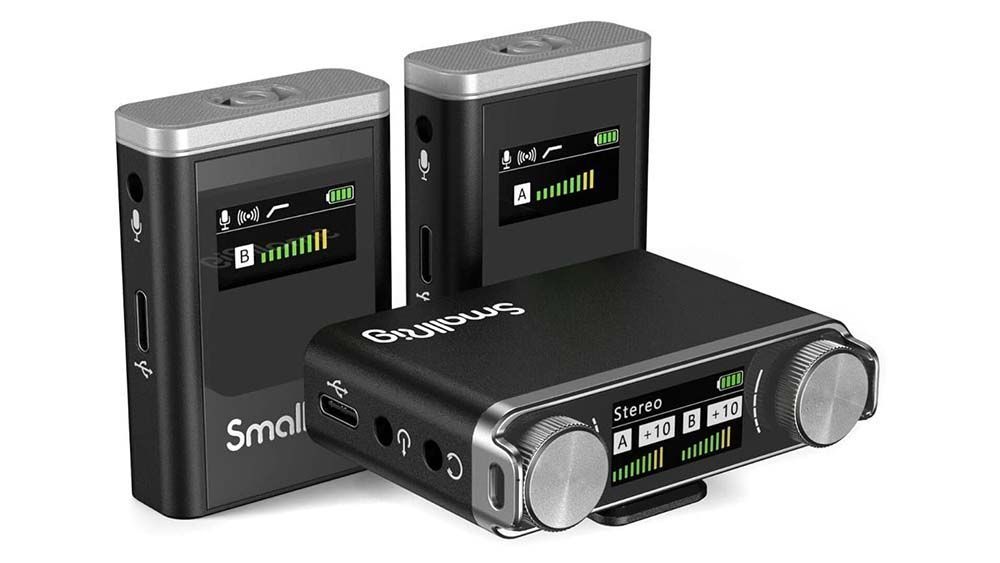
The recently released SmallRig Forevala W60 is a wireless microphone system that includes two transmitters and one receiver, allowing clear and crisp sound recording.
The W60 comes in a plastic case that also functions as a charger. The case has a cable that can be connected to a USB port, enabling simultaneous charging of the two transmitters and the receiver, ensuring all devices are fully charged and ready for long recording sessions.
Although the W60 does not include lavalier microphones like other kits such as the Boya BY-XM6-S2, the transmitters have an input for lavalier microphones, which is useful if you already own one. The transmitters also feature a low-pass filter that helps eliminate background noise such as traffic.
The receiver, which is slightly larger, has a headphone jack that allows monitoring the sound during recording to detect any issues. The kit is very easy to use, as the transmitters come factory-paired, so you only need to wear a transmitter and connect the receiver to a device to be ready to record.
It includes cables to connect the receiver to recorders, cameras, and smartphones. For iPhones, a TRS to Lightning adapter is required, such as the UGREEN Adapter [Amazon link].
What sets this kit apart are the LCD screens on the transmitters and receiver, which display visible audio waveforms to check if sound levels are distorting. The two dials on the receiver allow precise sound level adjustments, a somewhat more effective system than the buttons found on other sets like the JOBY Wavo AIR.
The SmallRig Forevala W60 allows clear recording on an iPhone without pairing issues. The LCD screens are visible even under sunlight, and sound levels can be easily adjusted to avoid distortion. Although the signal begins to drop at 17 meters when line of sight is interrupted, with a clear line of sight the sound was clear up to 60 meters. At 100 meters, the signal shows some drops, but these are easy to fix in post-production.
The best high-end wireless microphones
Scroll the table to the left
| Transmitter Battery | Transmitter Weight | Maximum Distance | Mic Type | Dynamic Range | Frequency Range | Max SPL | Latency | Built-in Recording | |
|---|---|---|---|---|---|---|---|---|---|
| Rode Wireless Pro | 7 h | – | 260 m | Omni. | 72 dB | 20Hz-20KHz | 123.5 dB | – | Yes |
| Saramonic BlinkMe B2 | 6-8 h | 30 g | 100 m | Omni. | – | – | – | – | Yes |
Rode Wireless Pro
At first glance, the Rode Pro kit looks like many of the wireless microphone sets featured in this buying guide. However, it offers some additional features that will appeal to professional video creators (and no joke, it has a price to match those features).
Unlike other kits in this guide, the Rode Pro can record 32-bit float files directly on its transmitters. This format contains so much information about the recorded audio that you don’t have to worry about setting sound levels, meaning if the microphone input levels are too high, you won’t get distorted audio. The transmitters can also be set to use GainAssist to capture appropriate sound levels (or you can take full manual control, if preferred).
Since this kit targets professional video creators, it includes timecode, allowing precise syncing of audio and video resources. As with all wireless microphone kits, the Rode Pro transmitters are quite visible when clipped to clothing. For a more discreet audio recording, you can wear a lavalier mic (included) on your clothing and connect its cable to the transmitter, which you can clip somewhere else, for example on your belt.
Saramonic BlinkMe B2
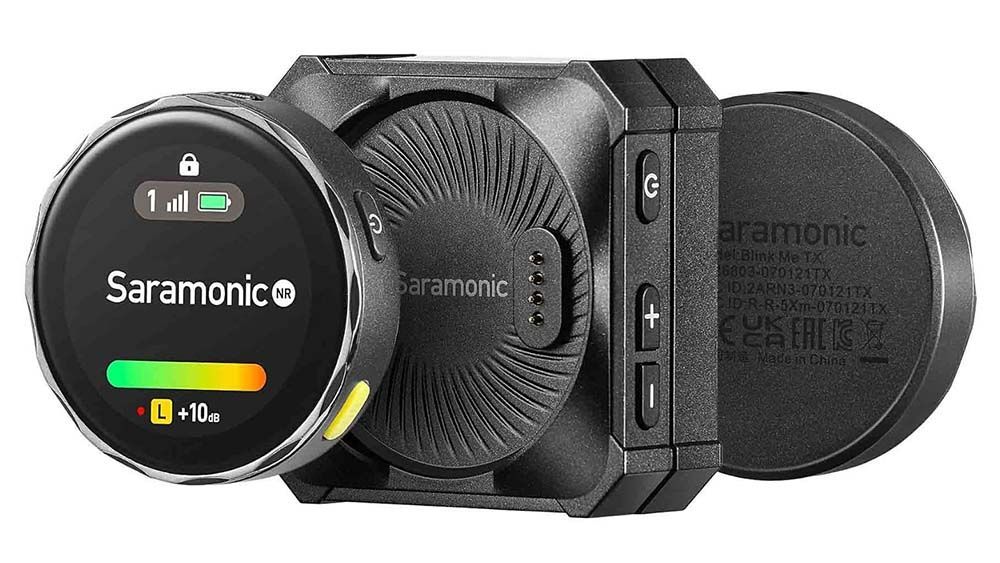
One of the biggest challenges a wireless microphone system must overcome is avoiding signal loss, especially when the direct line of sight between the transmitter mic and the receiver is obstructed. Another challenge is reducing wind noise. The Saramonic BlinkMe kit successfully overcomes both challenges. Additionally, its optional software noise reduction feature removes residual wind noise without creating a flat, metallic voice—unlike cheaper kits like the Godox WEC.
The transmitter can clearly transmit audio from up to around 80 meters away, even when facing away from the camera or walking behind a wall. In any case, to ensure that no part of the audio is ever lost, the BlinkMe transmitters feature built-in recording that stores a backup copy directly on the microphone. So, in the unlikely event of signal loss, the audio can be restored using the .wav file saved on the mic.
BlinkMe’s unusual circular transmitters include a touchscreen for monitoring and adjusting input levels. They’re solid but also heavier than others (30 g compared to the Godox WEC’s 12 g, for example), which can cause clothing to sag slightly when clipped on.
- fotografiamacro.org participa en el programa de afiliados de Amazon y obtiene ingresos por las compras adscritas que cumplen los requisitos aplicables.