

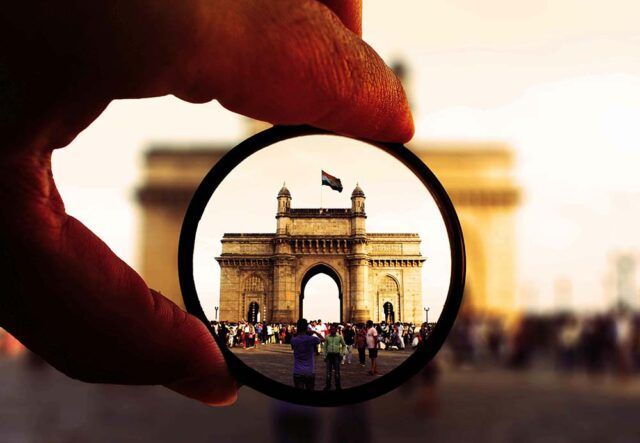
Neutral Density (ND) filters are among the most useful and versatile accessories in a photographer’s toolkit, especially when working with natural light or aiming for greater creative control over exposure. They’re simple to use, relatively affordable, and can unlock effects that are impossible to achieve straight out of the camera or through editing.
In this guide, we cover everything you need to know about them — from what they are and what they do, to how to choose the right ones for your photographic style.
What Is a Neutral Density Filter and What Is It For?
An ND filter is essentially a piece of neutral-toned optical glass placed in front of the lens that evenly reduces the amount of light entering the camera. Unlike other filters, it doesn’t change color, contrast, or sharpness (if it’s good quality). It simply darkens the scene, allowing us to use creative settings that would otherwise be impossible in bright lighting conditions.
So why would we want to reduce the light? Here are a few examples:
- To use a slow shutter speed in broad daylight (for example, imagine you want to capture a waterfall with that classic silky water effect. To achieve it, you need a slow shutter speed, but in bright daylight, the photo will likely be completely overexposed without an ND filter).
- To maintain a very wide aperture (like f/1.4 or f/2.0) and get a blurred background outdoors without overexposing the image. Without filters, it’s simply not possible.
- To control motion —either by freezing it in strong light or letting it flow with long exposures.
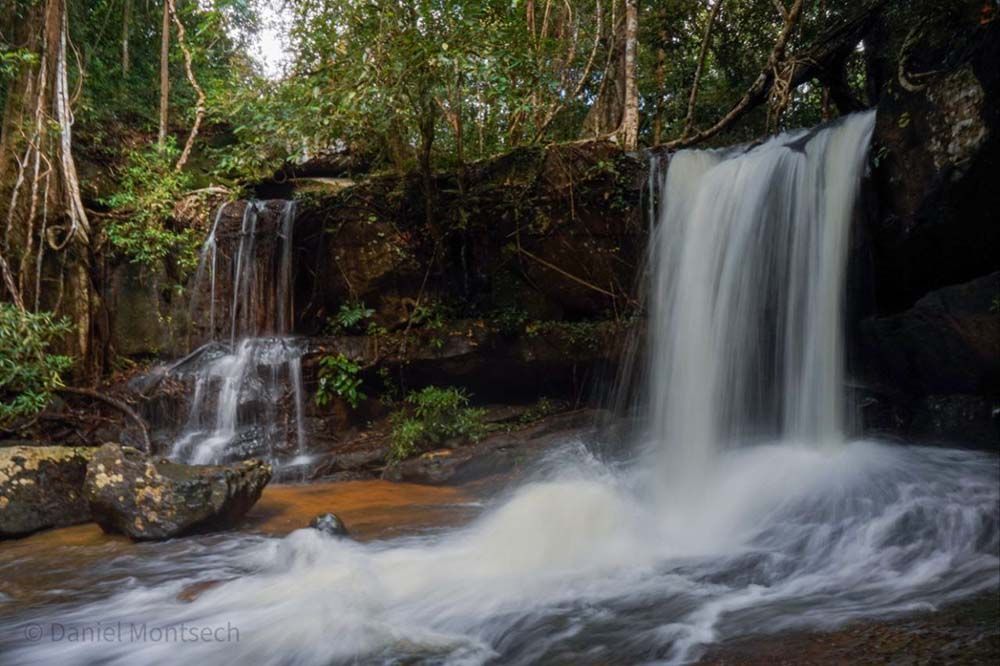
▌Thanks to a long exposure, the water of this waterfall turns into a soft, flowing mist, capturing a sense of calm that’s impossible to see with the naked eye.
How ND Filters Are Classified
ND filters are identified by their ability to block light, measured in f-stop reductions. An ND2 filter reduces light by 1 stop (allowing 50% of the light through), an ND4 by 2 stops (25%), an ND8 by 3 stops (12.5%), and so on. The more stops a filter blocks, the darker the image and the more dramatic the creative effects you can achieve.
Here are some typical use examples:
- ND2 or ND4: ideal for outdoor portraits where you just want to slightly reduce exposure without drastically changing your settings.
- ND8 to ND32: useful for shooting on cloudy or partly sunny days, allowing for background blur or subtle motion effects.
- ND64 to ND512: designed for bright light conditions, such as daylight landscapes or long exposure shots.
- ND1000 or higher: perfect for extended exposures, like moving skies, misty water effects, or urban scenes with light trails.
ND filters are classified by the amount of light they filter, measured in f-stops.
| ND Filter | Light Reduction | Approx. Transmission | Typical Use |
|---|---|---|---|
| ND2 | 1 stop | 50 % | Soft light / outdoor portraits |
| ND4 | 2 stops | 25 % | Moderate light / background blur |
| ND8 | 3 stops | 12.5 % | Cloudy days |
| ND16 | 4 stops | 6.25 % | Clear days without direct sun |
| ND32 | 5 stops | 3.12 % | Partly clear skies |
| ND64 | 6 stops | 1.56 % | Sunny day |
| ND128 | 7 stops | 0.78 % | Intense light |
| ND256 | 8 stops | 0.39 % | Direct sun / long exposure |
| ND512 | 9 stops | 0.19 % | Long exposure in full sun |
| ND1000 | 10 stops | 0.10 % | Prolonged exposure |
| ND10000 | 13 stops | 0.01 % | Very prolonged exposure |
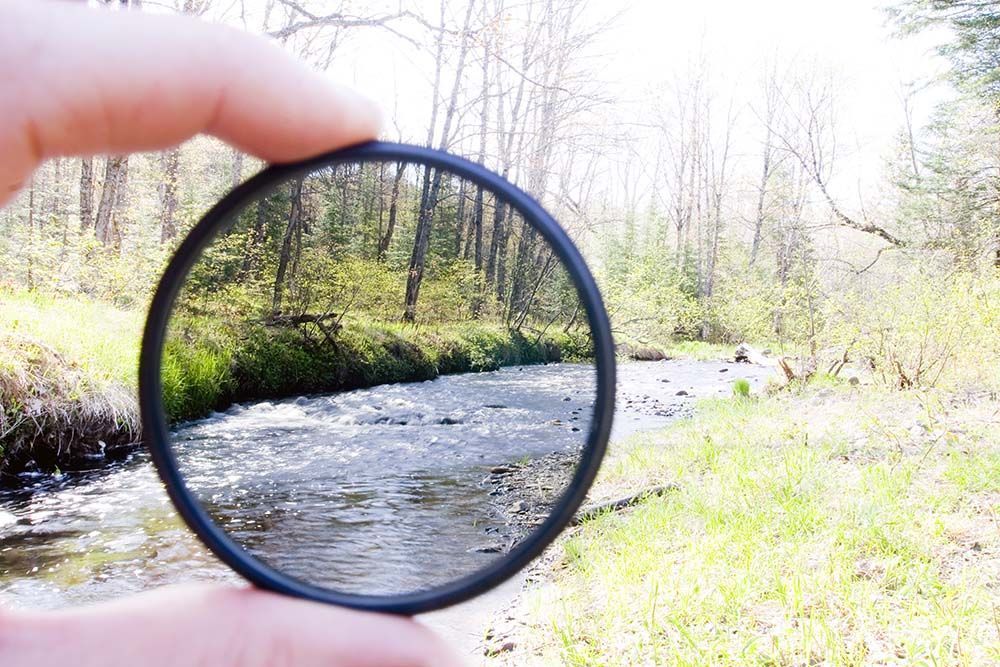
▌Demonstration of the effect of an ND filter: exposure was adjusted for the area covered by the filter, causing the rest of the image to appear overexposed. If the background had been exposed, the filtered area would look much darker.
Types of ND filters: fixed, variable, and system
Fixed ND filters
They have a specific density (such as ND64) and offer better optical quality. They are ideal for long-exposure photography. Professional brands take care with anti-reflective coatings, color fidelity, and sharpness.
Variable ND filters
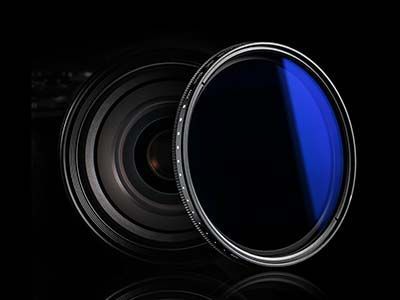
They allow adjusting the density by rotating the filter, generally between 2 and 5 stops. They are very popular in video because they enable quick adaptation to changing light without changing ISO, shutter speed, or aperture.
⚠️ Limitations: At high densities, cheap variable filters can cause:
- Vignetting (dark edges)
- Loss of sharpness
- Color casts (green or magenta)
- The so-called “X effect”: a dark cross caused by interference between the two polarized crystals that make up the filter.
Filter holder systems (square or rectangular)
Common in professional landscape photography. They consist of a holder that attaches to the lens and large-format filters (usually glass or optical resin) that are inserted as needed. They allow combining multiple filters (ND, polarizer, graduated, etc.) without threads.

▌Example of the “X effect” on a variable ND filter: as density increases, a dark cross appears in the center of the image, resulting from the interaction between the filter’s polarizers.
Practical tips for choosing an ND filter
- Buy filters for your largest diameter lens and use adapter rings for the smaller ones.
- Invest in decent quality filters. Cheap filters can ruin an image with reflections, lack of sharpness, or color casts.
- Check the coating. Ideally, the filter should have multi-layer coatings (MC or nano) to prevent internal reflections and make cleaning easier.
- Always keep it clean: dust, fingerprints, or water droplets are more visible in long-exposure scenes. A simple microfiber cloth makes a difference.
Conclusion: Is it worth using ND filters?
In short: yes. A good ND filter greatly expands our creative possibilities. It allows us to control time, play with blur, and enhance the visual storytelling of a scene. It’s not essential for everyone, but in the right hands, it can make the difference between an okay photo and a memorable one.
As with everything in photography, its value depends on our needs, style, and type of work. But if we’ve ever wanted more control over light or how motion is represented in our images, an ND filter might be exactly what we need.
Learn more:
- Concise Guide to Camera Filters
- Polarizing Filters: How They Work and Why to Use Them
- Ultraviolet Filters: Do They Actually Work?
- Sealed Zoom Lenses: The Essential Travel Companion
Buy ND filters on Amazon
⚠️ Remember: a good way to save money is to buy a filter for our largest-diameter lens and use step-down rings to use it with smaller lenses.
Adapter ring sets available on Amazon
- K&F Concept adapter rings
- Neewer adapter rings

Fixed ND filter kits
Variable ND filters
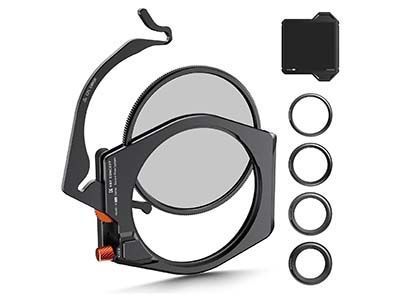
Filter holder systems
- As an Amazon Associate, this website earn from qualifying purchases.