


Extreme macro photography allows us to delve into a hidden and astonishing universe of tiny details that can only be captured one way: with total precision. And it is in this context that micrometric rails or linear stages become essential tools. But what are these devices and how are they used? Let’s see it.
What are micrometric rails?
Micrometric rails are devices similar to focusing rails but specifically designed for extreme macro photography and microscopy. Their main function is to allow extremely precise movements of the camera or the object to be photographed along one or more axes, which is essential for capturing the tiniest details with clarity and sharpness. These rails feature graduated scales that enable millimetric or micrometric adjustments depending on the need.

▌A manual micrometric rail
Advantages of Micrometric Rails
- Absolute precision: Micrometric rails allow for smooth and precise movements, ensuring flawless focus.
- Stability: Stability is key in extreme macro photography, where even the slightest vibrations can ruin a shot. Micrometric rails are usually solid and relatively heavy to help minimize vibrations and provide a stable platform for the camera.
- Repeatability: They allow you to mark exact positions and repeat them in future photo sessions. This is especially useful when working on a long-term project or when comparing images taken at different times.
- Increased focus range: Micrometric rails make focus stacking easier — a technique where multiple photos focused on different planes are taken and then combined into a single image to achieve greater depth of field. This technique is essential in extreme macro photography.
What are linear stages?
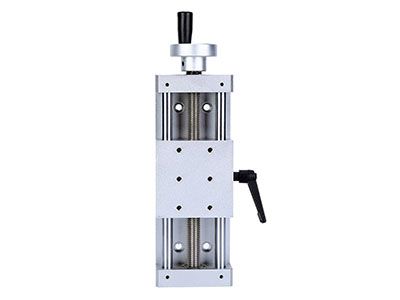
If our budget doesn’t stretch to a micrometric rail, we can use a linear stage — a device designed for precision movements. However, linear stages are not originally intended for photography, so we’ll need to adapt them by attaching an Arca-Swiss clamp and an Arca-Swiss plate, to which our camera will then be mounted. Keep in mind that these parts are the weakest links in the whole system, so it’s important they are of good quality.
Linear stages usually feature a series of screw holes, which we’ll use to attach the plate.


How to use micrometric rails and linear stages
- Setup: Place all the components of the system on a tripod or table, and make sure the setup is stable and level.
- Initial adjustments: Frame your subject and adjust the focus. If your camera allows for automated focus bracketing, lock the focus to prevent accidental movements.
- Precise movement: Use the micrometric rail to move the camera or the subject forward or backward in millimetric or micrometric increments, as needed, to achieve the desired focus.
- Proper lighting: Lighting is crucial in macro photography. Use soft, diffused light to avoid unwanted shadows and highlight details.

▌Mounting a linear stage on a tripod
Micrometric rails are (almost) essential tools in extreme macro photography. If you want to take your photography to the next level and capture the beauty of the small, consider adding one to your gear. Happy photo hunting!
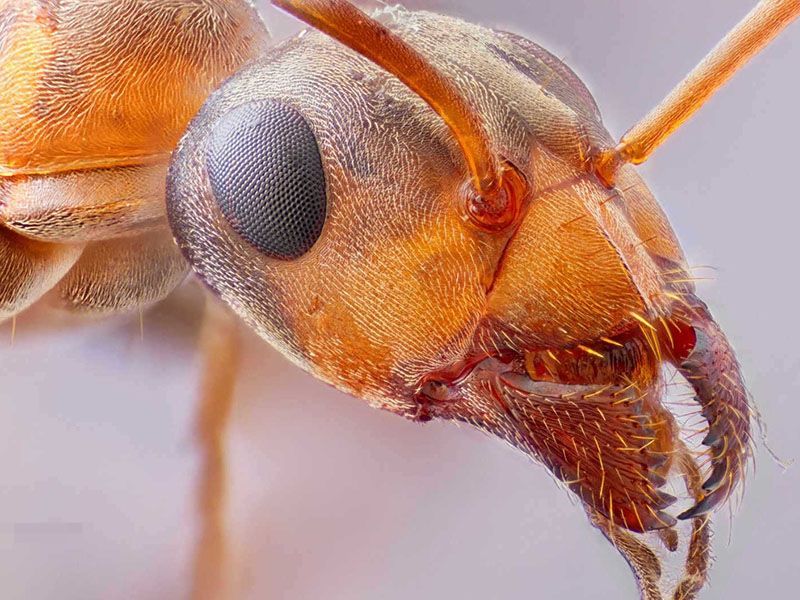
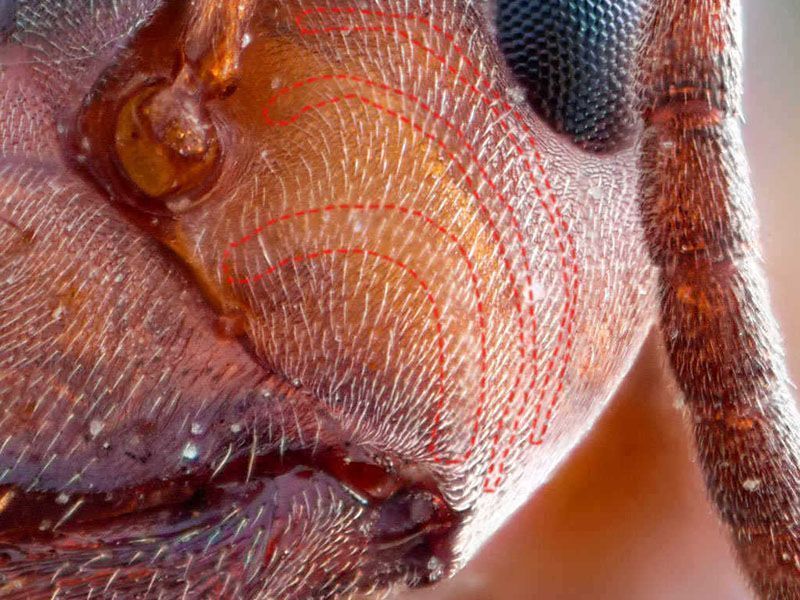
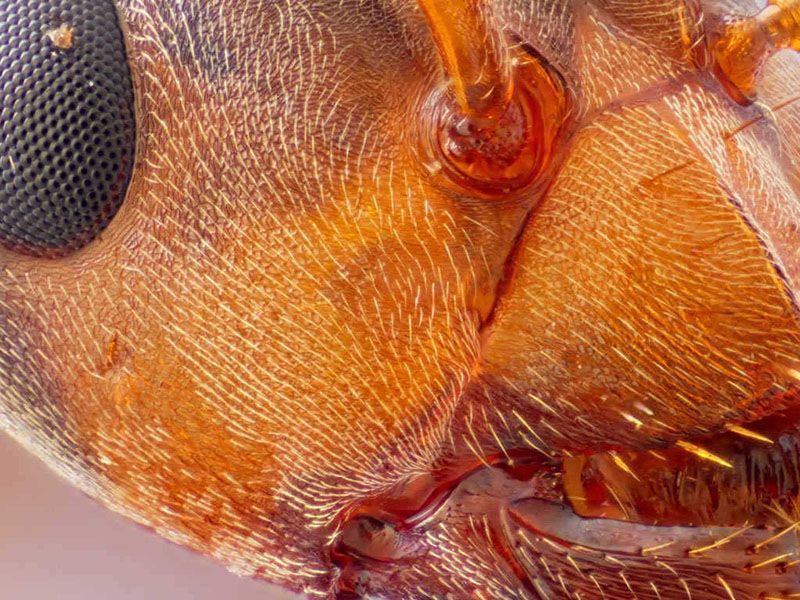
Comparison of results obtained with millimetric rails and micrometric rails (linear stage)

Top-rated linear stages on Amazon
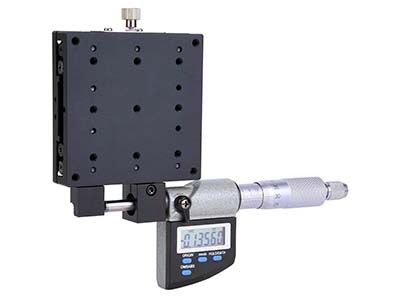
SEMX80-AS
Keenso
Jectse
Other options:
- Keenso SEMX60-AC (more affordable)
- TKSE (3 axes, XYZ)
- Duokon (3 axes, XYR)
- As an Amazon Associate, this website earn from qualifying purchases.