


Almost all modern cameras, even mid-range ones, offer more than enough image quality for most purposes. But when it comes to macro photography —especially true 1:1 or higher magnification—, certain technical aspects carry a weight we can’t overlook.
Photographing very small subjects up close means working with extremely shallow depth of field, millimeter-level error margins, and often demanding conditions in terms of light, stability, and control. In this scenario, it’s no longer enough to just check how many megapixels a camera has or the size of its sensor (though those still matter). In addition, we need gear that helps us work with precision, speed, and flexibility.
Here are some key features to look for in a camera for macro photography:
- Effective image stabilization (IBIS or OIS), especially when shooting handheld.
- Articulating screen, ideal for low or awkward angle compositions.
- Automatic focus stacking, to expand the sharp area without sacrificing detail.
- High-quality electronic viewfinder or live view, with aids like magnification or focus peaking.
- Dust and moisture sealing, especially useful for outdoor photography.
- Compatibility with true macro lenses, both native and third-party.
This article is a guide focused on those essential features. Although we suggest a few cameras at the end, the goal isn’t to declare winning models, but to help you understand which features are worth looking for if you want to get serious about macro photography—whether in the field or in the studio.
Types of Cameras and Sensors
You can do macro or close-up photography with almost any camera —including smartphones and advanced compacts—, but if you’re looking for versatility, image quality, and the ability to grow as a photographer, it’s best to choose a system with interchangeable lenses.
DSLR or mirrorless? The dilemma is over
Today, the practical choice for macro photography —and for almost any genre— is a mirrorless camera. With the heroic exception of Pentax, all major manufacturers have stopped developing consumer-level DSLR cameras, and current innovation is focused on mirrorless systems.
Why does this matter for macro?
If you’re trying to save money and are considering buying used gear, you may have thought about getting a DSLR. Well, in that case, you should know that mirrorless cameras offer specific advantages for macro photography:
- Electronic viewfinder (EVF): allows precise preview of exposure, focus, and depth of field before shooting.
- Live view: ideal for shooting from tricky angles, especially with the help of articulating screens.
- No mirror vibration: eliminates mechanical shake, improving sharpness at slow shutter speeds.
- Compatibility with digital focus aids, such as focus peaking, magnification, or real-time histogram.
- More compact size, making field photography more portable.
What about sensor size?

▌Framing simulation according to sensor size: The overlaid lines represent the apparent crop produced by each type of sensor using the same lens at the same shooting distance: black for full frame, blue for APS-C, and red for M43. The smaller the sensor, the tighter the framing.
Sensor size directly influences how we work in macro photography. It affects framing, working distance, depth of field, and the detail per millimeter that an image can capture.
Micro 4/3, with its smaller sensor, offers an apparent 2x magnification. This means that with the same lens, it is possible to fill the frame with small subjects without needing to get as close, which can make a difference when working with insects or in complex environments where you can’t intrude on the scene. Additionally, by concentrating the same number of pixels on a smaller surface, these sensors can offer a higher detail density per millimeter, something especially useful when the image is not cropped. In return, this format tends to show more noise at high sensitivities and lower performance in low light conditions, although recent advances have significantly reduced these differences.
APS-C represents an interesting balance. Its apparent magnification is 1.5x, allowing some distance from the subject while maintaining a tight frame, though not as much as Micro 4/3. It offers a good compromise between equipment size, image quality, depth of field control, and variety of available cameras and lenses. It is probably the most versatile format for those seeking a high-performance solution without the costs and demands of full frame.
Full frame, on the other hand, offers the best overall image quality, with more dynamic range, better high ISO performance, and greater shadow recovery and post-production editing capacity. But it also demands more. Depth of field is shallower, requiring precise focus management and, in many cases, focus stacking to achieve sharpness across the entire subject. Also, to get the same framing as APS-C or Micro 4/3, you usually need to get closer or use longer lenses, which can complicate work in certain field situations.
In short, each system has its strengths and limitations, and choosing one or the other depends on the type of macro photography you want to do, the environment you work in, and your personal priorities: portability, image quality, depth of field, optical flexibility, and budget.
- If you want to learn more about how sensor size affects macro photography, read Which system is better for macro photography: Full Frame, APS-C, or Micro 4/3?
Lens catalog: the key element
A camera is nothing without a good lens, and this is especially true in macro photography. All the major current systems — full frame, APS-C, and Micro 4/3 — have native macro lenses capable of achieving 1:1 magnification or greater. But there are important differences in variety, performance, and compatibility.
Here’s a review by brand:
- Canon (FF and APS-C): In the Canon RF system, the native macro lens lineup for full frame includes standout models like the RF 100 mm f/2.8L IS USM, offering magnification beyond 1:1 (up to 1.4x) and hybrid stabilization, as well as more compact and affordable options such as the RF 85 mm f/2 IS STM and the RF 35 mm f/1.8 IS STM, both with a maximum magnification of 1:2. Although these latter two do not reach life-size scale, they are very useful for close-up photography. For APS-C, Canon has yet to release dedicated RF-S macro lenses beyond some zooms with symbolic “macro” modes—like the 18–45 mm or 55–210 mm—whose true magnification is far from 1:1. However, one of the big advantages of the RF system is full compatibility with EF and EF-S lenses via adapter. This allows access to a wide range of established macro lenses, such as the EF 100 mm f/2.8L IS Macro, the EF-S 60 mm f/2.8 Macro, or even older specialized options. Learn more: Full range of macro lenses for Canon EOS (Full Frame and APS-C)
- Sony (APS-C and FF): Sony’s E-mount system has few native macro lenses: only three official models. The most notable is the FE 90 mm f/2.8 Macro G OSS, a stabilized lens with 1:1 magnification and a very good optical reputation. For APS-C, there’s the E 30 mm f/3.5 Macro, more limited in working distance, and the FE 50 mm f/2.8 Macro, which also works on APS-C bodies with crop factor. Although the native catalog is short, Sony benefits from a mount widely adopted by third parties (Laowa, Sigma, Tamron, Samyang…), which broadens options—though not all offer 1:1 magnification. Additionally, compatibility with DSLR lenses via adapters (especially Canon EF mount) allows access to other specialized lenses if manual focus is acceptable. Learn more: Full range of macro lenses for Sony E (Full Frame and APS-C)
- Nikon (FF and APS-C): In the full frame (Z FX) system, Nikon offers two quality native macro lenses: the Nikkor Z MC 105 mm f/2.8 VR S, with optical stabilization and excellent working distance, and the more compact and affordable Nikkor Z MC 50 mm f/2.8. Both achieve true 1:1 magnification. In APS-C (Z DX), Nikon has not released native macro lenses. Users have two main alternatives: use full frame Z-mount macro lenses (with automatic cropping, but increased size and weight), or resort to DSLR optics (F-mount DX), such as the well-known AF-S DX Micro NIKKOR 40 mm f/2.8G, using the FTZ adapter. There are also some third-party Z-mount options, mostly manual focus. Learn more: Full range of macro lenses for Nikon (Full Frame and APS-C)
- Fujifilm (APS-C): The native lineup includes the XF 80 mm f/2.8 OIS WR Macro, with 1:1 magnification and optical stabilization, and the more limited XF 60 mm f/2.4 Macro, which only reaches 1:2 and has slower autofocus. The catalog is not broad, but the system offers a wide range of third-party lenses. Manufacturers like Laowa, Zeiss, 7Artisans, TTArtisan, or AstrHori provide alternatives ranging from versatile lenses to specialized setups for extreme macro. Mostly manual focus, these lenses expand the available options and allow adapting the system for different creative or technical approaches, for both amateur and professional use. Learn more: Full range of macro lenses for Fuji X (APS-C) and Fuji G (medium format)
- Micro 4/3: Offers a solid and sufficiently varied range of native macro lenses, such as the M.Zuiko 90 mm F3.5, with 2:1 magnification, the Olympus M.Zuiko 60 mm f/2.8, or the Panasonic 30 mm f/2.8, among others. There are also third-party lenses (Laowa, 7artisans, Meike) for manual shooting, while the system easily allows adapting older optics thanks to its short flange distance. Learn more: Full range of macro lenses for Micro Four Thirds
Essential Functions
Image Stabilization (IBIS and OIS)
In macro photography, even the slightest vibration results in a blurry or soft image. When working with 1:1 magnification or higher, the depth of field shrinks to millimeters or even fractions of a millimeter, making it extremely difficult to maintain focus if there’s any movement—whether from the subject, the environment, or the photographer.
This is where image stabilization comes into play. It can be built into the camera body (IBIS), the lens (OIS), or both.

▌Although it’s sometimes assumed that macro work is always done with a tripod, the reality is that in the field, shooting handheld is very common: a tripod can be slow, awkward, or outright impractical if the subject is constantly moving or the terrain is uneven, making a good image stabilizer essential.
In-body stabilization systems are especially useful because they stabilize any lens you mount, including manual or vintage macro lenses. Some recent models, like the OM System OM-1 or Fujifilm X-T5, allow for shutter speeds that would have been unthinkable a decade ago when shooting handheld macro, with improvements of up to 5–7 stops depending on the system.
Practical example: if with a non-stabilized camera you’d need to shoot at 1/250 s with a 100 mm macro to avoid blur, a camera with good IBIS might let you shoot at 1/30 s or even slower. This greatly expands your options in low-light conditions without needing to resort to very high ISOs or flash units.
Focusing: Manual Precision and Digital Assistance
Most advanced macro photographers use manual focus, especially for very close-up shots. The reason is simple: the depth of field is so shallow, and the focus plane so critical, that relying on autofocus is often unreliable.
In this context, the camera must provide good focus assist tools. The most useful ones are:
- Focus peaking: highlights the in-focus areas with color, ideal for working quickly without constant magnification.
- Magnification (loupe): allows digital zoom in the viewfinder or on the screen to check the focus point with maximum precision.
- Contrast-detect autofocus in live view: usually more accurate than phase detection at very close distances, though somewhat slower.
Recommendation: look for lenses that allow you to limit the focus range (for example, from 30 to 50 cm) or set custom focus zones to avoid autofocus “hunting” in macro photography (Learn more: How to choose a macro lens).
Viewfinder and Screen: Seeing Well Means Focusing Better
One of the biggest challenges in macro photography is making sure the focus is exactly where we want it. And that starts with being able to see clearly. Mirrorless cameras have a clear advantage here thanks to the electronic viewfinder (EVF), which allows for real-time digital magnification, visual aids like focus peaking, and viewing the exact depth of field at the selected aperture.
In DSLR cameras, the optical viewfinder doesn’t offer this kind of assistance, and precise focusing typically relies on using live view on the screen.
Tilting/Articulated Screen: Difficult Angles Without a Stiff Neck
Another crucial element for macro photography—especially in the field—is a tilting or fully articulated rear screen. Shooting at ground level, from low angles, or in awkward positions is common, and having a screen that can freely rotate makes framing and composing much easier without straining your neck, crouching too much, or working blindly.
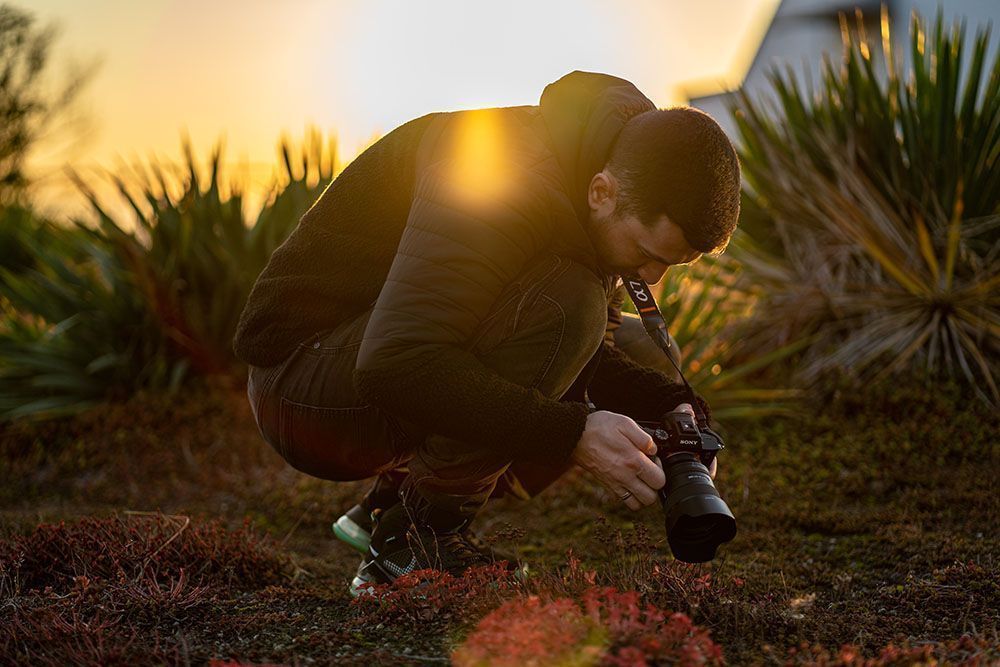
▌If we’re doing macro photography of mushrooms, insects in low areas, or small plants, a tilting screen can save us more frustration (and back pain) than many other extras.
Silent and Remote Shooting
Silent Shooting: The electronic shutter is ideal for avoiding vibrations and working without disturbing the subject (especially insects). It also allows burst shooting without mechanical wear.
Remote shooting or via app: Shooting without touching the camera prevents movement. Modern apps allow control of focus, aperture, ISO, and even viewing the framing in real time from your phone, which is especially useful for stacking or meticulous work. Still, a remote shutter release or simply using the timer is often quicker in practice than using the app, which requires juggling two devices.
Focus Bracketing and Focus Stacking
As mentioned, one of the biggest limitations in macro photography is the extremely shallow depth of field we have to work with. Even stopping down to f/11 or f/16, it’s impossible to capture an entire subject without parts of it being out of focus.
To solve this, focus stacking is used: a technique that involves taking several photos, slightly changing the focus point each time, and then digitally combining them into one image with a larger focused area (Learn more: What is focus stacking).
Many modern cameras offer automatic focus bracketing. Some even allow full in-camera stacking and directly generate the final file, saving (a lot of) time, reducing errors, and making the technique feasible even for field photography.
Current Cameras with Focus Stacking Features (Bracketing and Stacking)
Slide the table to the left
| Brand | Model | Sensor | Bracketing | Stacking | Max Number of Photos |
|---|---|---|---|---|---|
| Sony | α7R V, α6700 | FF / APS-C | ✅ | ❌ | ~299 (bracketing only) |
| OM System | OM-1, OM-5, E-M1 III, E-M5 III | Micro 4/3 | ✅ | ✅ | 999 (bracketing) / 15 (stacking) |
| Panasonic Lumix | G9, GH5 II, G95, S5 II, S1R | Micro 4/3 / FF | ✅ | ✅ | 999 (bracketing) / 10 (stacking) |
| Fujifilm | X-T5, X-S20, X-T30 II | APS-C | ✅ | ❌ | 999 (bracketing only) |
| Canon | EOS R7, R10, R8, R5 | APS-C / FF | ✅ | ❌ (stacking only via software) | ~200 (bracketing only) |
| Nikon | Z6 II, Z7 II, Z8, Z9 | FF | ✅ | ❌ (automatic bracketing only) | 300 (bracketing only) |
| Pentax | K-1 II, K-3 III | FF / APS-C | ✅ | ❌ (requires external software) | – |
Body sealing and ergonomics
Sealing
Anyone who does outdoor macro photography knows conditions aren’t always ideal: dew, unexpected rain, mud, dust, sudden temperature changes… Any mishap can affect your gear if it’s not prepared.
That’s why a body sealed against dust and moisture offers greater durability guarantees. So does a sturdy construction, with well-protected buttons, seals on covers, and materials resistant to shocks or accidental pressure (common when crawling over stones or vegetation).
Tip: also make sure the chosen macro lens has some degree of sealing. A sealed body with a vulnerable lens is no longer sealed.
Size, weight, and ergonomics
Portability does matter (though it’s not everything)
Macro photography often requires moving around, crouching, holding the camera with one hand while pushing a branch aside with the other, or holding uncomfortable positions for minutes.
That’s why the total weight of the gear and how it feels in hand are crucial factors. You shouldn’t just look at the grams listed in the specs, but consider the balance between body and lens, the actual grip, and whether the system allows mounting accessories without making it unstable or uncomfortable.
Conclusion and Final Recommendations
There’s no perfect camera, but there is one that fits our needs and budget better. The main thing is to understand how you work:
- Do you prefer to move light or don’t mind setting up a small studio in the woods?
- Are you looking for handheld agility or surgical precision with a tripod and stacking?
- Do you shoot living subjects that might run away or static structures like crystals or textures?
- Are you willing to accept some compromises in image quality or do you want the best possible image quality?
- Are you looking for versatile gear or the best you can afford for macro?
- How much are you willing to invest?
Recommendations by System: Balanced Cameras for Demanding Macro
Choosing a camera for macro photography doesn’t have to mean going for the most expensive model. In fact, many key features for this type of work—like automated focus stacking, good image stabilization, quality electronic viewfinders, sealed bodies, or articulating screens—have been available for years in mid-range bodies that offer excellent value for money.
Below is a selection of representative models for each system. Factors such as macro performance, portability, specific features, and overall reliability have been considered, avoiding the most expensive or exclusive models from each brand whenever possible.
Slide the table to the left
| System | Model* | Resolution | IBIS | Bracketing | Stacking | Screen | Sealing |
|---|---|---|---|---|---|---|---|
| Full Frame (Canon) | Canon EOS R6 Mark II | 24 MP | Yes | Yes | No | Articulated | Yes |
| APS-C (Canon) | Canon EOS R7 | 32 MP | Yes | Yes | No | Articulated | Yes |
| Full Frame (Sony) | Sony α7 IV | 33 MP | Yes | Yes | No | Articulated | Yes |
| APS-C (Sony) | Sony α6700 | 26 MP | Yes | No | No | Articulated | Yes |
| Full Frame (Nikon) | Nikon Z6 II | 24 MP | Yes | Yes | No | Tiltable | Yes |
| APS-C (Fujifilm) | Fujifilm X-T5 | 40 MP | Yes | Yes | Yes | Tiltable | Yes |
| Full Frame (Lumix) | Panasonic Lumix S5 II | 24 MP | Yes | Yes | Yes | Articulated | Yes |
| Micro 4/3 (Lumix) | Panasonic Lumix G9 II | 25 MP | Yes | Yes | Yes | Articulated | Yes |
| Micro 4/3 (OM System) | OM System OM-5 II | 20 MP | Yes | Yes | Yes | Fully tiltable | Yes |
| Pentax (APS-C) | Pentax K-3 Mark III | 26 MP | Yes | Yes | No | Fixed | Yes |
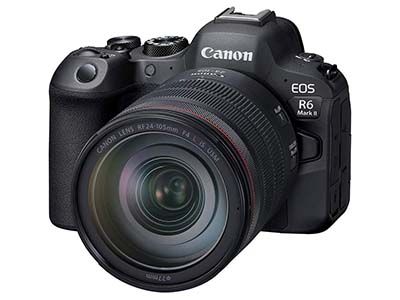
Canon EOS R6 II
General Specifications
- Mount: Canon RF
- Sensor: 24.2 MP full-frame CMOS (35.9 x 23.9 mm)
- Processor: DIGIC X
- In-body Stabilization (IBIS): Up to 8 stops with compatible lenses
- Native ISO: 100–102,400 (expandable to 50–204,800)
- Mechanical Shutter: 1/8000 s – 30 s
- Electronic Shutter: Up to 1/16,000 s
- Burst Rate: 12 fps (mechanical), up to 40 fps (electronic, with AF tracking)
- Autofocus: Dual Pixel CMOS AF II with 1053 zones
- Rear Screen: Touch LCD, fully articulating, 3″, 1.62 M dots
- Electronic Viewfinder: OLED, 3.69 M dots, 0.76x magnification
- Video: 6K RAW external, 4K 60p oversampled (no crop), Full HD 180p
- Inputs/Outputs: Microphone, headphones, micro HDMI, USB-C
- Connectivity: Wi-Fi, Bluetooth
- Body: Magnesium alloy, dust- and splash-resistant
- Dimensions: 138.4 x 98.4 x 88.4 mm
- Weight: 670 g (with battery and card)
- Battery: LP-E6NH, approx. 580 shots (CIPA)
- Card Slot: 2x SD UHS-II
Key Features for Macro Photography
- Full-frame sensor: Shallower depth of field, greater control over blur
- IBIS stabilization: Up to 8 stops
- Focus bracketing: Yes, configurable from menu
- In-camera focus stacking: No, requires external software (e.g., Canon DPP or Helicon)
- Focus peaking: Yes
- Focus magnifier: Yes, with customizable magnification
- Electronic shutter: Silent, vibration-free
- Articulated screen: Ideal for macro at low or difficult angles
- Ergonomics and sealing: Sturdy body, good grip, weather-resistant
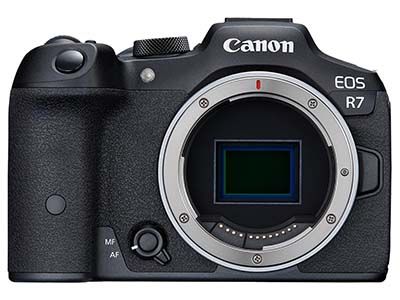
Canon EOS R7
General Specifications
- Mount: Canon RF (APS-C format)
- Sensor: 32.5 MP APS-C CMOS (22.3 x 14.8 mm)
- Processor: DIGIC X
- In-body stabilization (IBIS): Up to 8 stops with compatible lenses
- Native ISO: 100–32,000 (expandable to 51,200)
- Mechanical shutter: 1/8000 s – 30 s
- Electronic shutter: Up to 1/16,000 s
- Burst: 15 fps (mechanical), up to 30 fps (electronic, with continuous AF)
- Autofocus: Dual Pixel CMOS AF II with 651 zones
- Rear screen: Fully articulating 3″ touchscreen LCD, 1.62M dots
- Electronic viewfinder: OLED, 2.36M dots, 0.72x magnification
- Video: 4K 60p (oversampled from 7K), Full HD up to 120p
- Inputs/outputs: Microphone, headphones, micro HDMI, USB-C
- Connectivity: Wi-Fi, Bluetooth
- Body: Magnesium alloy, weather-sealed against dust and splashes
- Dimensions: 132.0 x 90.4 x 91.7 mm
- Weight: 612 g (with battery and card)
- Battery: LP-E6NH, approx. 660 shots (CIPA)
- Card slot: 2x SD UHS-II
Key Features for Macro Photography
- APS-C sensor (1.6x): Greater apparent magnification with standard macro lenses
- High resolution: 32.5 MP allows cropping without losing detail
- IBIS stabilization: Up to 8 stops, great for handheld macro
- Focus bracketing: Yes, with control over number of shots and intervals
- In-camera focus stacking: No, requires external software
- Focus peaking: Yes
- Focus magnifier: Yes, with configurable zoom
- Electronic shutter: Silent and vibration-free
- Articulating screen: Useful for low-angle or awkward macro shots
- Ergonomics and sealing: Sturdy, weather-sealed body, field-ready
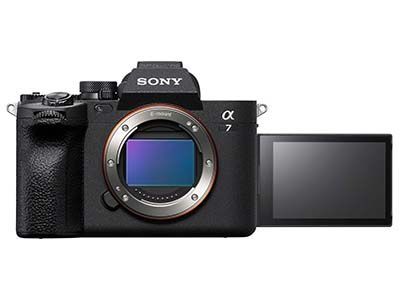
Sony α7 IV
General Specifications
- Mount: Sony E (full-frame format)
- Sensor: 33 MP back-illuminated full-frame Exmor R CMOS (35.6 x 23.8 mm)
- Processor: BIONZ XR
- In-body stabilization (IBIS): Up to 5.5 stops
- Native ISO: 100–51,200 (expandable to 50–204,800 in photo)
- Mechanical shutter: 1/8000 s – 30 s
- Electronic shutter: Up to 1/8000 s
- Burst rate: 10 fps (mechanical/electronic) with continuous AF
- Autofocus: 759 phase-detection points with real-time tracking (Human/Animal Eye AF)
- Rear screen: Fully articulating 3″ touchscreen LCD, 1.03M dots
- Electronic viewfinder: OLED, 3.69M dots, 0.78x magnification
- Video: 4K 60p (10-bit, 4:2:2), 4K oversampled from 7K (up to 30p), Full HD 120p
- Inputs/outputs: Mic, headphone, micro HDMI, USB-C 3.2, flash sync
- Connectivity: Wi-Fi, Bluetooth, FTP, USB streaming
- Body: Magnesium alloy, weather-sealed against dust and moisture
- Dimensions: 131.3 x 96.4 x 79.8 mm
- Weight: 658 g (with battery and card)
- Battery: NP-FZ100, approx. 580 shots (LCD) / 520 (EVF)
- Card slots: 2 slots (1x CFexpress Type A + SD UHS-II, 1x SD UHS-II)
Key Features for Macro Photography
- Full-frame sensor: Creative control of background blur and shallow depth of field
- High resolution: 33 MP allows detailed crops, useful in macro without getting too close
- IBIS stabilization: Up to 5.5 stops; helpful for handheld shots (less effective at extreme magnifications)
- Focus bracketing: Not available natively (requires external intervalometer or third-party software)
- In-camera focus stacking: Not available; must be done with external software
- Focus peaking: Yes, color and intensity customizable
- Focus magnifier: Yes, with customizable magnification and assist
- Silent electronic shutter: Yes
- Articulated screen: Ideal for low or angled macro shots
- Ergonomics and sealing: Solid body with excellent grip, ready for the field
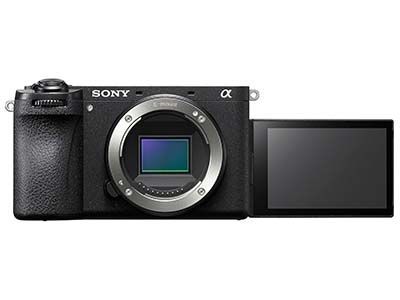
Sony α6700
General Specifications
- Mount: Sony E (APS-C format)
- Sensor: 26 MP back-illuminated APS-C Exmor R CMOS (23.5 x 15.6 mm)
- Processor: BIONZ XR + dedicated AI chip
- In-body stabilization (IBIS): Up to 5 stops
- Native ISO: 100–32,000 (expandable to 50–102,400)
- Mechanical shutter: 1/4000 s – 30 s
- Electronic shutter: Up to 1/8000 s
- Burst shooting: Up to 11 fps (mechanical and electronic) with AF tracking
- Autofocus: 759 phase-detection points with intelligent tracking (Eye AF for humans/animals/insects)
- Rear screen: Fully articulating 3″ touchscreen LCD, 1.03M dots
- Electronic viewfinder: OLED, 2.36M dots, 0.70x magnification
- Video: 4K 60p oversampled from 6K, 4K 120p (cropped), 10-bit 4:2:2
- Inputs/outputs: Microphone, headphones, micro HDMI, USB-C 3.2
- Connectivity: Wi-Fi, Bluetooth, USB streaming
- Body: Magnesium alloy, dust and moisture resistant
- Dimensions: 122 x 69 x 75.1 mm
- Weight: 493 g (with battery and card)
- Battery: NP-FZ100, approx. 570 shots (LCD) / 550 (EVF)
- Card slot: 1x SD UHS-II
Key Features for Macro Photography
- APS-C sensor (1.5x): Higher effective magnification with standard macro lenses
- Good resolution: 26 MP allows cropping while retaining detail
- IBIS stabilization: Up to 5 stops; helpful for handheld macro under moderate conditions
- Focus bracketing: Not natively available
- In-camera focus stacking: Not available; requires external software
- Focus peaking: Yes, color and intensity customizable
- Focus magnifier: Yes, with detailed control
- Silent electronic shutter: Yes
- Articulating screen: Great for low or awkward macro angles
- Ergonomics and sealing: Compact design, good grip, resistant to moderate outdoor use
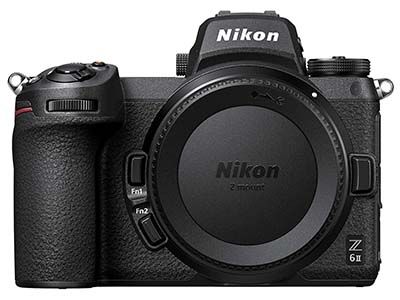
Nikon Z6 II
General Specifications
- Mount: Nikon Z (full-frame format)
- Sensor: 24.5 MP full-frame BSI CMOS (35.9 x 23.9 mm)
- Processor: Dual EXPEED 6
- In-body stabilization (IBIS): Up to 5 stops
- Native ISO: 100–51,200 (expandable to 50–204,800)
- Mechanical shutter: 1/8000 s – 30 s
- Electronic shutter: Up to 1/8000 s
- Burst shooting: Up to 14 fps (12-bit RAW), 10 fps (14-bit RAW)
- Autofocus: 273 phase-detection points on sensor with Eye AF (human and animal)
- Rear screen: 3.2″ tilting touchscreen LCD, 2.1M dots
- Electronic viewfinder: OLED, 3.69M dots, 0.80x magnification
- Video: 4K UHD up to 60p (cropped at 60p), Full HD 120p
- Inputs/outputs: Microphone, headphones, micro HDMI, USB-C, flash sync
- Connectivity: Wi-Fi, Bluetooth
- Body: Magnesium alloy, weather-sealed against dust and splashes
- Dimensions: 134 x 100.5 x 69.5 mm
- Weight: 705 g (with battery and card)
- Battery: EN-EL15c, approx. 410 shots (CIPA, EVF)
- Card slots: 1x CFexpress Type B / XQD + 1x SD UHS-II
Key Features for Macro Photography
- Full-frame sensor: Shallower depth of field, useful for subject-background separation
- 24.5 MP resolution: Good balance of detail and noise control
- IBIS stabilization: Up to 5 stops; helpful for handheld macro (less effective at extreme magnifications)
- Focus bracketing: Yes, via “Focus shift shooting” mode
- In-camera stacking: No; requires external software (e.g., Helicon or Photoshop)
- Focus peaking: Yes, with color and intensity options
- Focus magnifier: Yes, during manual focusing or playback
- Silent electronic shutter: Yes, ideal for vibration-free macro shots
- Tilting screen: Handy for low-angle macro shots (not fully articulated)
- Ergonomics and sealing: Rugged body, great grip, built for demanding outdoor use
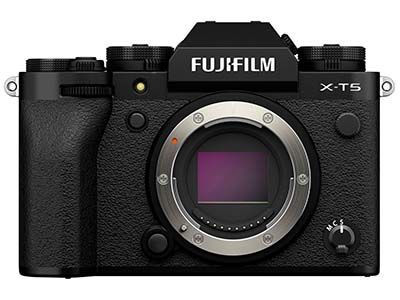
Fuji X-T5
General Specifications
- Mount: Fujifilm X (APS-C format)
- Sensor: 40.2 MP backside-illuminated APS-C X-Trans 5 HR CMOS (23.5 x 15.6 mm)
- Processor: X-Processor 5
- In-body stabilization (IBIS): Up to 7 stops
- Native ISO: 125–12,800 (expandable to 64–51,200)
- Mechanical shutter: 1/8000 s – 15 min
- Electronic shutter: Up to 1/180,000 s
- Burst shooting: 15 fps (mechanical), up to 20 fps (electronic with 1.29x crop)
- Autofocus: 425 phase-detection points with AI-powered subject detection
- Rear screen: 3″ touchscreen LCD, 3-way tilt, 1.84M dots
- Electronic viewfinder: OLED, 3.69M dots, 0.80x magnification
- Video: 6.2K at 30p, 4K at 60p, 10-bit 4:2:2 internal, F-Log2
- Ports: Mic, headphones (via USB-C), micro HDMI, USB-C 3.2
- Connectivity: Wi-Fi, Bluetooth
- Body: Magnesium alloy, weather-sealed against dust, moisture, and cold
- Dimensions: 129.5 x 91 x 63.8 mm
- Weight: 557 g (with battery and card)
- Battery: NP-W235, approx. 580 shots (LCD) / 470 (EVF)
- Card slots: 2x SD UHS-II
Key Features for Macro Photography
- 40 MP APS-C Sensor: High resolution, ideal for detailed cropping
- 1.5x Crop Factor: Effective magnification boost with standard macro lenses
- IBIS Stabilization: Up to 7 stops; excellent for handheld macro work
- Focus Bracketing: Yes, configurable for shot count, interval, and focus steps
- In-camera Focus Stacking: No; requires external software
- Focus Peaking: Yes, customizable
- Focus Magnifier: Yes, with precise manual focusing aid
- Silent Electronic Shutter: Yes, perfect for avoiding vibrations
- 3-way Tilting Screen: Great for low-angle or angled macro shots (not fully articulating sideways)
- Ergonomics and Sealing: Compact, durable body designed for demanding outdoor use
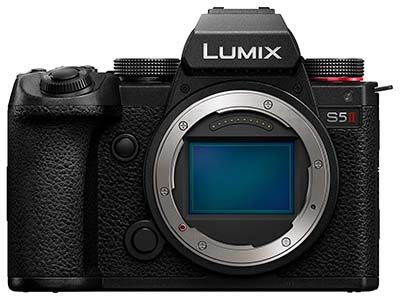
Lumix S5 II
General Specifications
- Mount: L-Mount (full-frame format)
- Sensor: 24.2 MP full-frame CMOS (35.6 x 23.8 mm) without low-pass filter
- Processor: L² Technology (co-developed with Leica)
- In-body stabilization (IBIS): Up to 6.5 stops (up to 7 stops with Dual I.S. 2)
- Native ISO: 100–51,200 (expandable to 50–204,800)
- Mechanical shutter: 1/8000 s – 60 s
- Electronic shutter: Up to 1/16,000 s
- Burst rate: Up to 9 fps (mechanical), 30 fps (electronic with AF-C)
- Autofocus: Hybrid phase-detection and contrast, 779 zones
- Rear screen: Fully articulating touchscreen LCD, 3″, 1.84M dots
- Electronic viewfinder: OLED, 3.68M dots, 0.78x magnification
- Video: 6K 30p (3:2), 5.9K 30p (16:9), 4K 60p 10-bit, V-Log, unlimited recording
- Inputs/outputs: Microphone, headphones, HDMI Type A, USB-C 3.2, flash sync
- Connectivity: Wi-Fi, Bluetooth, USB streaming
- Body: Magnesium alloy, sealed against dust, splashes, and low temperatures
- Dimensions: 134.3 x 102.3 x 90.1 mm
- Weight: 740 g (with battery and card)
- Battery: DMW-BLK22, approx. 370 shots (EVF), up to 1200 with power-saving mode
- Card slot: 2x SD UHS-II
Key Features for Macro Photography
- Full-frame sensor: Great control over depth of field and bokeh
- 24.2 MP resolution: Good detail level with excellent dynamic range
- IBIS: Up to 7 stops (Dual I.S. 2); effective for handheld macro with compatible lenses
- Focus bracketing: Yes, configurable in steps and number of shots
- In-camera focus stacking: Yes, automatic blending directly in-camera (depending on compatible lens)
- Focus peaking: Yes, configurable in color and intensity
- Focus magnifier: Yes, during shooting and playback
- Silent electronic shutter: Yes, prevents vibration in delicate shots
- Fully articulating screen: Ideal for tricky angles in macro
- Ergonomics and sealing: Robust, weather-sealed body for demanding outdoor use
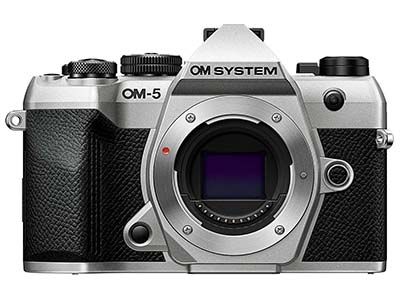
OM System OM-5 II
General Specifications
- Mount: Micro Four Thirds (MFT)
- Sensor: 20.4 MP Live MOS (17.4 x 13.0 mm)
- Processor: TruePic IX
- In-Body Stabilization (IBIS): Up to 6.5 stops (up to 7.5 stops with Sync IS)
- Native ISO: 200–25,600 (expandable to 64)
- Mechanical Shutter: 1/8000 s – 60 s
- Electronic Shutter: Up to 1/32,000 s
- Burst Shooting: Up to 10 fps (mechanical), 30 fps (electronic, AF locked)
- Autofocus: 121 contrast-detection points
- Rear Screen: Fully articulating 3″ touchscreen LCD, 1.04M dots
- Electronic Viewfinder: OLED, 2.36M dots, 0.74x magnification
- Video: 4K (30p/25p/24p), Full HD (up to 120p)
- Inputs/Outputs: Microphone (3.5 mm), micro HDMI, USB 2.0
- Connectivity: Wi-Fi, Bluetooth
- Body: Magnesium alloy, sealed against dust, splashes, and freezing
- Dimensions: 125.3 x 85.2 x 49.7 mm
- Weight: 414 g (with battery and card)
- Battery: BLS-50, approx. 310 shots (CIPA)
- Card Slot: 1x SD UHS-II
Key Features for Macro Photography
- Micro Four Thirds Sensor: Provides greater depth of field at the same aperture
- Effective IBIS: Up to 7.5 stops with compatible lenses; ideal for handheld macro shooting
- Focus Bracketing: Up to 999 images with step and number control
- In-Camera Focus Stacking: Yes (if lens supports it)
- Focus Peaking and Magnification: Yes
- Electronic Shutter: Silent shooting, vibration-free
- Articulating Screen: Ideal for low or awkward angles in macro
- Compact and Weather-Sealed Body: Suitable for extended outdoor use in tough conditions
- As an Amazon Associate, this website earn from qualifying purchases.