


The ideal would be a lens that would be suitable for everything, from insects in the wild to a jewel in a studio. Unfortunately, that doesn’t exist.
Zoom lenses
When we buy our first camera, it often comes with a standard zoom lens. These lenses typically cover from a moderate wide-angle to a short telephoto and, in some cases, include a feature labeled as “macro.”
In reality, this term is somewhat misleading and can create confusion among unsuspecting buyers. What these lenses allow is close-up photography, as they reduce the minimum focusing distance and achieve magnifications that make it possible to capture several subjects at full frame, such as flowers, large insects, textures, etc. However, they do not reach a 1:1 reproduction ratio, which is the conventionally accepted technical criterion for considering an image as true macro photography.
Zoom lenses are not usually particularly bright, and their macro functionality requires working with long focal lengths, making handheld shooting really challenging. Also, they are not as sharp as true macro lenses, although this can be seen as a relative drawback: often, we do not seek high sharpness at the edges of the image because the subject of interest occupies the center, and what matters is isolating it from the background.
With a few exceptions, there are no true macro zooms. One of them is the Micro Nikkor AF 70-180 f/4.5-5.6. It is not a true macro by reproduction ratio (1:1.3), but it is close enough, and its optical performance is very good. Apparently, it was too expensive to produce and there wasn’t enough demand, so production was discontinued, and today it is out of production and only found on the second-hand market. After all, in close-up and macro photography, it is common to move the camera to change magnification, and the real usefulness of a macro zoom is questionable.
Along with the Nikkor, we only know of a few macro zooms: the Zeiss Luminar Zoom, the Zeiss Tessovar, and the Leica Wild macroscope line, which is prohibitively priced.
Fixed lenses without macro function
The story with fixed focal length lenses is similar. The maximum magnification achievable with them is around 1:3. The advantage of these lenses is that they tend to be much brighter than zooms, which means they work better with teleconverters and extension tubes. In any case, if macro is our main interest in photography, it makes more sense for our next major purchase to be a dedicated lens. There are reasonably priced options, but if the budget doesn’t allow, we can explore what third-party brands like Samyang, TTArtisan, or 7Artisans offer or get a vintage lens from another system along with a lens adapter. Old models with a magnification ratio of 1:2 can be found.
Macro lenses
From a mechanical point of view, macro lenses are constructed like other lenses but have longer helicoids and/or internal groups of moving optical elements that allow extending the focusing range. They also tend to have higher sharpness and better correction of optical aberrations than non-macro lenses.
Thus, from both an optical and mechanical perspective, macro lenses are designed to:
- Focus at very short distances
- Maintain high image quality throughout the focus range
- Correct chromatic and geometric aberrations more rigorously than standard lenses
The vast majority of macro lenses from major brands have good or very good optical quality. As a result, macro lenses tend to be more expensive than general-purpose lenses of comparable focal length.
Ideally, our first macro lens should be suitable for photographing a wide variety of subjects, from plants and insects in the wild to a piece of jewelry in a studio. Unfortunately, an ideal macro lens for all possible situations does not exist. For example, longer focal length lenses have a narrower field of view, which makes it easier to isolate a subject. Thus, a 60mm on Micro Four Thirds can be excellent for photographing insects or ground-level subjects such as lichens and mushrooms, but its focal length may be too long if we want to take overhead shots.
Macro lenses often allow stopping down the aperture to f/22 or even f/32 to achieve greater depth of field, which is especially useful for three-dimensional subjects where critical focus is challenging. However, this increased depth is usually accompanied by a reduction in sharpness due to diffraction, i.e., the bending of light passing through a very narrow aperture. Generally, diffraction becomes noticeable from f/11 or f/16 and worsens at smaller apertures like f/22 or f/32.
For this reason, most macro lenses achieve their greatest sharpness at medium apertures, such as f/8 or f/11, where depth of field and optical quality are well balanced. At the same time, many modern macro lenses also offer wide maximum apertures, like f/2.8, which adds creative versatility: it allows working with softer blurred backgrounds or in low-light conditions, though with a very shallow depth of field.
Less than 50mm
Macro lenses with focal lengths in this range tend to be designed for use with smaller sensors, such as APS-C or Micro Four Thirds. They allow including some surrounding elements of the subject of interest, making them very suitable, for example, for macro landscape photography. They are rarely intended for use with full-frame cameras, although there are some wide-angle lenses for full frame, like the Laowa 15mm f/4 Wide Angle Macro, which offer a 1:1 ratio with dramatic perspective.
50mm to 60mm
Focal lengths in the 50mm to 60mm range are often the choice for macro enthusiasts purchasing their first prime lens, and there are good reasons for this:
- They are ideal for reprography (photos of books, documents, illustrations) because they provide virtually distortion-free results.
- They are also ideal when photographing subjects at medium distance, such as skittish insects or products in a studio.
- They are versatile. They serve as a “normal lens” for landscape photography, portrait, etc.
90 mm to 105 mm
Macro lenses with focal lengths between 90mm and 105mm are preferred by many photographers due to their great versatility. This range allows working at a greater distance from the subject, which is especially useful when photographing insects, small animals, or plants sensitive to movement, as it reduces the likelihood of startling them or obstructing light with our presence.
Additionally, these lenses are perfectly valid as short telephoto lenses and are also frequently used for portraits. However, their high sharpness, designed to highlight fine details in macro photography, can be excessive for traditional portraits, as it tends to reveal skin imperfections that we would usually prefer to soften.
One advantage is that, thanks to the longer working distance, these lenses facilitate the use of artificial lighting without casting unwanted shadows. As long as you don’t shoot at very narrow apertures, it is also possible to use them handheld, especially if you have stabilization systems in the camera or the lens itself.
150 mm and more
Macro telephoto lenses in the 150mm to 200mm range are ideal for photographing insects like dragonflies and butterflies. A working distance of about 30 cm from the front lens is enough for most insects not to flee, as long as we are not too noisy or abrupt in our movements. If more distance is needed, a teleconverter can also be used. They require a steady hand or tripod, although many current models include stabilization.
200 mm and more
Lenses in this category have disappeared from the market. In the past, options like the Sigma 4 300mm and Sigma 5.6 400mm existed, providing approximately 1:3 magnification. Their macro applications are minimal, but they are useful for photographing butterflies, dragonflies, and, more interestingly for some, birds.
Macro lenses for Micro Four Thirds (Olympus / OM System and Panasonic Lumix)

Zuiko 30mm F3.5
Specs
- Focal length: 30mm (60mm full frame equivalent)
- Angle of view: 40°
- Aperture: f/3.5 to f/22
- Closest focusing distance: 9.5 cm
- Maximum magnification: 1.25:1
- Weight and dimensions: 128 g, 57 x 60mm
- Compatibility: Micro Four Thirds
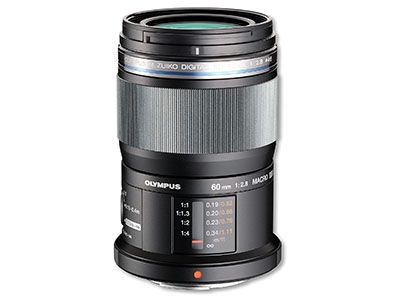
Zuiko 60mm F2.8
Specs
- Focal length: 60mm (120mm full frame equivalent)
- Angle of view: 20°
- Aperture: f/2.8 to f/22
- Closest focusing distance: 8cm
- Maximum magnification: 1:1
- Weight and dimensions: 185g, 81 x 56mm
- Compatibility: Micro Four Thirds

Zuiko 90mm F3.5
Specs
- Focal length: 90mm (180mm full frame equivalent)
- Angle of view: 14°
- Aperture: f/3.5 to f/22
- Closest focusing distance: 22 cm
- Maximum magnification: 2:1
- Weight and dimensions: 435 g, 136 x 69.8 mm
- Compatibility: Micro Four Thirds
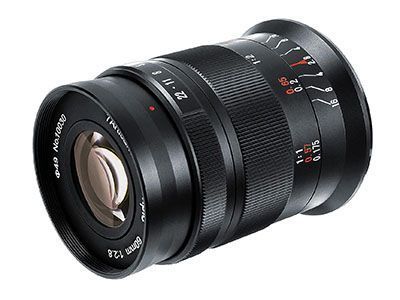
7artisans 60mm F2.8 II
Specs
- Focal length: 60mm (120mm full frame equivalent)
- Angle of view: 20°
- Aperture: f/2.8 to f/22
- Closest focusing distance: 26 cm
- Maximum magnification: 1:1
- Weight: 339 g
- Filter size: 39 mm
- Compatibility: Micro Four Thirds
Macro lenses for Canon
Canon RF 35mm F1.8

Specs
- Focal length: 35mm
- Angle of view: 63°
- Aperture: f/1.8 to f/22
- Closest focusing distance: 17 cm
- Maximum magnification: 0.5:1
- Weight and dimensions: 305 g, 63 x 74mm
- Compatibility: Canon RF
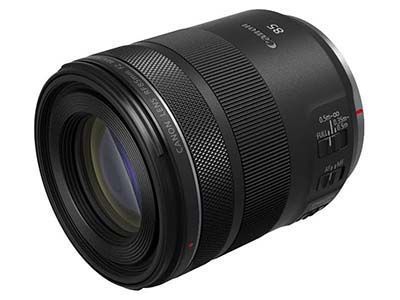
Canon RF 85mm F2
Specs
- Focal length: 85mm
- Angle of view: 24°
- Aperture: f/2 to f/22
- Closest focusing distance: 26 cm
- Maximum magnification: 0.5:1
- Weight and dimensions: 500 g, 78 x 90.5 mm
- Compatibility: Canon RF
7artisans 60mm F2.8 II
Specs
- Focal length: 60mm (90mm full frame equivalent)
- Angle of view: 20°
- Aperture: f/2.8 to f/22
- Closest focusing distance: 26 cm
- Maximum magnification: 1:1
- Weight: 339 g
- Filter size: 39 mm
- Compatibility: Micro Four Thirds
Macro lenses for Sony
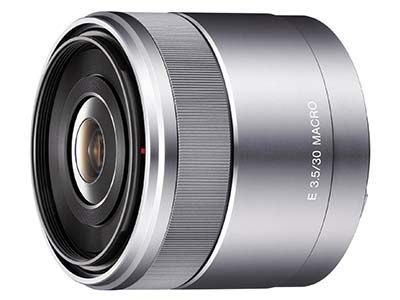
Sony 30mm F3.5 APS-C
Specs
- Focal length: 30 mm (equiv. to 45 mm in full frame)
- Angle of view: 50°
- Aperture: f/3.5 to f/22
- Minimum focusing distance: 9.5 cm
- Maximum magnification: 1:1
- Weight and dimensions: 138 g, 62 x 55.5 mm
- Compatibility: Sony E APS-C
50mm F2.8 Full Frame
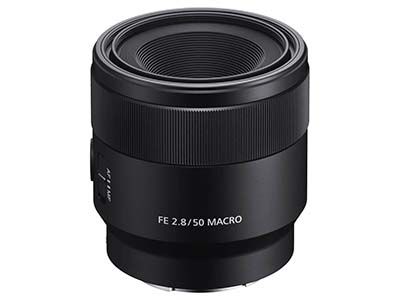
Specs
- Focal length: 50 mm
- Angle of view: Approximately 47°
- Aperture: f/2.8 to f/22
- Minimum focusing distance: 16 cm
- Maximum magnification: 1:1
- Weight and dimensions: 290 g, 70.8 x 71 mm
- Compatibility: Sony FE (Full Frame)
Sony FE 90 mm F2,8 Full Frame
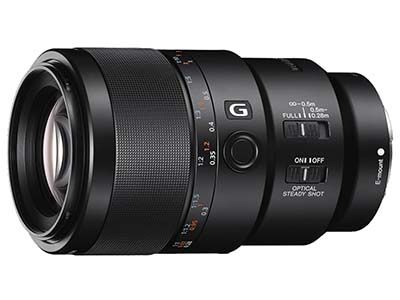
Specs
- Focal length: 90 mm
- Angle of view: Approx. 27°
- Aperture: f/2.8 to f/22
- Minimum focusing distance: 28 cm
- Maximum magnification: 1:1
- Weight and dimensions: 602 g, 79 x 130.5 mm
- Compatibility: Sony FE (Full Frame)
7artisans 60mm F2,8 II APS-C
Specs
- Focal length: 60mm (90mm full frame equivalent. A7 series need switch to the APS-C format)
- Angle of view: 20°
- Aperture: f/2.8 to f/22
- Closest focusing distance: 26 cm
- Maximum magnification: 1:1
- Weight: 339 g
- Filter size: 39 mm
Macro lenses for Nikon
Nikkor Z MC 50mm F2.8
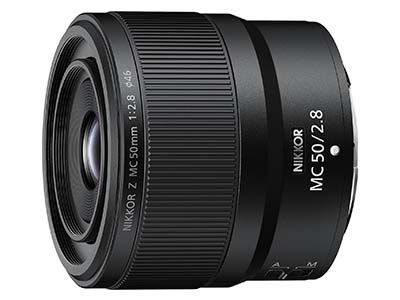
Specs
- Focal length: 50 mm
- Angle of view: Approx. 47°
- Aperture: f/2.8 to f/22
- Minimum focusing distance: 16 cm
- Maximum magnification: 1:1
- Weight and dimensions: 260 g, 74.5 x 66 mm
- Compatibility: Nikon Z (Full Frame and APS-C)
Nikkor Z MC 105 mm F2.8
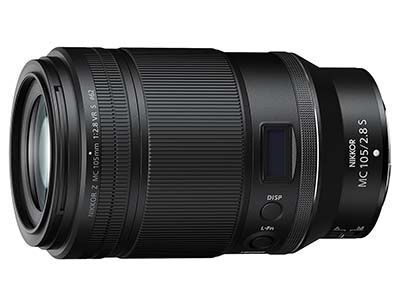
Specs
- Focal length: 105 mm
- Angle of view: Approx. 23°
- Aperture: f/2.8 to f/32
- Minimum focusing distance: 29 cm
- Maximum magnification: 1:1
- Weight and dimensions: 630 g, 85 x 140 mm
- Compatibility: Nikon Z (Full Frame and APS-C)
Macro lenses for Fuji
Fujinon XF 30mm F2.8
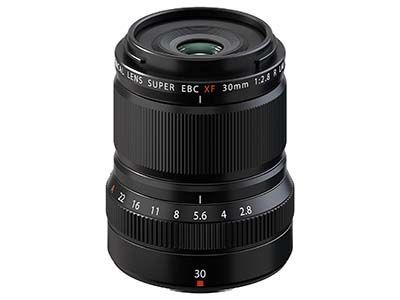
Specs
- Focal length: 30 mm (equiv. to 45 mm on full frame)
- Angle of view: Approx. 50°
- Aperture: f/2.8 to f/22
- Minimum focusing distance: 10 cm
- Maximum magnification: 1:1
- Weight and dimensions: 195 g, 60 x 69.5 mm
- Compatibility: Fujifilm X (APS-C)
Fujinon XF 60mm F2.4
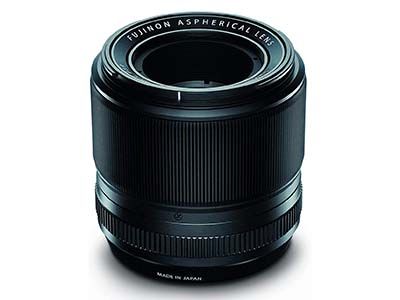
Specs
- Focal length: 60 mm (equiv. to 90 mm on full frame)
- Angle of view: Approx. 27°
- Aperture: f/2.4 to f/22
- Minimum focusing distance: 26.7 cm
- Maximum magnification: 0.5:1
- Weight and dimensions: 215 g, 64.1 x 70.9 mm
- Compatibility: Fujifilm X (APS-C)
Fujinon XF 80mm F2.8
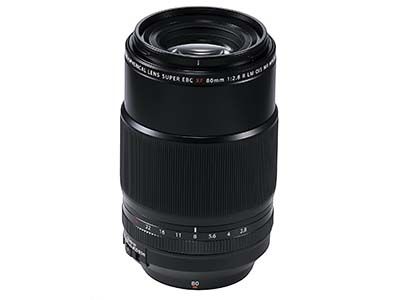
Specs
- Focal length: 80 mm (equiv. to 120 mm full frame)
- Angle of view: 20°
- Aperture: f/2.8 to f/22
- Minimum focusing distance: 25 cm
- Maximum magnification: 1:1
- Weight and dimensions: 750 g, 80 x 130 mm
- Compatibility: Fujifilm X (APS-C)
7artisans 60mm F2.8 II APS-C
Specs
- Focal length: 60mm (90mm full frame equivalent).
- Angle of view: 20°
- Aperture: f/2.8 to f/22
- Closest focusing distance: 26 cm
- Maximum magnification: 1:1
- Weight: 339 g
- Filter size: 39 mm
- As an Amazon Associate, this website earn from qualifying purchases.